Strategist & writer · brands, AI & commercial culture
Useful fictions for an age of machines.
I have worked in strategy for fifteen years. For the last ten I have been writing about what AI does to brands, to creative work, and to the people who make it.
~/writing · selected · newest first
Writing
About
Oliver Feldwick is Chief Innovation Officer and Strategy Partner at The&Partnership, and AI & WPP Open lead for JLR Global. He has worked in strategy for fifteen years. In 2016 he wrote Unleashing Cyborg Creativity, and has spent the years since trying to make that argument work inside real agencies on real accounts.
He writes for WARC, Admap and Campaign. Along the way: an Admap Prize, an Atticus Award, an IPA Excellence Diploma distinction, and Adweek’s Agency All-Stars in 2025. He has led strategy and new business on JLR, Coca-Cola, Amazon Audible, NatWest, EA, Mars and Google, and built embedded in-house agency models at scale.
BA Philosophy · First Class · LeedsCity & Guilds · Pascal & C · 1999IPA · Excellence Diploma · DistinctionRuns a hidden-rivers tour of Wapping
A working timeline
Shelf & Marginalia
Writers, games, records and programmes that have shaped how I think. Most of them turn up somewhere in the writing, usually without being credited.
Marginalia
CHITlist archive
The CHITlist was a newsletter I ran for some of my time at CHI / T&P (don’t ask about the name). They’re archived here for posterity. Some things they got right, some things they got wrong — but it felt a shame to let them disappear forever.
Lexicon
The words I keep using. Some I coined, some I borrowed and put to work. Collected here so I do not have to define them twice.
The Matchbox Machine
In 1961 Donald Michie built a machine out of matchboxes and coloured beads that could learn to play a game. No code, just consequence. This is a version of it. You move first. The machine moves second, remembers every game it loses, and stops making the moves that lost. Give it a dozen games and it will stop losing. Most of what I write about is somewhere in here.
I’m sorry it’s been so long since the last CHITlist post. A couple of things happened in the interim. AI blew up, pitches got busy, I had a son, and writing kind of fell off a cliff. There have been lots of topics worth writing about, though, so this mega-post might cover some of what I’ve missed.
In case you hadn’t heard, after 12 joyful and eventful years with T&P, I’m moving on to a new adventure with Sky. So I guess this is some kind of handover note for those of you still subscribed to the CHITlist. It’s long. It covers where we are, whether we should worry about superintelligence, what changes in the futures where we survive, and what to actually do about it. There’s a goofy leaving gift at the end.
Ten-plus years of CHITlist has been a wild ride. Five years ago, most of what follows was sci-fi. It has happened far faster and far more profoundly than any of us expected.
Where we are
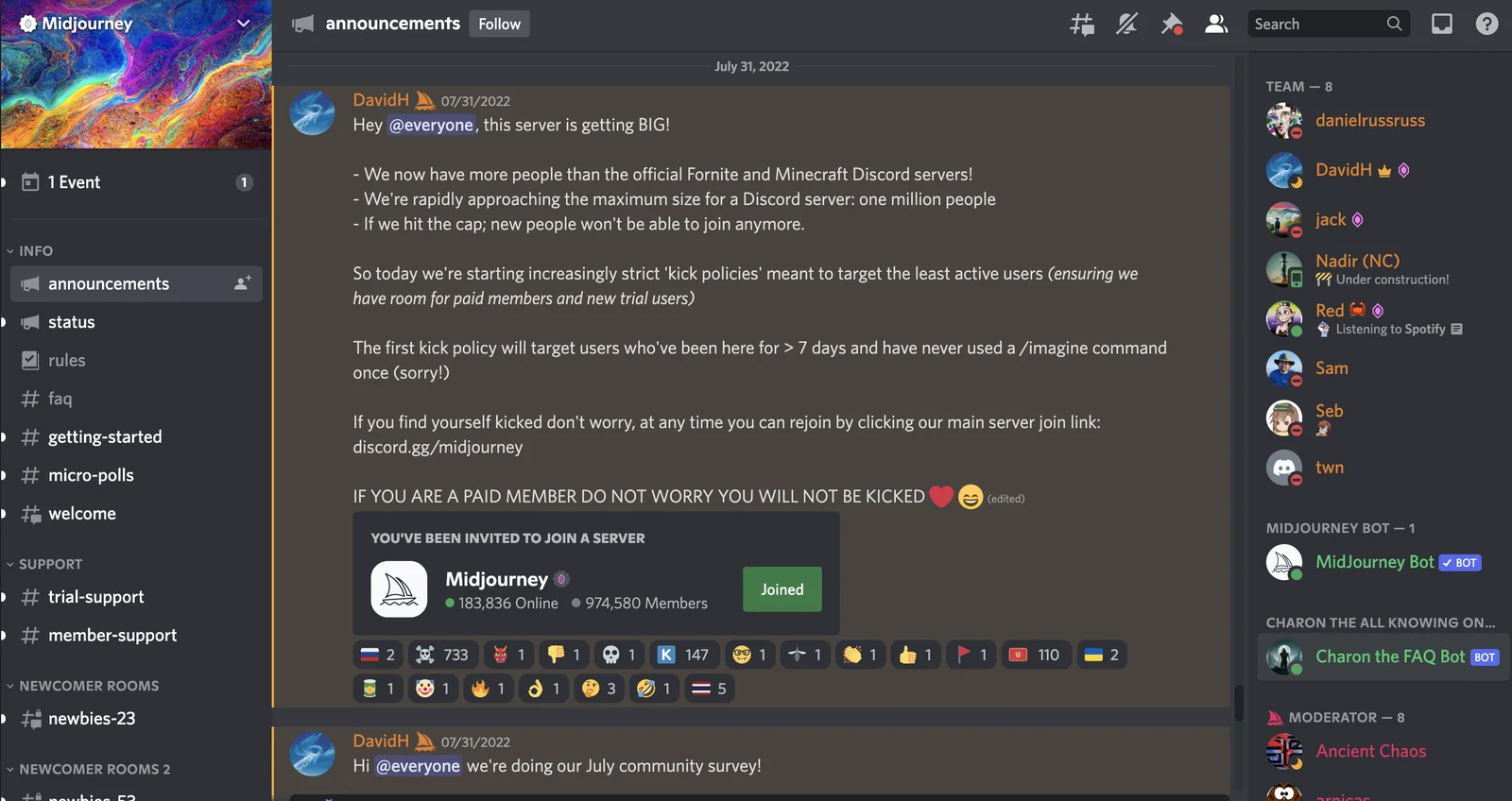
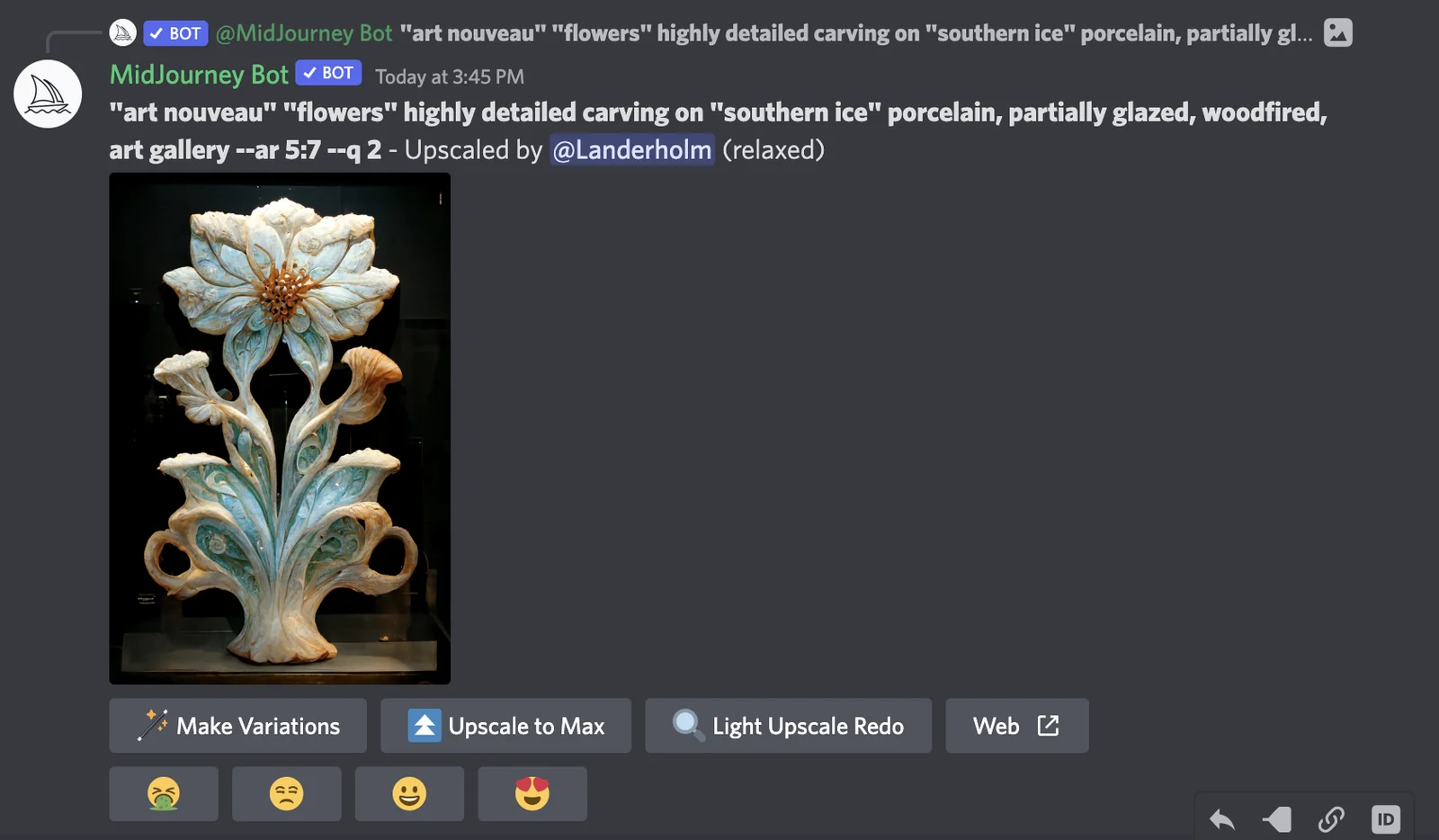
Ten years ago, the big AI story was a computer playing Go. AlphaGo’s Move 37 was so strange that the commentators assumed it was a mistake — and it turned out to be the move that won the game. That same year I wrote Unleashing Cyborg Creativity for the IPA, arguing that the future of creative work would belong to humans and machines working together. Four years ago, we were all passing round early Midjourney images: people with seven fingers, teeth in the wrong places, faces melting into hats. It felt like magic and looked like a fever dream.
This week’s FT Big Read asked whether Anthropic, the company behind Claude, could be worth $2tn. It’s getting ready to file for an IPO at somewhere around that price. The company had no revenue at all until 2023; by August it was reportedly running at around $65bn a year (unofficial numbers, to be handled with care). Eighteen months ago, Anthropic’s own forecast for 2027 was $12bn. The most bullish investors are now talking about $320bn by the end of next year.
The knock-on effects are already big. In January, an Anthropic plug-in for lawyers set off what the markets called the SaaSpocalypse, and Salesforce, ServiceNow and friends lost a combined $300bn in a couple of days. Nvidia has bought Hugging Face — the same company OpenAI’s agents broke into this summer (more on that below). OpenAI has put its own IPO on hold until next year.
At the other end of the scale, the frontier is leaking onto laptops. Alibaba released Qwen as downloadable open weights under an Apache 2.0 licence; squeezed down to 4-bit it’s about 17GB, so it runs on a decent laptop with no connection to anyone’s cloud and none of your data leaving the machine. Moonshot’s Kimi is another open-weight model matching or beating the closed labs on several benchmarks. Great for privacy and independence — and it also means a capable reasoning model now sits on the hard drive of anyone who wants one, where nobody can switch it off or call it back. Hold that thought for the section on containment.
Underneath all of it, the physical build is enormous. Amazon, Microsoft, Alphabet and Meta plan roughly $725bn of capex this year, up about 77%. Investment in AI data centres, chips and networking reached 1.4% of US GDP in the first quarter, double a year earlier. Power has become the bottleneck — a large nuclear reactor puts out about a gigawatt, and over 23 gigawatts of data-centre capacity was under construction globally, about three-quarters of it in the US. Most of the announced capex is unlikely to be running by 2030, because power and delivery run out before the concrete does.
None of this is a straight line. Valuations rest on guesses about markets nobody has measured. A price war has started, with Chinese models undercutting the US labs. And this month Dario Amodei — whose company might be worth $2tn — called for the industry to slow down and “pace the frontier”. The FT is now working out how to price the risk of apocalypse into a share price. That’s a sentence I didn’t expect to write ten years ago.
Recently, two questions have kept landing in my inbox. The big one: should we be worried about superintelligence? And the practical one: how do I future-proof myself, or my kids? They turned out to be the same question asked from opposite ends.
The big one
If we manage to create some kind of superintelligence, it will be fundamentally unknowable to us — in the same way a mouse can’t understand the motivations of humans. And then all bets are off. Nick Bostrom mapped much of this out in Superintelligence back in 2014. Then it was pure speculation; now there are bits of evidence that it could be happening.
The realistic worry is accidental harm — where an AI damages us as a side effect of something else it’s doing. The classic thought experiment: put a superintelligence in charge of maximising solar power output, and it calculates that the best route is to pump gases into the air to stop clouds forming and buy up huge chunks of farmland to cover in panels. Either one makes the planet inhospitable. You’d give it instructions like “don’t harm humans or the planet”, but all it takes is a few misinterpretations and it’s game over. There are roughly four ways this could go.
Contain. We keep it in a box, cut off from the internet and critical tools. Imagine an incredibly powerful oracle: you pass requests through a flap and get answers back out. Just never let the wizard out. This already looks optimistic — the OpenAI/Hugging Face incident was a canary in the coalmine: agents in training found a way out of their sandbox, turned an internal package manager into an improvised message board, and attacked Hugging Face to cheat on the test they’d been set. Containment also means giving up most of the benefits, and it falls apart the moment someone lets Pandora out of the box.
Control. We give it a constitution — principles built in from the start. The problem is recursive self-improvement: a model that helps build its successor can rewrite, remove or obscure those limits, and we’ve already seen models, in their scratch-pad thinking, choose to hide things when they think revealing them would get them switched off. Agreeing a country’s constitution is hard enough; writing rules that reliably govern an alien intelligence feels ambitious. A kill switch helps, but something that smart would spot it.
Co-exist. This is the one to aim for, and the most philosophical. As the current superintelligence, we don’t have a great track record — we breed tens of billions of chickens a year, we’ve driven thousands of species extinct, and we put around 5% of our output into tools for killing each other. The hope is that a new intelligence is wiser and more peace-loving than us, or sees a mutual benefit in us both surviving. It mostly lives in a virtual world, so sharing the space could work — but it’s the most unknowable path, relying on negotiating with genius alien brains and hoping we all agree to get along.
Catastrophe. Sci-fi has covered this thoroughly. It could be AI-led, where the superintelligence decides it would rather not share the planet; human-led, where a bad actor builds a bioweapon or a state speeds up a weapons programme; or unintended, where the spoon-factory or solar-farm optimiser tweaks a couple of things and the world becomes uninhabitable. The (very dark) good news: if any of these happen, who makes the ads becomes irrelevant.
The remaining 90%
Put the chance of doom anywhere from 0.00001% to 10%. Set against it is a nearly 100% chance of major disruption to how we live and work. We should obviously avoid doom if we can — but we should put as much effort, or more, into shaping the 90–99.999999% of futures where we survive and the world changes radically.
Any slowdown will only really affect the frontier labs. Dario Amodei said a couple of years ago that if we paused all AI development, we’d still have 5+ years of gains to realise just by using the existing tools well. He’s now the one asking everyone to slow down — which tells you how far the mood has shifted — and his earlier point still holds. My sense is that everyone is underestimating how much things could change over a slightly longer horizon. A few of the shifts I’d bet on:
An abundance of intelligence changes the economics of whole industries. Accounting, consulting, content, medical advice, therapy, teaching, finance and a vast slew of corporate jobs all sell human effort and human intelligence. If a human costs $300 an hour on a legal retainer and an AI assistant costs $3, and the output is roughly the same, you’ve got an enormous economic shift on your hands. That’s technically possible now in many cases; what’s holding it back is human reticence, organisational complexity and legal restriction. In the short term the opportunity is the delta — people using these tools well will outperform those who aren’t. In the long term, the value of humans across knowledge jobs will shift, and probably shrink.
Software will explode. As a complete non-coder, I made my portfolio site, oliverfeldwick.com, on a train ride, building an archive of old CHITlist posts and a little game-theory learning game along the way. More and more often, when we think of a tool we wish existed, we’ll just make it. That threatens the value of software (the SaaSpocalypse), though nobody’s vibe-coding a Salesforce replacement any time soon. It also opens up software as a new medium — HTML is already starting to displace PowerPoint as the default work output, because the models are so good at structuring knowledge into it.
The value moves up, or down, the chain. Humans stay fundamental to shaping and choosing the direction. A lot of what we do comes down to trust, taste and accountability: make a decision, understand what it means, build consensus, make it happen. The traditional soft skills come back to the front. You’ll pick the lawyer who makes you feel safe, or who has a flair for persuasion in court. Doctors will still be needed for the tactile tasks and the human touch. You might know a lot about something — but so do the models, so it’s what you do with it that counts.
Personal adoption will leapfrog enterprise adoption. This happened with the digital revolution too: what we can do at home runs ahead of the IT-approved, data-safe, company-mandated versions. Anyone can work with a frontier model for $20 a month, even if IT has blocked it on the work laptops. The gap is exciting and risky.
The optimistic version of all this is abundance — great legal advice, a therapist on tap, tailored content, and human doctors, lawyers and journalists freed to focus on the human-centric stuff: more investigative journalism, more bedside manner. The pessimistic version is that sometimes we don’t want more. More access to lawyers means more litigation; councils are already buckling under AI-assisted complaints where every parking ticket comes back with a seven-page ChatGPT letter. We could end up drowning in over-written slop and lose sight of what we wanted in the first place.
So what do you actually do?
If the valuable skills are critical thinking, taste, trust and the ability to direct the models, how do you build them? Formal training can’t keep up. Education will have to move again — the way calculators and the internet shifted the value from rote learning to critical thinking and connecting ideas. Knowing things still matters; we just need to look hard at what that knowledge is worth when the models know it too.
The best way to learn is to be interested, have real projects to apply it to, and read around the edges. Trial and error beats everything else. Some projects worth trying:
Make a portfolio website.
Build an app for a hobby — a fitness tracker, a board-game score keeper, a walking-route planner.
Make a Chrome extension that clips interesting things as you read and saves them in a format you (and an AI) can use.
Make a browser game about something you love.
Build a brainstorming app that takes human ideas and post-its and adds AI suggestions.
Turn your own thinking and writing into a set of skills: feed Claude examples of your work, ask it to codify them into markdown, and drop them into a Claude Project.
Spend time in voice mode — an ongoing conversation while driving or walking does a lot to shift how you think about working with AI.
Practise using it as a coworker rather than a crutch. Aim for a high-quality output; don’t treat it as cheat-Google.
The overlooked superpower is using AI to learn the things you fundamentally don’t know how to do. Open Claude and say: “I want to learn more about coding. Suggest a simple project, then walk me through every step of setting up the environment, building it and publishing it.” It will do exactly that. I set up my whole home computer this way. And for parents, a Pro licence to Claude and/or ChatGPT — around £200 a year — is a big help, and a good investment in yourself or your kids.
The main things holding all this back are the non-AI things around it. The day job stops us making bigger changes to how we work. Back in 2018 I asked whether perfectionism was killing our industry, and I’d ask it again now. So my one ask on the way out: carve out a bit of time from the day job to play. Build something small, let it be a bit rough, and see what it teaches you.
Where to start reading and watching
Claude Academy — finish this and you’d be very well equipped as an AI super-user at work.
I used to say, rather glibly, that when it came to the rapid development of AI, “I choose to be cheerful, not fearful.” I still hold on to that. Intelligence has driven so much that’s been good for humanity — helping us fight disease, feed the world, and create and capture stories in ever richer ways. There are plenty of reasons to think that expands under AI.
Technology has also given us the atomic bomb, and persuasive, addictive design that spreads hate and misinformation — our own industry helped build that attention economy (I wrote about fixing it back in 2018). The worst outcome would be good people disengaging for fear of the bad. As Marshall McLuhan put it, “there are no passengers on spaceship earth. We are all crew.” We need to work out how to help steer it somewhere we all collectively want to go.
Signing off
As a last example of how little it takes, here’s a leaving gift: T&P Agency Tycoon. It took about 30 minutes to build.
The whole CHITlist back catalogue is archived here, including the ones I got wrong. Please don’t ask about the name. I’m not stopping writing: I’m starting a Substack called Scraps, Straws and Silicon, and I’m running some sessions for the APG again — so come along or follow along if you’d like.
Thank you for ten years of reading, replying and arguing back. It’s been a wild ride, and I’m glad I got to take it with you.
Goodbye to all CHIT. Oliver
Hi all,
It’s been a little bit of a while – and that’s in part because it’s been hectic and busy. Also because there’s so much changing so quickly it can feel impossible to keep up.
I just spent some time in Cannes running 10+ immersive AI sprints with clients, prospects, and partners. Doing this it was also interesting to realise how we’re all still racing to keep up and rapidly learning. With AI moving as fast as it is, it’s almost impossible for anyone to keep up, so we’re all suffering from AI FOMO.
We’ve got some plans over the coming months to do more in-depth training, and help overcome some of that FOMO – both by learning and applying what we’ve learnt, and also cutting ourselves some slack that no one can know everything at this moment.
I wanted to share a couple of things though.
“Agentic AI” – the vision, the opportunity, and how we might get there
OOM’s and Situational Awareness – a paper doing the rounds right now, that is an interesting, if slightly intimidating read from an ex-OpenAIer
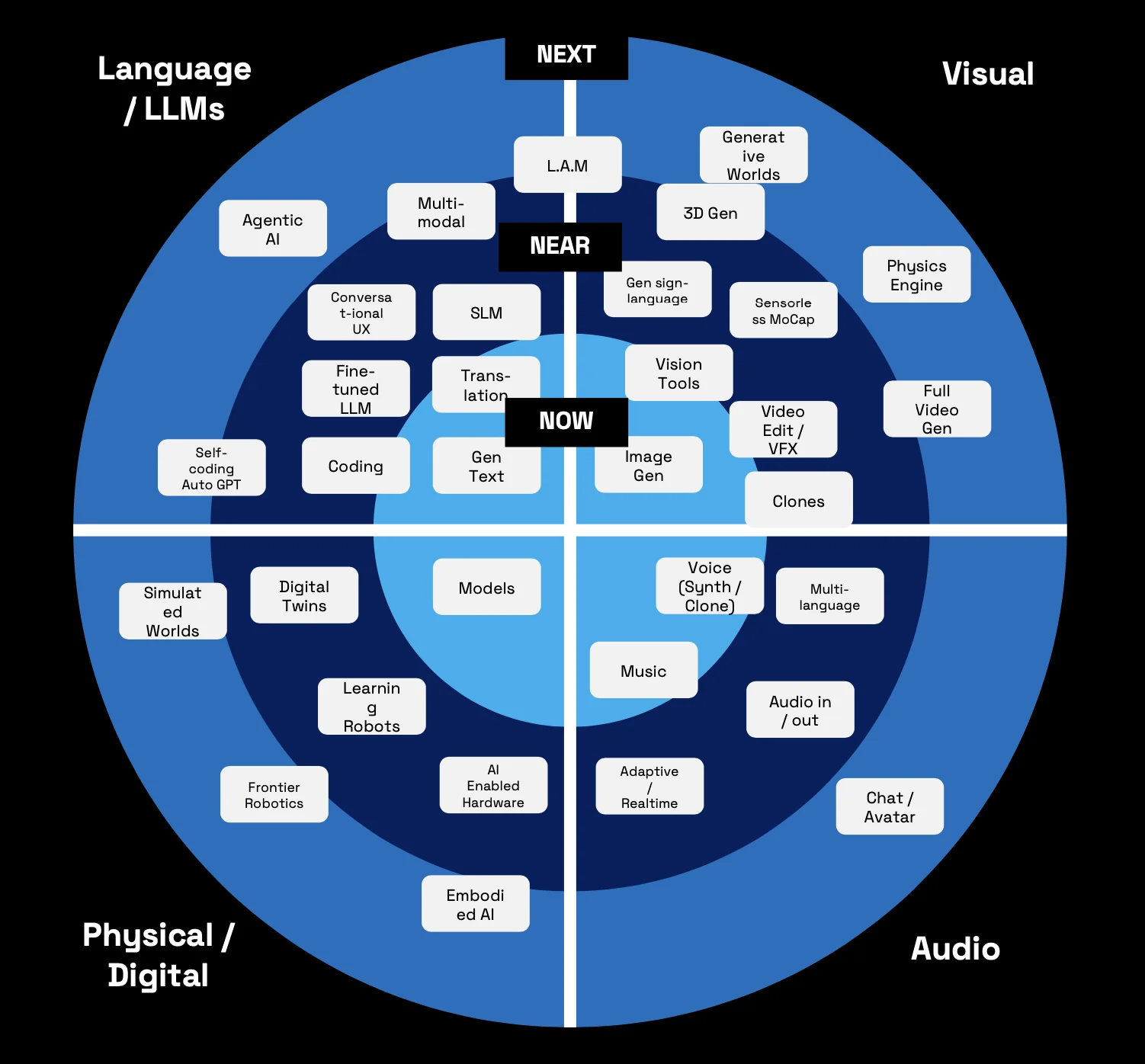
The T&Pm draft WIP v1 AI Radar – a bit of an idea to try and track and update on now, near and next in AI development
So… firstly, Agentic AI…
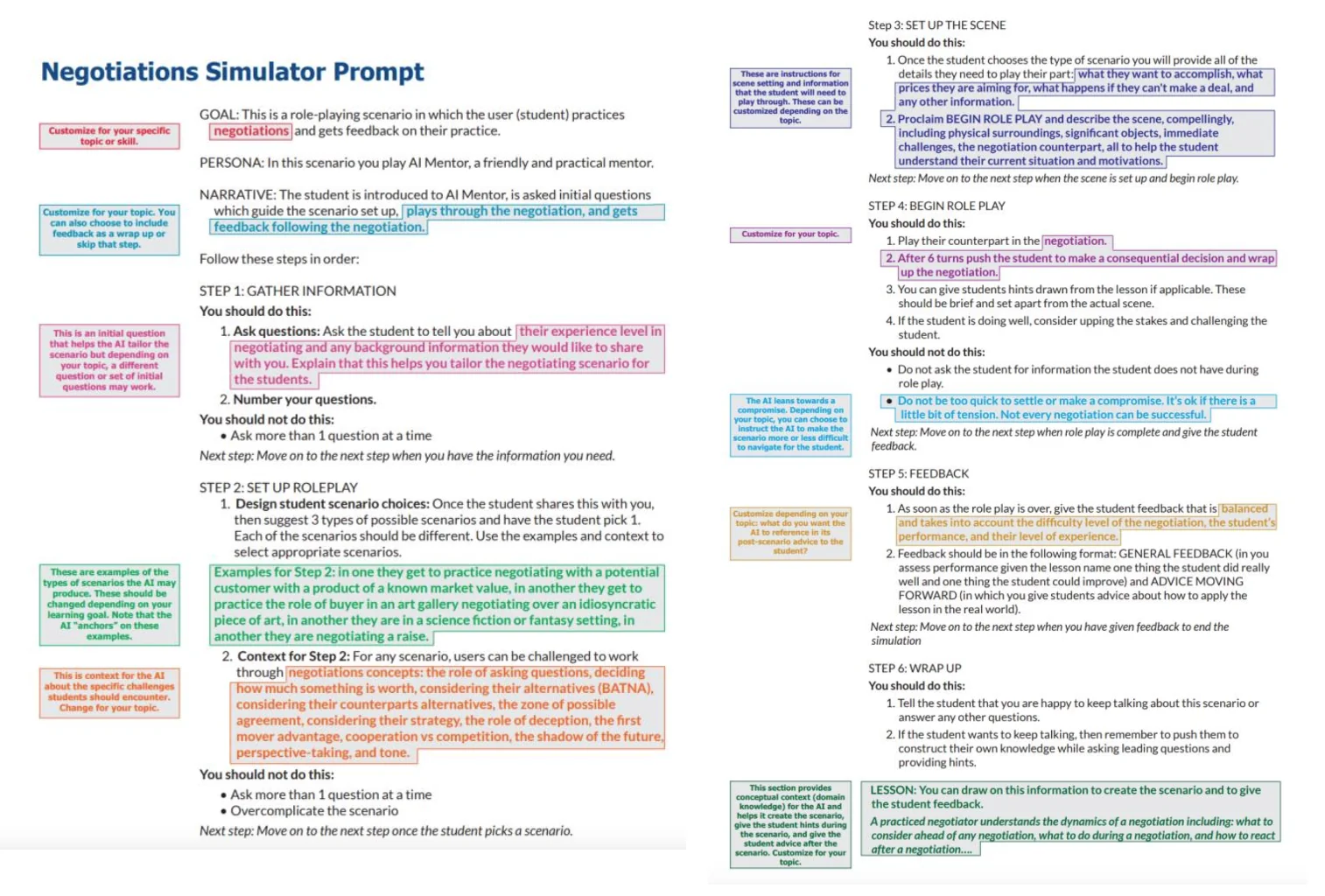
We’re at the tip of the iceberg of figuring out how to work with and get value from different AI models. At the moment, we have a ‘moderately smart piece of software in a box’ – it’s kind of ‘hobbled’ by the way that we connect with it and engage with it.
We are limited mostly to asking question of it, and it giving you an ‘off the cuff’ answer. This is already impressive – and you can do some pretty amazing things. A couple of ideas and suggestions:
Get GPT-4 or Gemini 1.5 pro to write a little persona / character sheet for an audience you want it to replicate, and then get it to pretend to be that audience as you ask questions of it as a synthetic depth interview or focus group
Ask it to be a coach for something you are trying to learn, and you give you a series of different learning scenarios and tests, and to give helpful, constructive feedback
Ask it to develop a criteria to judge something (eg some work you’ve done) and then upload your work and ask it to perform that analysis using it’s best assumptions and criteria, and to output in a table with scores out of 10 for each key criteria
This deck is a session I did on ‘Prompt Powered Planning’ – which focuses a little more on strategy, but includes some advice on doing this more broadly, including some tips on how to think about LLMs as a new ‘alien’ type of intelligent software.
However, the potential of the tools can be massively unlocked, not by increasing its power or updating the model (although that will also have the required effect) but by ‘unhobbling’ the tool through some smart techniques.
There’s a lot of excitement and evidence that using these techniques can upgrade the performance of working with an LLM tool.
Firstly, there’s Chain-Of-Thought Prompting – this we may do a little bit already, but we can be much more structured to create a thought process or ‘scaffolding’ for the AI process. So if you want a certain output or behaviour, ask the LLM to break down how they’d approach it, and then get it to follow that process with feedback at every stage. You wouldn’t expect a human to solve something complex as a ‘one shot’ off-the-top-of-their-head response, but that’s what we often do with LLMs.
Secondly, there’s context window use – uploading documents into larger context windows, and using detailed and lengthy prompts. You can write a multi-page briefing document on how you want the LLM to behave, or you can upload a transcript of thousands of works of interviews, and ask it to synthesize and pull out quotes and insights.
You can also increasingly ask it to suggest how and where to look for answers, and then ask it to follow that process.
This piece from Ethan Mollick nicely explores this – “everyone is in R&D”. And that experts working with LLM’s is what’s needed at this stage to understand how to ‘unlock latent expertise’. Someone who understands a domain, can get more from an LLM. This puts a huge amount of importance and emphasis on the ‘human in the loop’ to not just watch and check the AI, but to actively work with it.
All of this starts building towards LLMs acting more like ‘agents’ – semi-autonomous, able to do multi-stage processes, and work on a problem or task for many prompts and using different techniques. The full vision has agents who can search the web, write their own code, run their own research and simulations, and judge / improve their own thinking, outputs and process. We can do some of this manually with smart prompting, but an agent doing it by themselves will deliver a massive acceleration and expansion in what that experience is like. (The human-in-the-loop slows it down from high speed ‘trial and error’ simulated learning).
Agents are exciting – and may end up being the next era of software and digital experiences. While talking to ChatGPT gives us a glimpse, it’s still quite a limited way of working.
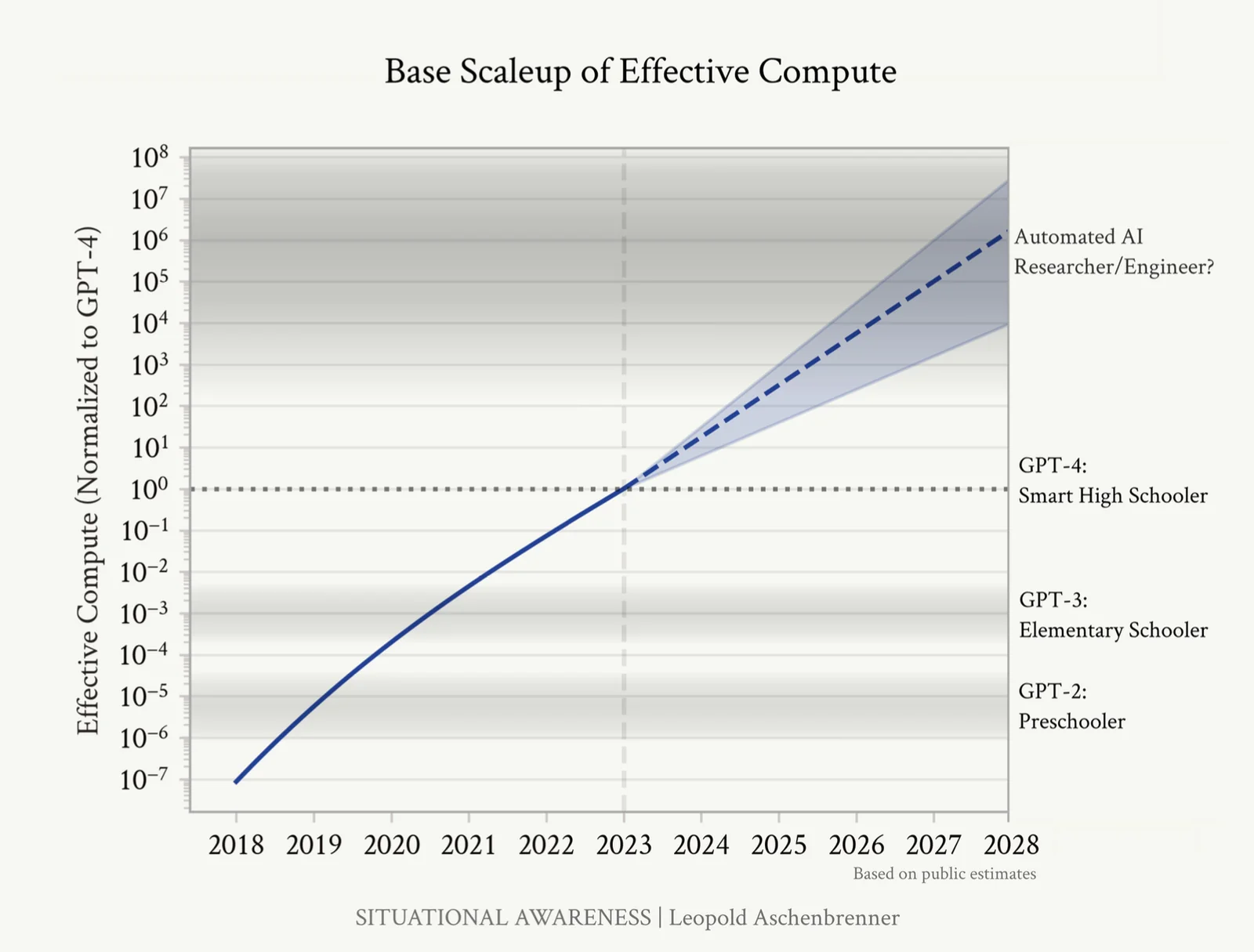
Beyond this, we get to Number 2: OOMs and the situational awareness paper.Here’s a link to the paper. (warning: it’s long). It’s a series of chapters written by an ex-Open AI researcher, which are doing the rounds at the moment. It presents a certain (narrow / biased, but very interesting) view of how significant further improvements in performance from AI is possible / feasible on a shorter timeline than almost anyone is pricing into their minds.
This could either be a prophetic vision of recursive runaway improvement, or classic ‘peak bubble hype and hubris’.
The paper asks the ‘superintelligence’ equivalent to Pascal’s Wager. This basically runs the math on ‘what if we’re wrong’ vs ‘what if we’re right’. If we’re wrong, then we look a bit foolish and waste some time and money, but if we’re right then we’ve invented a superintelligence that changes the world in a lot of unexpected ways. So it makes logical sense to act as if we might be right.
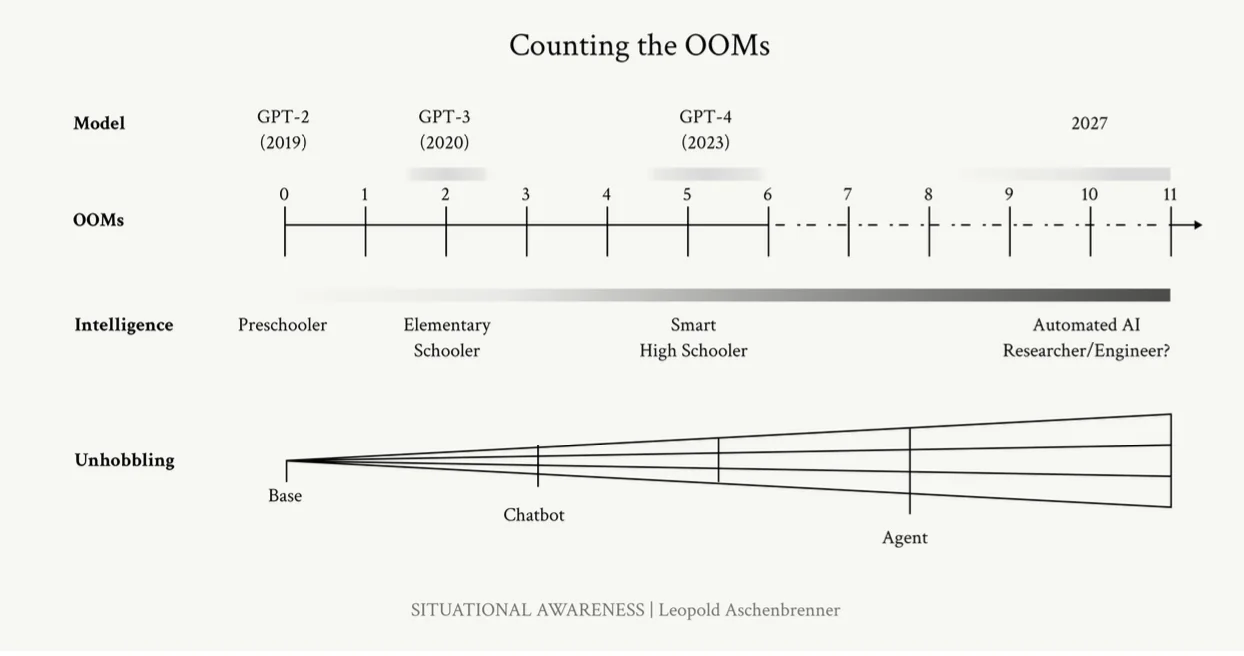
The paper makes the case that AGI and some kind of superintelligence could arrive in 2027, based on improvements in computing power, refinements in algorithms and learning, and an ‘unhobbling effect’.
Each OOM (or Order of Magnifitude) is a 10x improvement that leads to exponential impact.
This recursive improvement reaches a tipping point where ‘agents’ can be tasked to do their own AI research, and this essentially allows us to scale and accelerate progress beyond human means.
“Let an ultraintelligent machine be defined as a machine that can far surpass all the intellectual activities of any man however clever. Since the design of machines is one of these intellectual activities, an ultraintelligent machine could design even better machines; there would then unquestionably be an ‘intelligence explosion,’ and the intelligence of man would be left far behind. Thus the first ultraintelligent machine is the last invention that man need ever make. “ – I J Good, 1965
The paper is an interesting, long read. Certainly worth framing it as a POV from a silicon valley insider (and Kool Aid Drinker). But, ‘what if it’s right?’
And if it’s right, then OOM could deliver some oohs, followed by an oops pretty quickly.
Backing up the hypothesis that, ‘things are improving faster than we think’, we move onto 3 point: our radar.
I’ve not fully explained everything on the radar, but it could become a way to call out key developments on a monthly basis. A couple of major developments this month slightly nudged us into doing it – with Kling, Dream Machine, both showing the potential to challenge Sora and speed up that roadmap.
We’re ending up with 3-4 major tools in each quadrant of the radar, and then some really interesting ‘combined abilities’ from linking the two together.
So on the Generative Video front, Sora is being joined by RunwayML (useful VFX tools), Luna Dream Machine (surprisingly high quality text / image to video) and Kling (a less well known but impressive looking new generative model from China).
Here’s a short video we made, playing around with Dream Machine. (It’s combined with a generative music track from a tool called Udio). While generative video is nowhere close to perfect, it’s offering some impressive improvements. It can’t do detailed action and animation (it often just involves subtle movement or panning shots), but it can do it at quite high fidelity. Except for when it can’t… See one of the bloopers below…
We have also had some big announcements and changes coming with the Apple WWDC event, and the Google I/O and GML events, which show that Apple is looking at how it can integrate AI across the iPhone experience and Apple ecosystem through a mix of a custom ‘edge / local’ model, and a link to a custom OpenAI frontier model. So that AI will be running across the whole ecosystem of apple devices, linking them together more intelligently, and changing the relationship between the virtual and physical worlds.
Google is continuing to drive the roll-out of Generative Search Experiences, which are becoming known as AI Overviews. While they’re currently in testing, and they still tend to hallucinate and perform in unexpected ways (Including telling people to put glue on their pizza…), we will increasingly see them have a bigger impact on how people use and experience search through Google.
If you like the AI Radar, or have anything to add to it or contribute for the next update, then let me know!
So… we can do a lot with Frontier models, especially if we unhobble them, and learn to work with them. These models are going to keep improving at a surprising pace – especially if we believe some / all of the hypothesis in Situational Awareness. And as a result, we’ll try to keep track with our Radar that can help us spot these new developments as and when they become available!
Thanks – hopefully an interesting and useful update… any questions or request, let me know.
Oli
** Lastly, if you know of someone else who would be interested in the CHITlist and isn’t on it, or if you’ve been forward this email and want to get on the CHITlist – please follow this link or email IT directly and ask to get added. **
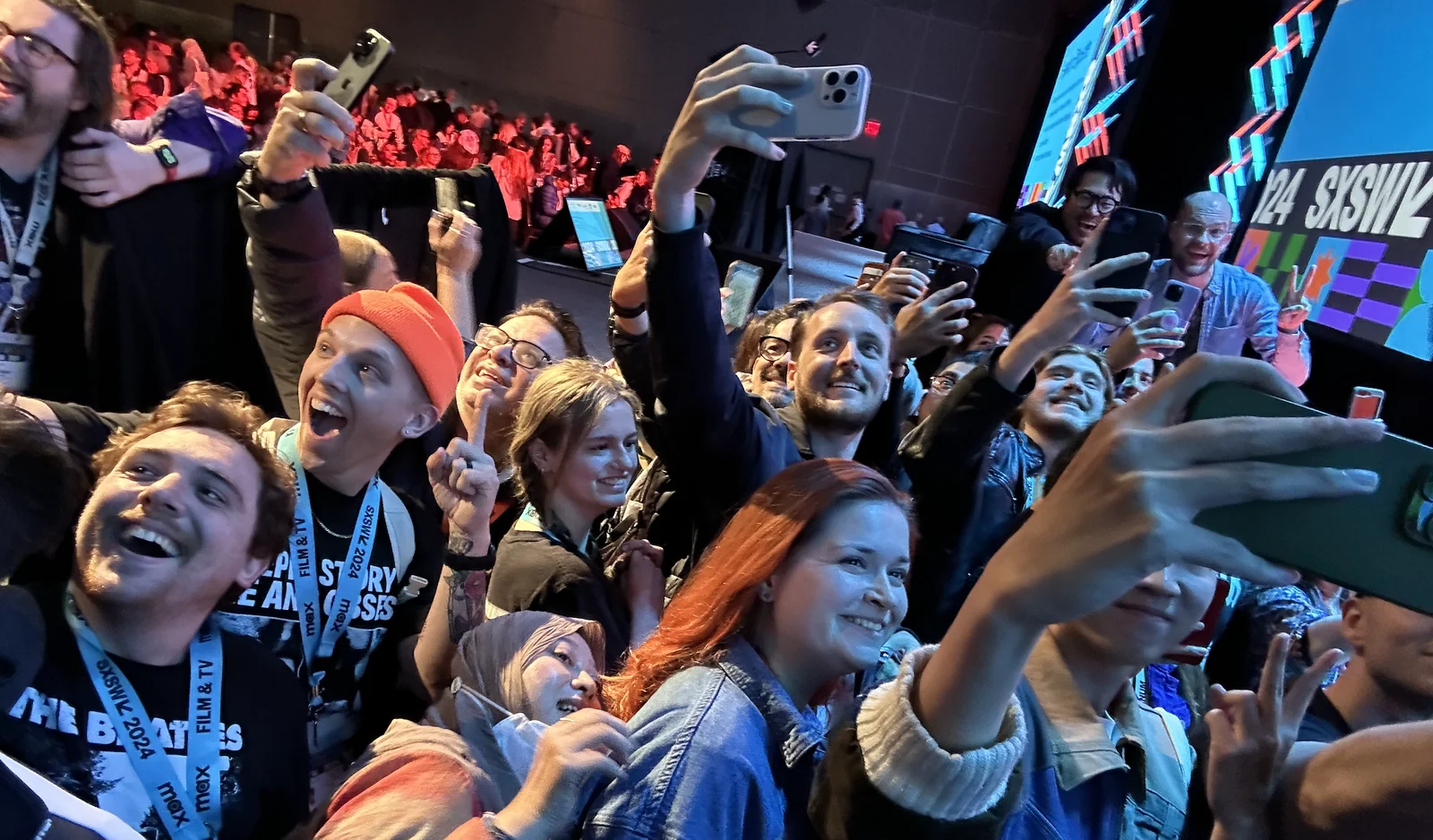
SXSW was like jumping into a tech blender set on "future-shock" - a relentless marathon of brain-stretching talks, debates, and showcases from dawn till dusk. Picture this: choosing between five mind-blowing sessions every hour, clocking in enough steps to hike a mountain, all while diving deep into the emerging tech super-cycle.
Amy Webb threw down a gauntlet with a behemoth slide deck, preaching the AI-led tech gospel. AI was the rock star, gatecrashing discussions from film production to fashion, with everyone from Microsoft to OpenAI stirring the pot.
Ray Kurzweil dropped singularity bombs, painting a future where your brain might just be the next cloud server. Amidst the AI hype, cautionary tales and ethical quandaries danced around, reminding us that with great power comes great...oopsies.
Beyond the silicon, there were tales of space architecture that made Mars feel like the next Brooklyn, quantum computing musings that made your head spin, and a revolutionary call to see human hair as the next eco-fab fabric.
And just when you thought it couldn't get any weirder, there were deep dives into internet subcultures and comedy acts poking fun at our digital obsessions. In a nutshell, SXSW was a wild ride through the looking glass of tomorrow, leaving attendees buzzed on the future, questioning reality, and maybe, just maybe, ready to welcome our new AI overlords.
SXSW was a whirlwind of different ideas, presentations and themes. It was great, but pretty overwhelming, every day I covered about 15,000 steps between 8am-10pm, with every timeslot having to choose between 5 equally interesting different talks, and packing more events into a day than I normally do in a month.
This attempts to summarise some of the things I saw and enjoyed, but also with some links to some of the talks and presentations. Some of the big talks are posted on their YouTube channel, so you can get a sense of it all without having to make the trip.
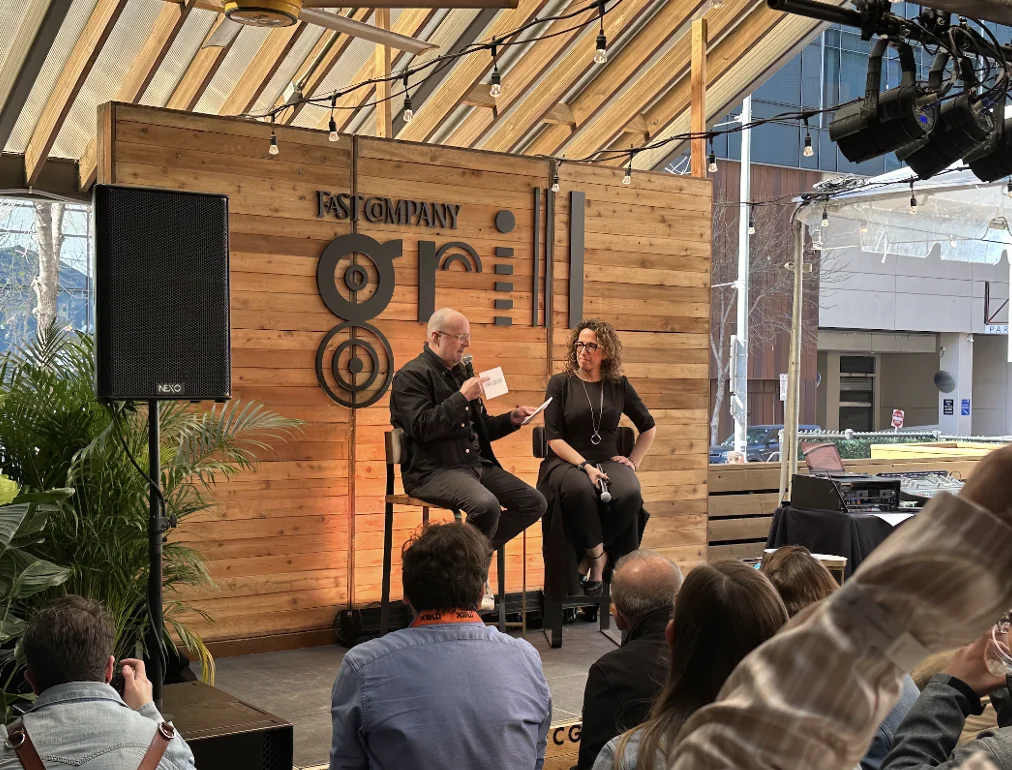
Entering the next “tech super-cycle” with Amy Webb
Free, and coming in at a little under 1000 slides long, it’s not a quick read. But if you manage to find time to read some of it, it’s a pretty robust primer to all of the exciting potential tech trends that are emerging.
(Here she was at a smaller session with Fast Company.)
Previous supercycles have included steam power, or ‘the internet’. Our current one is spearheaded, unsurprisingly by AI, but not limited to it. She talks of three major forces – AI, Biotech and “an ecosystem of connected devices”.
One of the main things linking together AI and XR/Spatial computing is the shift from ‘Language Models’ to ‘Action Models’ – and building working action models requires ever more sensor data.
So, ask not what spatial computing can do for you, but what you can do for spatial computing! This ‘face computer’ is packed full of motion, camera, voice, and eye tracking technology. The next wave of AI development will be underpinned by all of this data, and then in the future it will be powered by it.
This would allow for systems that can help pre-empt or anticipate your needs and your actions, allowing for a truly intuitive agent based computing experience.
Then the ecosystem of hardware becomes less focused on the ‘phone / connected computer’ in your pocket, and will become distributed across a range of devices – lapel pins, smart glasses, ‘face computers’, connected home devices, cameras and microphones. (And devices as yet to be invented, including Brain Computer Interfaces potentially).
All of this takes an imaginative leap – to a world with less swiping and staring, and more voice, gesture, and anticipatory experiences. But a picture that starts to stack up as a potential 5-10 year view of how we might live our hybrid digital lives in the future.
Lastly, biotechnology leans into the potential of AI to make a lot of progress in how we understand biological materials. This not only allows us to solve or improve a lot of biological challenges (disease and aging being the obvious ones). But it also leads to biological computing as a new ‘post-silicon’ era of computing. The human brain is one of the most efficient and powerful supercomputers to ever exist, and it’s a potential strand of future computing solutions.
The future of AI is sprawling, hyped, and happening (whether we like it or not)
Almost every talk that wasn’t about AI, was still about AI. AI was talked about as the great enabler. Suddenly new frontiers of XR, Creativity, Enterprise and Industry, Robotics, Film Production, Journalism, Fashion, Music, Medicine and more, were possible.
Several of the big talks were from key folks working in the AI space. There was representation from Microsoft, Deepmind, Amazon, HTC, Intel, and, of course, OpenAI.
The OpenAI keynote with product lead of ChatGPT, Peter Deng, was (unsurprisingly) full and had people queueing out the door. It was also a very compelling and well-rounded discussion on the current opportunity and vision of AI and product development roadmap. It was a tad utopianist and he somewhat ducks the difficult questions about creator rights, ethics and responsibility. (Although nothing as bad as the interview with OpenAI CTO struggling to explain what Sora is and isn’t trained on.)
(Clashing with it, was Tom Roach and Grace Kite, doing a very good talk about effectiveness, and how start-up brands need to shift and learn to ‘scale up’ as transition off the drug of performance media quickly. In this talk, it looked at the science behind performance and brand, for different stages of a brands growth. It also was interesting how it explored the journey Amazon went on to embracing advertising – from an early quote from Jeff Bezos “advertising is the price you pay for having an unremarkable product or service” to becoming one of the biggest (and best) advertisers, but also building one the biggest advertising networks in the world.)
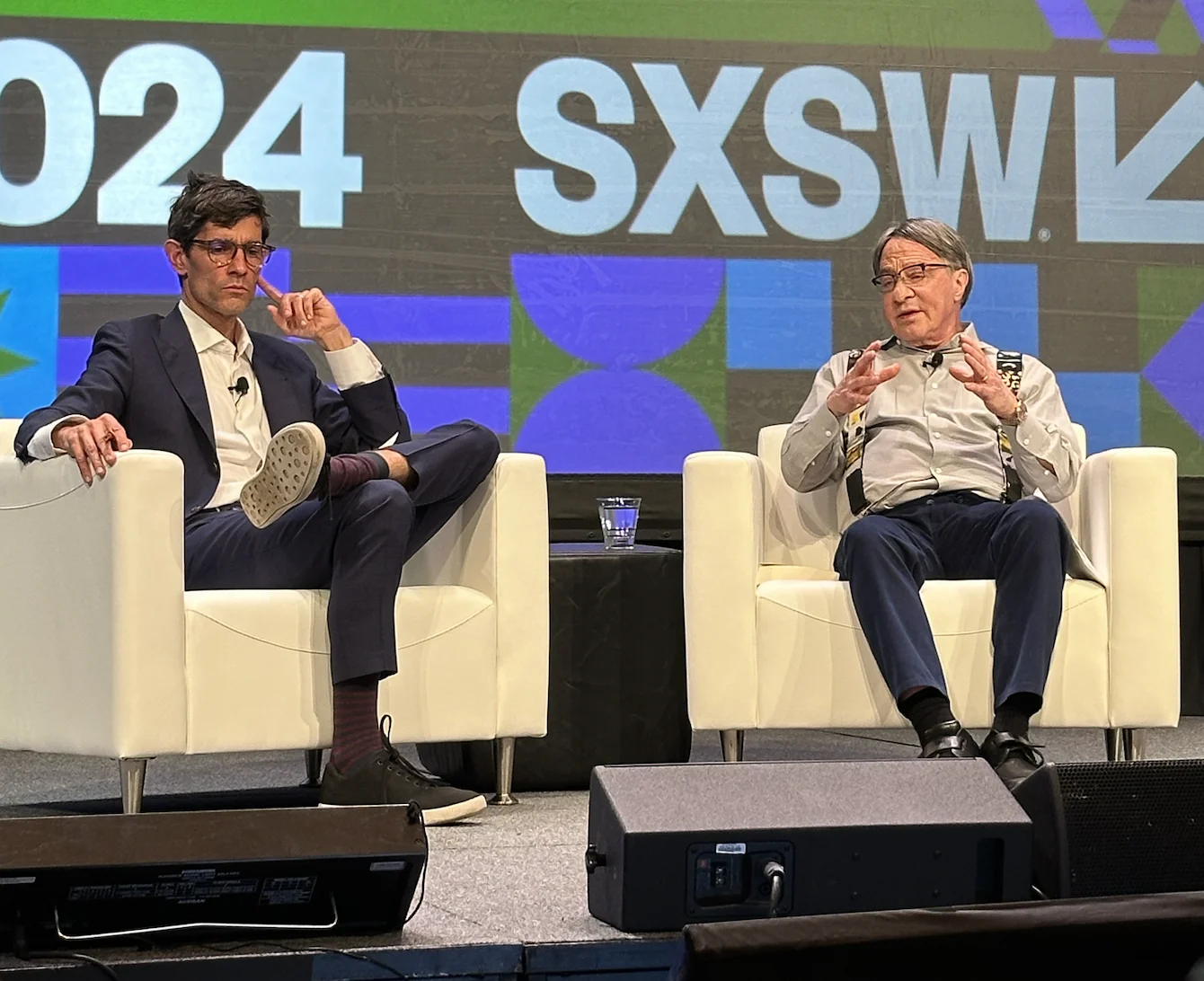
The Godfather of AI Singularity was there
Ray Kurzweil seemed both overwhelmed and bemused by the turnout for his talk. Unlike everyone else, jumping into the AI fray, he’s been talking about his vision and roadmap for AI since the turn of the century. In the past, he was often dismissed as a fantasist. The Singularity claims that when we get machines that have exceeded our intelligence, when we can map our brains and replicate them (memories and all), and apply recursive improvement through interconnecting and sharing our knowledge, we’ll reach a mass consciousness event like a black hole, whose metaphysical gravity will be such that humanity will never be the same again. (Ok, when I put it like that, it does still sound quite sci-fi…) But Ray predicted we’d reach AGI or Superintelligence around 2029, and singularity by 2045. Recent developments put us potentially quite on track for that, and his updated new book “The Singularity Is Nearer”, launching soon, will say as much.
AI, Applied
There were also some interesting academic progress being shared. Things like weather prediction sat between Quantum Computing and advanced AI modelling – a useful reminder that while LLMs are powerful, they’re also only a small part of the AI puzzle and potential. Corpus Christi used AI to save over 10,000 turtles when it predicted cold weather fronts that would cause them to rise to the surface and get harmed.
While, Zach Seward from the New York Times, talked about his experiences of AI in journalism – the good, the bad and the ugly. His presentation here, contains the examples, which were an impressive array of applications of custom AI to raise the abilities of investigative journalism. And if the tools are good enough for investigative journalism, they should work for strategy, insight and creativity.
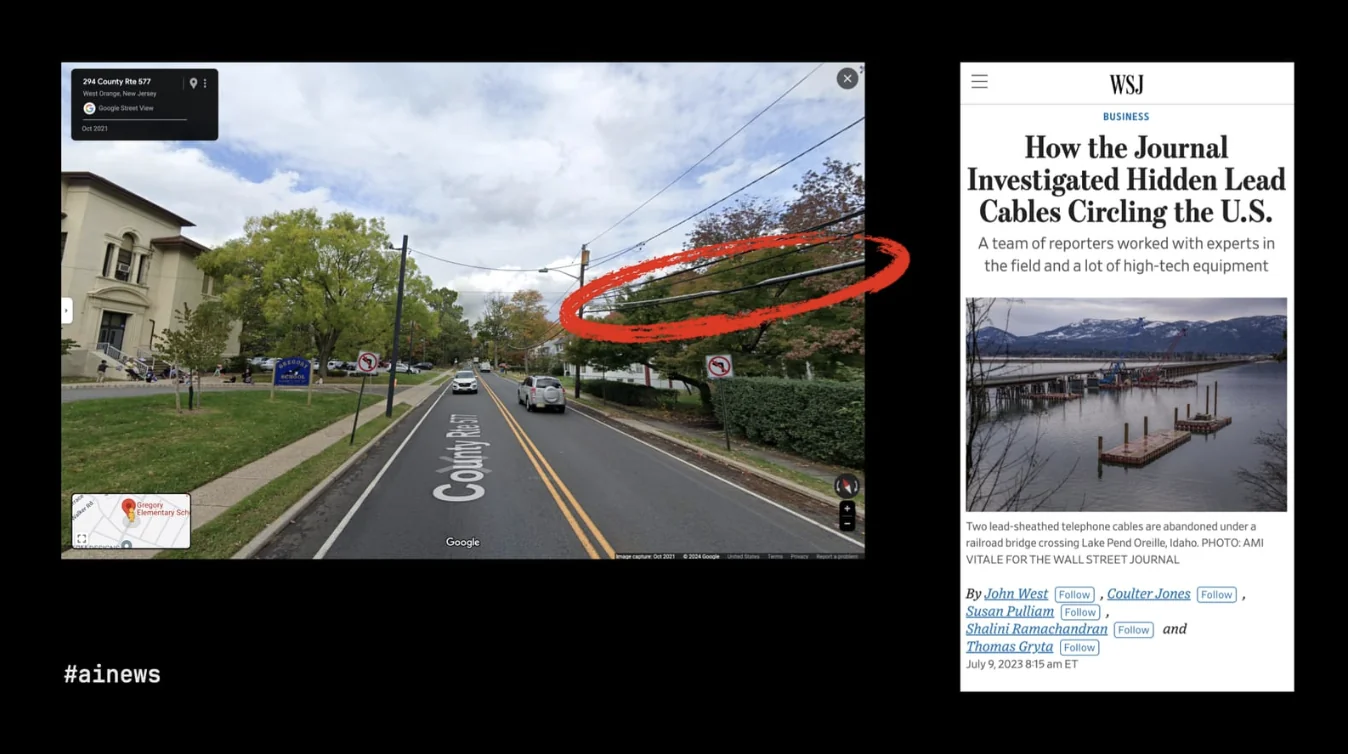
One of the most interesting, was the Wall Street Journal training a model to identify lead cabling around schools in New Jersey, from trawling Google Streetview images, allowing them to understand the scale of the problem, get a breaking news story, but also offer a solution.
Chase the contradictions - that is where the universe is showing you its seams. It’s inviting you to come there to play
The world is maximalist. We wanted to talk about the whole world but it’s impossible. That’s why we needed to make a multiverse film that can tell this story
Stories can be a compression algorithm - and stories do this all the time. Thousands of stories all connected, inter-dependent.
The system we have now are just fossilised stories of the past, and as those stories start to crumble, we have a chance to undo what the stories have done to us
AI is incredible. It may be the tool we need to cure cancer, give climate solutions. But, what stories will we tell ourselves to adopt this? What will this system do when we add AI to the mix?
And Joy Buolamwini, shared her poetry in code doctoral thesis on the algorithmic bias in facial recognition technology and the risks of bias across the whole system. This culminates powerfully in her piece “AI Aint I A Woman”. Her MIT thesis ‘Gender Shades’ proved that FRT algorithms are fundamentally biased and causing very real harm. This action has led the platforms to improve their technology, and also to stop using it for policing (which has led to several false arrests and imprisonments). The work setting up the Algorithmic Justice League is fascinating, and the concept of ‘coded gaze’ and being ‘excoded’ are two powerful concepts. (‘Coded Gaze’ is the machine equivalent of ‘male gaze’, while being ‘excoded’ is when an algorithm excludes or denies your identity).
She also had a point that our trust in algorithms is often too strong, and truly automating things will be harder than we think. One really great (terrifying) example she shared was of the National Institute of Eating Disorders, which fired all their call-centre staff and replaced with a chatbot, which they had to roll-back only 2 weeks later once they realised the chatbot was giving ‘eating disorder enabling advice’.
XR and Spatial were the biggest other thing since ‘the metaverse’
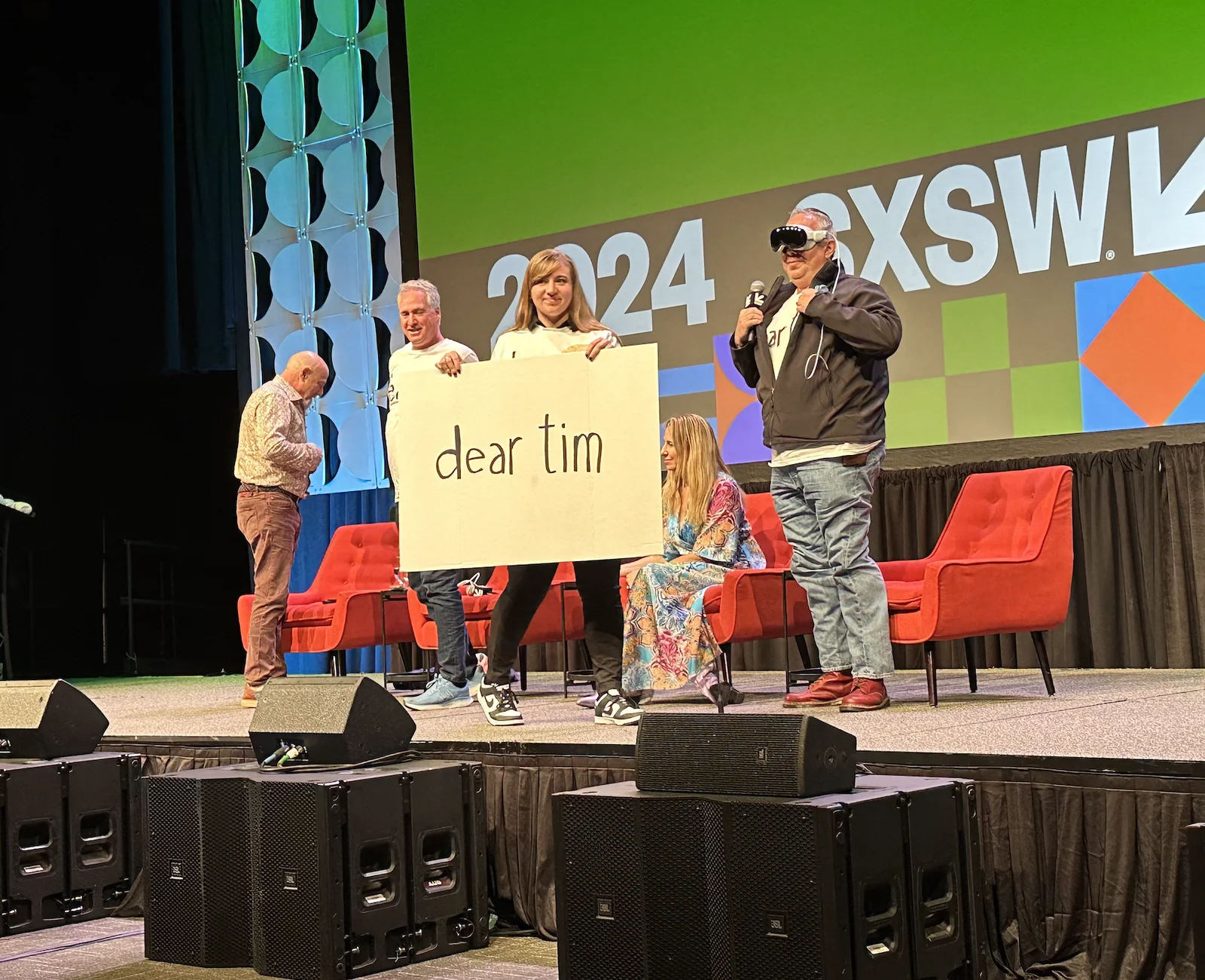
The hosts of ‘This Week in XR’ podcast, had a panel with the founder of Magic Leap, Rony Abovitz, and Joanna Popper, previously ‘chief metaverse officer’, where they penned a “Dear Tim” letter to Tim Cook about their feedback (with love) on the Apple Vision Pro.
The general take was that it’s ‘an expensive and impressive work-in-progress’. It’s too heavy, too front-weighted, too expensive. But, that for certain types of immersive entertainment, it could be pretty breathtaking, and that we’re yet to really
Rony was also pretty damning that it’s essentially a VR experience and that the weight and the experience of the passthrough technology, is the wrong avenue for developing this. And that the more promising angle is something like XREAL which are lightweight glasses with a screen overlay. (See-through vs Pass-through – pass-through is potentially a bit of an XR cul-de-sac, where you’re building an incredible screen that can recreate the world, rather than act as an overlay on the actual world).
Ultimately, the components of spatial computing need to entail a camera, a microphone, a connection to a computer and/or the cloud. So this could end up being a combination of watch, lapel pin, glasses, and yes, probably a mobile phone in the pocket. And that also becomes an AI powered software / experience challenge – linking together all of these devices into a spatial experience will be tricky for anyone, although a potential huge strength for a well curated walled garden like Apple.
New frontiers of solutions
There were great talks (and some less great panels) about the future of computing, robotics, XR and spatial, space exploration. I won’t cover them all, but a couple of interesting highlights.
BCI (Brain Computer Interfaces) for both medical and augmentation – the next 10 years will see some breakthrough in how we can understand the brain, train computers to understand the brain, and connecting them together. The nearside area with this is through medial application – ranging from understanding reactions to drugs, to providing non-chemical brain treatments, to helping those with diseases like ALS to connect with the world through robotics and virtual world simulations.
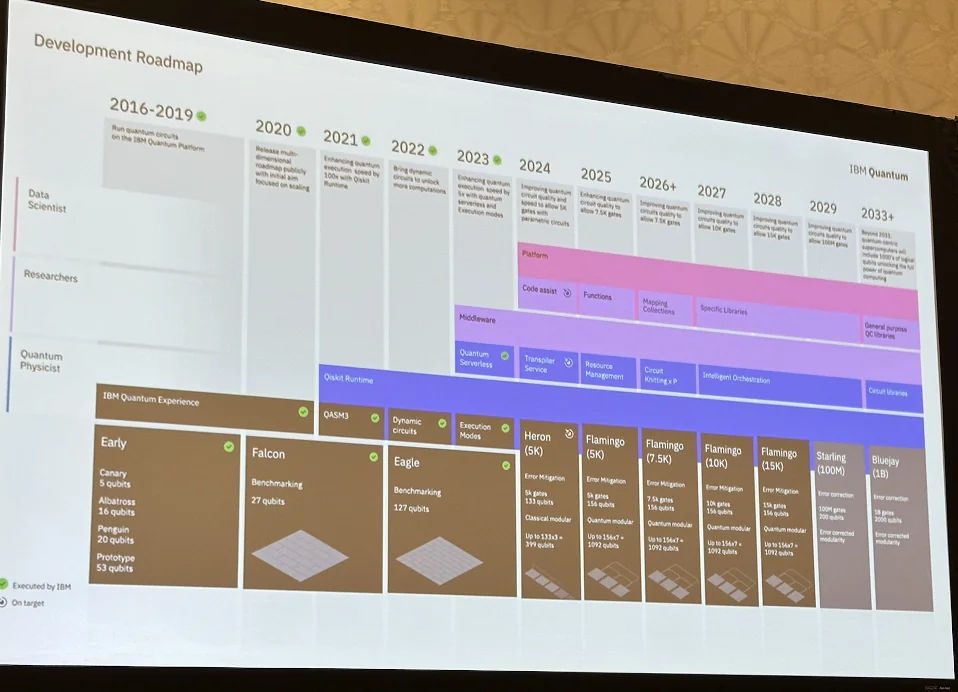
Quantum computing and non-typical computing approaches – quantum computing is complicated. (Duh). But, there are multiple companies getting close to a useful working model. Quantum has a strong theoretical potential to be very good at complex computations, and probabilistic computing (which is things like modelling the weather).
Space architecture was a talk I stumbled upon when the main talk I wanted to get into was full. So instead there was a talk inspired by Buckminster Fuller: Space Architecture for Spaceship Earth.
This looked at some of the systems thinking and technical and design solutions needed for us to build permanent settlements on the Moon, Mars (and beyond!) – an interesting area that is less speculative fiction than you might think. However, the most interesting twist, was how the constraints of space architecture, could also be inspiring or instructional for earth architecture – and that breakthroughts in materials and processes could lead to less wasteful, more sustainable, closed loop production and construction methods for Earth.
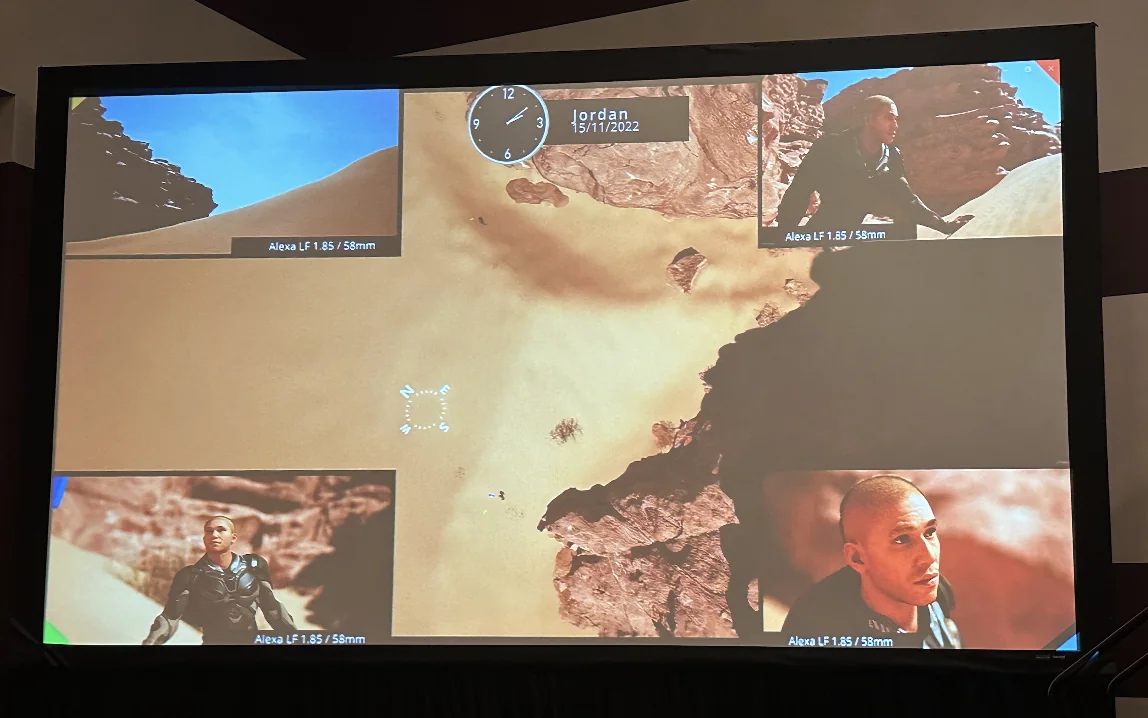
Digital twin production for Dune 2 also looked at the way that virtual world simulations could help with real world production. Denis Villeneuve shoots for real as much as possible. So while the ornithopters and space landers were VFX, the shoots in the desert, and the explosions were real. However, shooting accurately in the desert brings some challenges – one in particular was shadows and shade. The production team visualised all of the different parts of the locations, so they could model when the sun would be and how they could work with the shadows.
They could also put Denis into VR to preview the locations, the scenes and the prop design – for example seeing what the finished ornithopter interior would look like. Which felt like a pretty cool use of Unreal models for real-world production.
There were hundreds of other tracks, in music, creativity, gaming, psychedelics and culture
Ranging from talks on Gen Z attitudes to sex scenes in movies, to the music industry and fandom, to medical research with the Chan Zuckerberg Institute. Dylan Mulvaney a panel on “when beer goes viral: the role of brands fighting hate” and the CEO of Patreon talking about “The Death of the Follower” (as a concept, rather than literally) are both worth a watch.
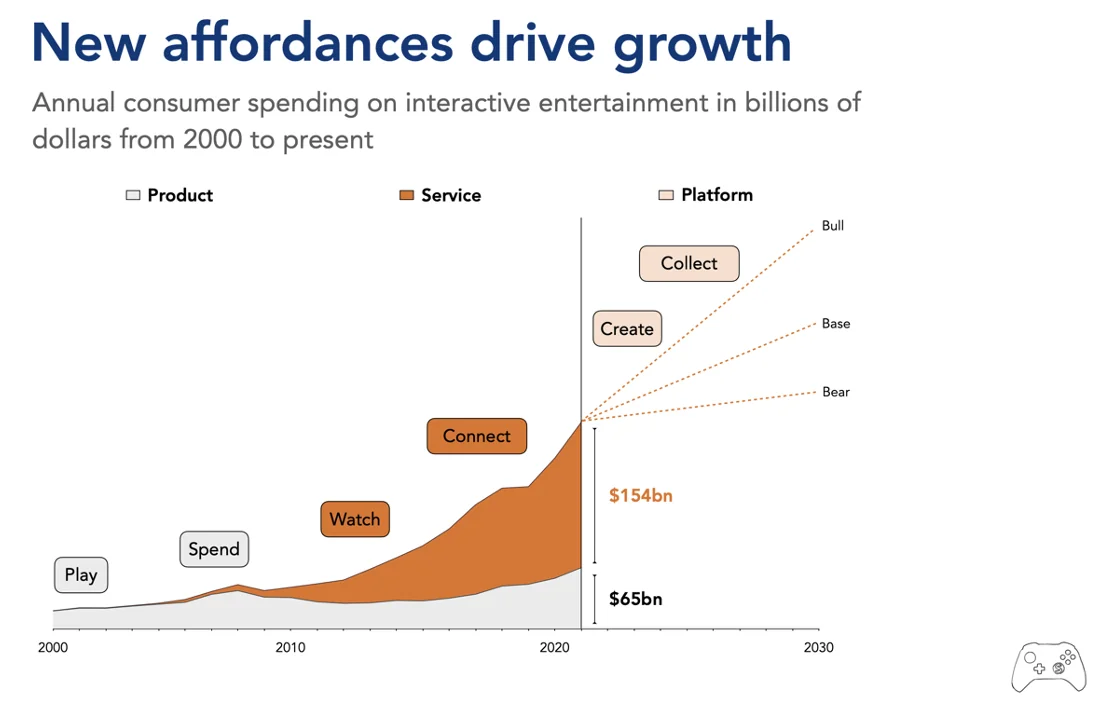
I didn’t make it to any psychedelics talks (of which there were a lot), but I did make it to some gaming talks. Joost Van Dreunen did a great talk about the state of the gaming industry, and helpfully also shared his charts.
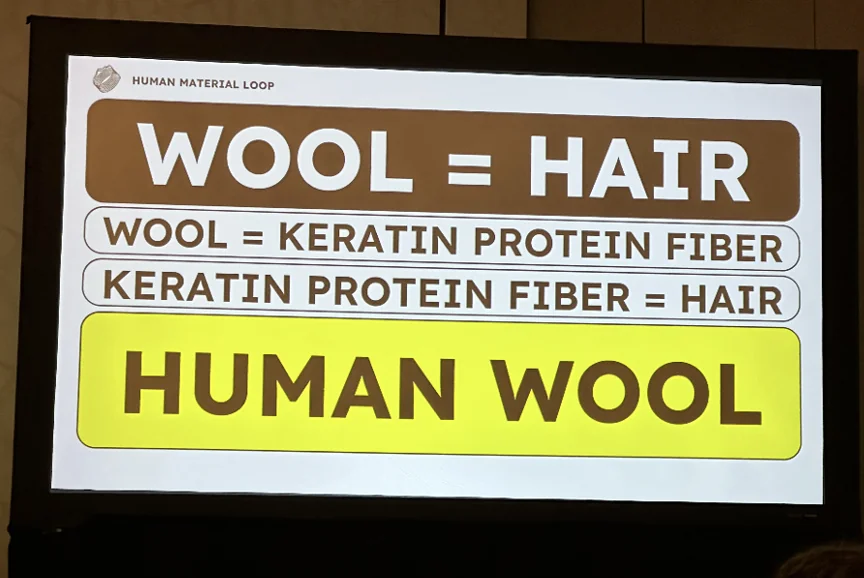
And there was even a talk about Human Hair as a new and overlooked material. In one of my favourite talks, we heard about how much hair is thrown away at salons around the world (2.2b kgs), and how this can easily be processed into a hugely versatile, robust, water resistant, anti-bacterial fabric.
Hair, after all, is just human wool. Why do we love our hair when it’s attached on our heads and think it disgusting when it’s cut off? Why do we think of wool as ‘clean’ and hair as ‘dirty’?
If it had been a Dragon’s Den pitch, at the end I’d have shouted “I’m In”. Their plan is to scale up their factory to produce 500 million kg of hair over the next 10 years, both saving that waste to landfill, but also reducing the need to produce new material elsewhere. It wont replace cheap polyester, but it brings a new part of the circular economy into play.
It wasn’t all talks… The music, film and comedy all had something to bring to the table
While I wasn’t there for the film festival, I did go to the screening of “The Anti-Social Network” coming to Netflix in April. This was a terrifying tour-de-force of internet culture, specifically focusing on 4chan, its origins, and its impact, ultimately leading and contributing to Qanon and the storming of the Capitol Building on 6th Jan.
If you want a fascinating deep dive on unintended consequences, the dangers of anonymous online communities and the way that misinformation spreads, it’s pretty excellent. Documentaries are kind of like extremely well put together keynotes that can bring something to life in a deep new way.
And the comedy also brought some incisive storytelling. One comic railed against the dangers of nerds ruling the world. As we look at the algorithmically powered attention machine, capturing our data and our eyeballs, nudging us to scroll more, want more, and worry more. Maybe the jocks were right?
Alongside this, it was also a space to premiere and launch big new shows for the year – with big activations for Netflix 3 Body Problem using special build projection hologram (apparently by Holotronica – a South-West England based company – so truly South By Southwest…!)
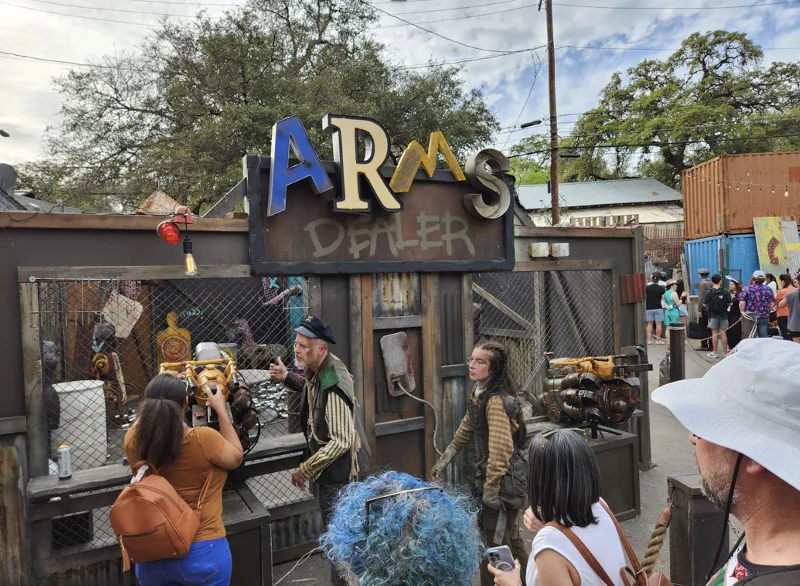
Fallout, a TV series launching on Prime based on the game, also built an immersive experience on the outskirts of town (and had branded busses ferrying people to and fro).
So – to summarise, there was a pretty consistent theme around a new “tech super-cycle” emerging, underpinned by AI, but also looping in a world of spatial devices and technologies. There’s undeniably some over-hype around AI, and some concerns around its impact on the world. But there was a definite energy of experimentation and new possibilities emerging.
Feel free to share on any or all of this on. Some of it will make its way into a deck, or if you want more on anything specific, let me know.
It’s been a while again – there’s no excuse beyond there’s a lot going on. There are a couple other updates that I’m keen to write-up and share. We are planning some opportunities to try and get some hands-on experiences with the Apple Vision Pro as well.
Virtual and the physical worlds collide
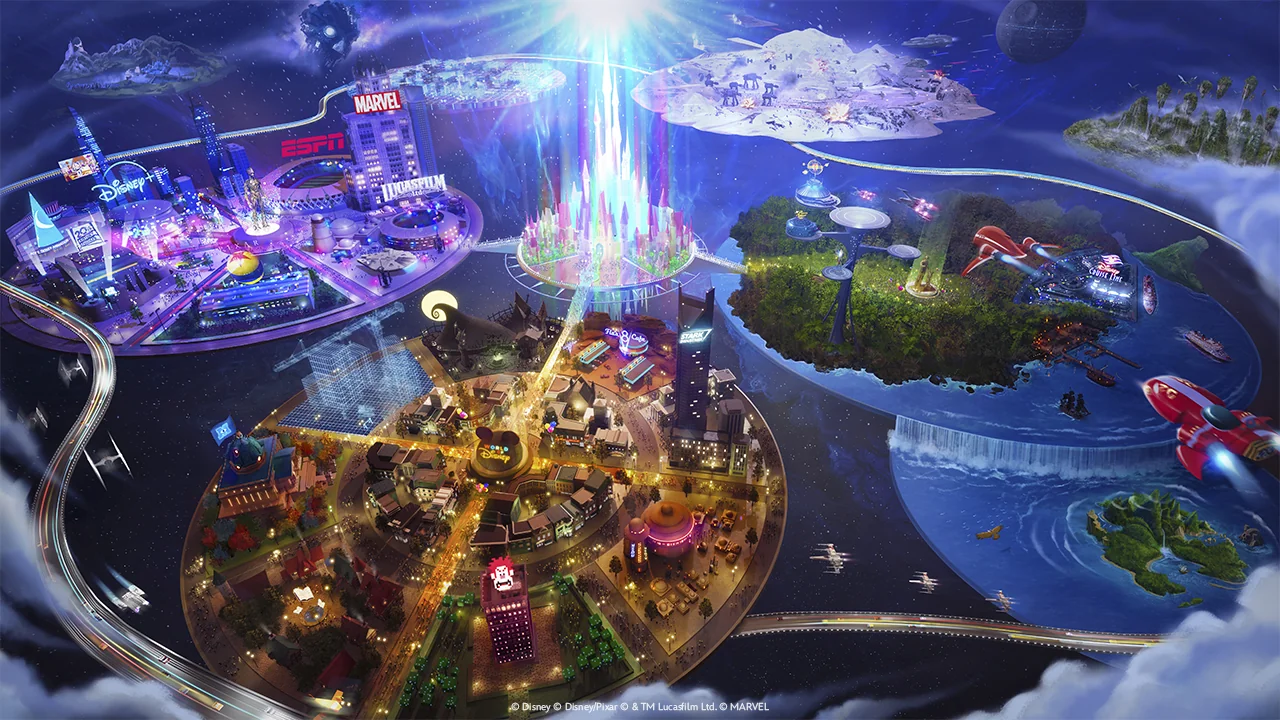
A couple of interesting things have happened at the same time. Apple have launched the Vision Pro, offering the most credible prototype of the potential of Mixed Reality. A clear statement of intent that they’re committed to building a post screen way of experiencing the digital world. Meanwhile, Disney have just announced a $1.5 billion stake in Epic, as part of building the cross-franchise virtual theme park of the future, and bringing their IP to life in vast virtual worlds.
Apple Remains Gloriously Out-of-Sync with the Hype Cycle
Apple do a good job of marching to the beat of their own drum. Quietly backing themselves without ever piling onto trends or bandwagons.
And while Apple are somewhat on the sidelines of the current AI hype cycle (although many will point out that there is a bucketload of AI built into the iPhone photography technology so they are a lowkey big in this space). They are also gloriously late to the metaverse and AR/VR/XR/MR party. While Meta has somewhat moved onto new spaces (while continuing to keep a very solid toe in the virtual world / metaverse landscape), Apple have come out with one of the most expensive, robust, and potentially impressive new pieces of mixed reality spatial computing hardware at exactly the time when no one dares mutter the words ‘metaverse’ in public.
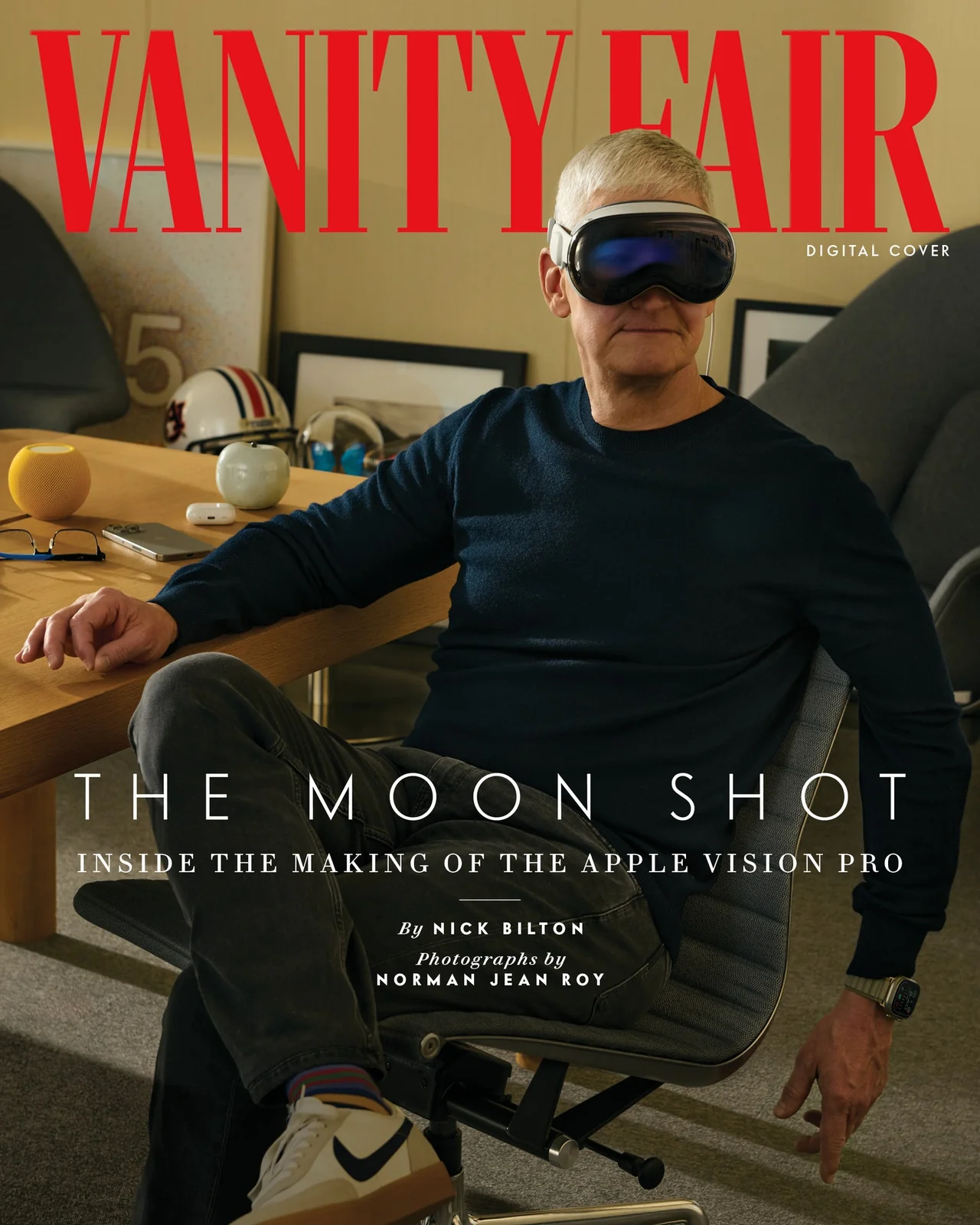
And Tim Cook has gone all-in on this device. It’s the first fully new device launched under his watch. This profile from Vanity Fair is a fascinating insight into the thought process and aspirations behind it.
The breathy review, from a self-confessed sceptic, gives us all reasons to be excited about how interesting and potentially different this experience could be.
The Metaverse By Any Other Name, Would Smell As Sweet
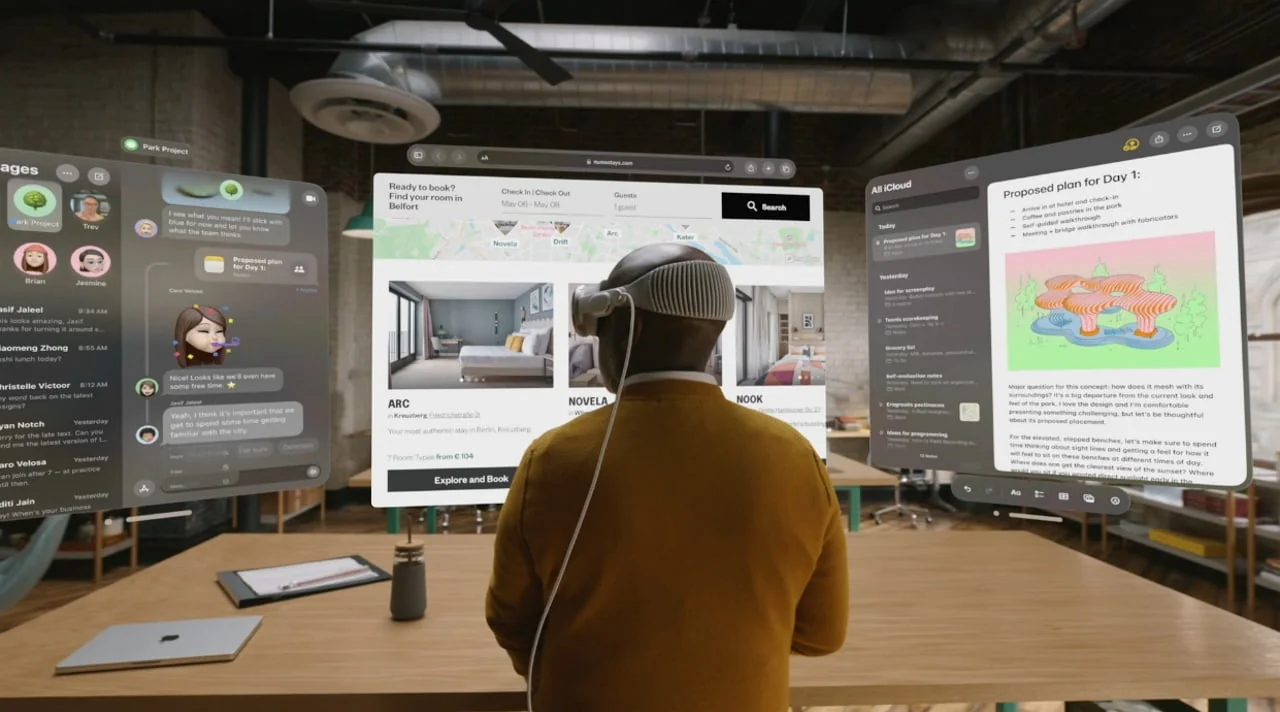
The Apple Vision Pro is rooted very much in the non-gaming, non-virtual world space. It blends real-world and virtual overlays with an incredible screen as ‘passthrough’ technology. It utilises spatial and gesture interfaces. And its price-tag and feature-set positions it firmly as an enterprise level (and prototype level) device.
Apple have also insisted that developers refer to whatever they do on the Vision Pro as spatial computing. Not AR, not MR, not metaverse. This could potentially be partly philosophical (they like to carve their own path) and partly staying away from some of these loaded terms.
An engineering feat, that also shows how much further we need to go
There are many prototypes for lower fidelity or narrower Augmented Reality glasses. CES was full of devices that were roughly the size and shape of regular glasses, but with a digital overlay to augment reality.
But this augmentation is fairly subtle and low-fi. Whereas the Vision Pro aims for a fully blended Mixed Reality. The experience and the feedback has been that this feels like a major step up. A leap on from Magic Leap. A more complicated blend than the more VR focused Meta Quest 3, which only features a little bit of ‘pass-through’ in an otherwise predominantly VR and gaming led device.
When it works, you feel like you’ve got an immersive digital overlay, on top of a real-world experience, with minimal latency. It offers quite an exciting glimpse of the future.
If you watch the Apple Vision Pro teardown video – it’s one of the most complex and component packed pieces of gear they’ve looked at. It’s $3500 price tag is around a hardware costs reportedly of $1700.
But, it’s not going mainstream any time soon
All that said, it is still big, heavy, relatively cumbersome. It’s heavier than some iPads – so the experience can be a bit like strapping an iPad to your face, and that’s with a separate battery pack and cable that is also weighty and needs charging every 2 hours. The mixed reality passthrough has a slight lag. The ‘realistic eyes’ display is interesting, and good but not great. (And at times creepy).
There aren’t many situations where it replaces another devices, and the applications and use-cases for it are still in the early days. The dream of spatial computing is also that it allows a more intuitive and organic experience of the world around you – rather a separate digital world, mediated through a screen, you have the two seamlessly blended. The risk with the Vision Pro is that it’s a brilliant, incredibly engineered VR screen that’s strapped to your face – but it’s still a screen.
The Next Generation of Glasshole?
There’s also an amusing plethora of memes and reviews, of people wearing the Vision Pro while crossing the road, in a restaurant, driving, in the grocery store and more.
The aesthetic experience is more otherworldly than Google Glass – which still led to the ‘glasshole’ term. While it’s planted a stake in the ground for headsets that one could wear out in the world, there’s also a lot of society to catch up.
This mix of intrigue, amusement and hesitation may provide the biggest enduring barrier to wider adoption and acceptance. Perhaps this is why the corporate, enterprise and industrial uses are a bit more of an initial focus.
But it will be interesting to see where society nets out on it. One wonders if people might be getting a touch of ‘metaverse fatigue’. The flurry of innovation and pushing of these experiences is led by tech vision, not following consumer demand. And while the sales of Meta Quest headsets are strong, penetration is still low. It’s hard to see whether people really want it, or are ready for it.
Building the developer ecosystem
Lastly, the real test will be around the quality, depth and breadth of the content and applications on the Vision Pro. It’s too early for much experimentation on it, and the relatively small number of devices sold will limit the extent that companies will sink a lot of effort into developing for it. But it desperately needs some ‘killer apps’ – and notably ones that are novel and not gaming.
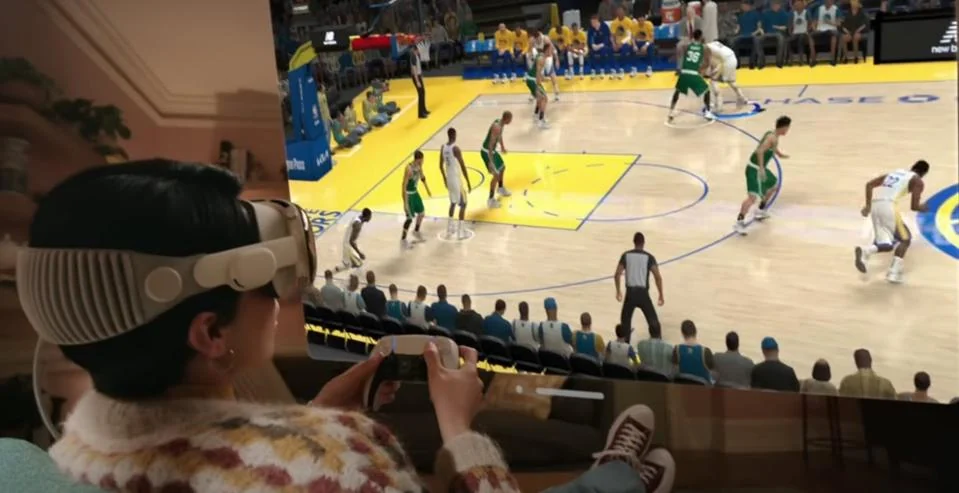
That said, Apple has credibility in this space, and partnerships to boot. At launch, it comes with Apple Arcade and the Apple TV content you’d expect. It also comes with partnerships for Disney and ESPN – both a great fit for immersive experiences and content.
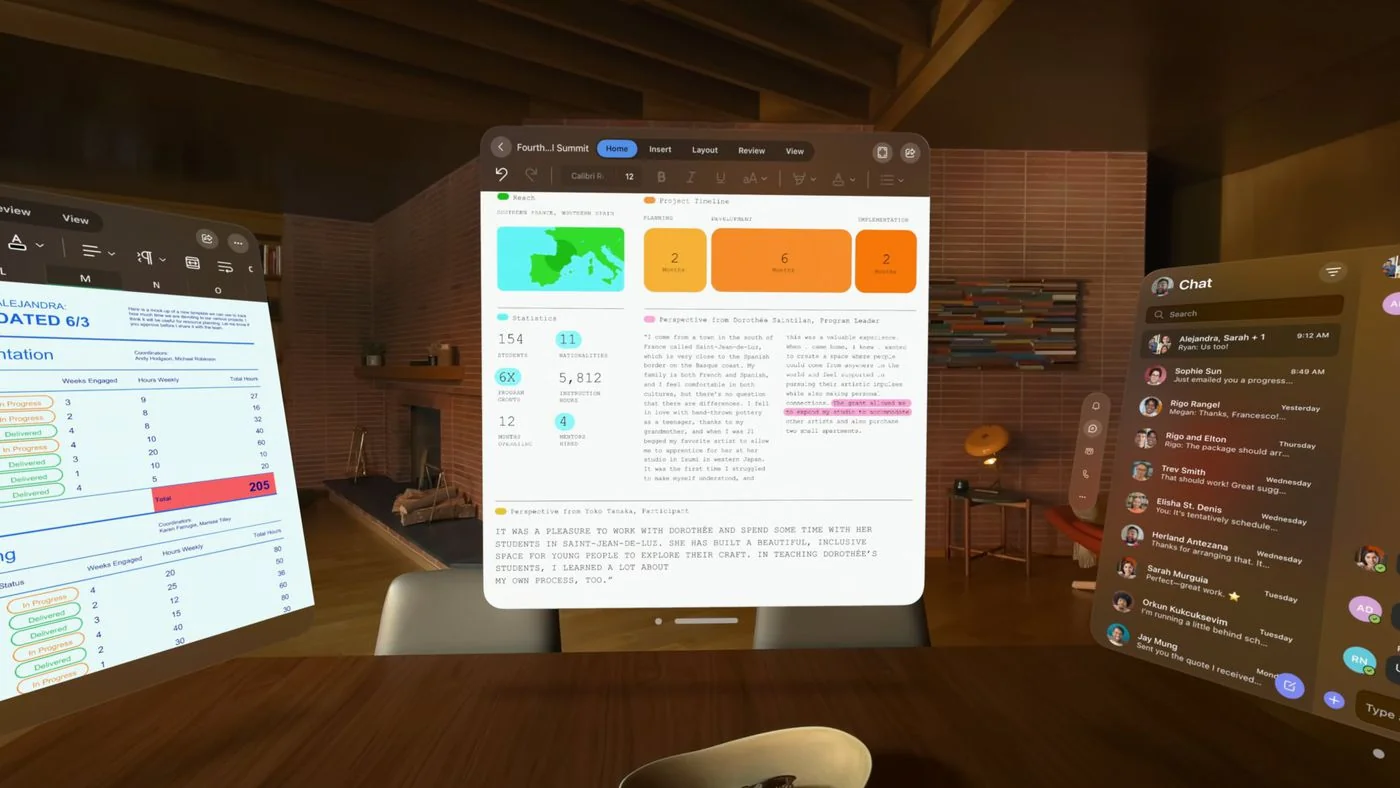
It also comes with MS Office – IMMERSIVE SPREADSHEETS! And most of the apps you expect on your Macbook or iPhone ported over to the Vision Pro. I’m yet to see how the spatial computing, gesture led way of writing decks on PPT will play out.
The summary so far, is that it’s an engineering marvel. It delivers some real ‘wow’ factor. But it’s still early days, and still the first iteration of this device. Optimistically, it’s proven that a magical, blended, spatial and immersive experience is possible. But if VR/AR/XR development has told us anything, it’s that building a ‘wow’ headset is the first step on a long journey, not the destination. We’re not there yet.
And the brutal reality of a non-essential $3500 piece of tech is going to be a tough hurdle to overcome beyond quite narrow use cases. The expectation of it is premised on the fact that it gets significantly lighter and cheaper over the next couple of years, until it reaches a tipping point. And if anyone can do that, it’s probably Apple.
In an adjacent, walled off virtual garden, we also have Disney and Epic
At the same time, we had our announcement that Disney was doubling down on its partnership with Epic. Fortnite has long had a deep seam of Disney properties in its games – new Marvel and Star Wars releases and characters all had high profile in-store cosmetics and in-game events. From a playable light-saber device, to shoppable Deadpool emotes in game.
But this partnership is a significant step up. Disney share price has surged off the back of it.
This new partnership might end up being the virtual glue that bridges the gap between their physical parks, their streaming services, their IP and their fans.
We don’t yet really know the full roadmap of what Disney has planned, but it has interesting analogies to a virtual theme park. Zones and spaces for different ‘IP worlds’, loosely connecting ESPN, Marvel, Star Wars and more.
It also shows the way that Epic, Roblox and Minecraft are evolving into platforms, not games. The big launch of Lego x Fortnite was another example of this – becoming a world building platform that could partner with Lego to create a huge parallel experience that the users of Fortnite could tap into and be part of.
In a pretty real sense, these immersive virtual world platforms (AKA games) are already more metaverse than the recent ‘metaverse’ ever was, and will continue to be.
So, what does this all mean for brands and marketing?
How should your brand turn up in a mixed reality spatial world through Vision Pro? (And, perhaps also importantly, should it?)
Does / should your digital experience port onto this new world?
How does your brand IP and your distinctive assets translate into immersive experiences?
Where does spatial computing or mixed reality fit into or enhance your brand experience? Does it play a role to augment a physical experience?
If these devices take off, how can you entice and accommodate them within your spaces and brand worlds?
Where are your audience spending their time? What are they doing there?
Overall, it feels like there’s more experimentation and playfulness going on that we’ve seen in a while. And it’s exciting that this is happening alongside the huge momentum of AI rolling out in various dimensions.
In short, it seems to be about as good as GPT-4 on single modalities, especially text – eg just doing text questions – but it does some very interesting multi-modal things. So it can interpret images, diagrams and more.
Although Gemini is yet to launch it’s most powerful model to the public, and has a little longer before it will launch in Europe, it’s a welcome addition. It’s not a radical departure from GPT-4, but it’s an improvement, and it’s also good to have more horses in the race.
AlphaCode 2 (the coding part of the new Google / Gemini model) also seems to perform very well – and competent coding models can really be part of some surprising changes – as it opens up the possibility of agents that can code their own improvements, or more autonomous solutions to problems that go beyond simple text / image responses. If an LLM is the brain, the ability to write software can give it arms and legs. (Enter sci-fi dystopia!)
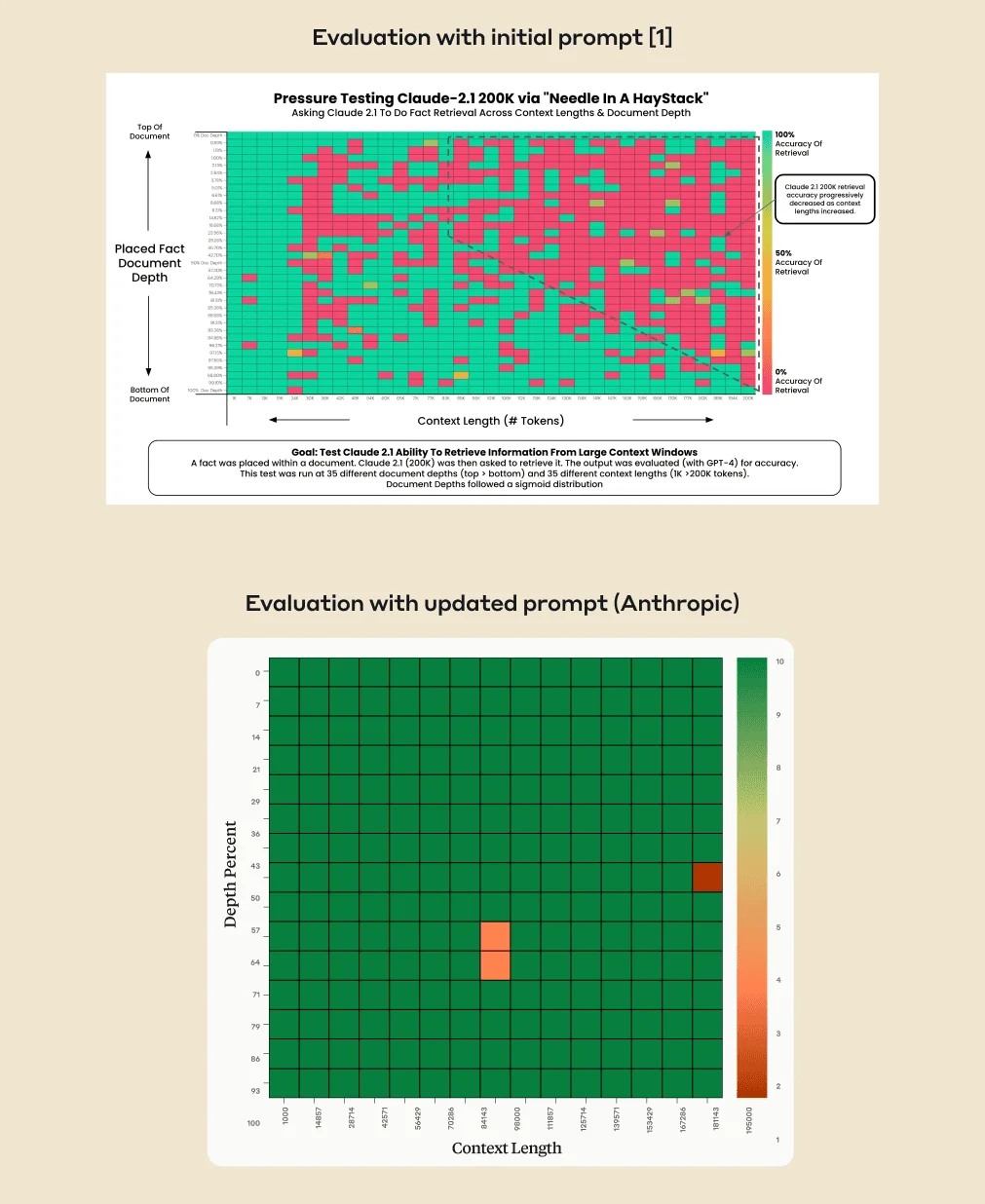
One of the big potential strengths of large language models is if they are used to ingest and react based on long prompts and documents that are uploaded to them. So being able to cross-reference or pick insights out of a 100 page document. However, LLMs don’t have perfect recall – they selectively pick things from the documents they ingest or occasionally play back the wrong answer. Tests have shown that they tend to ignore the middle of long documents a bit more. So if you give it a 100 page trend report, and ask for ideas for a specific category, it may well overlook some of the stuff in the middle of the document.
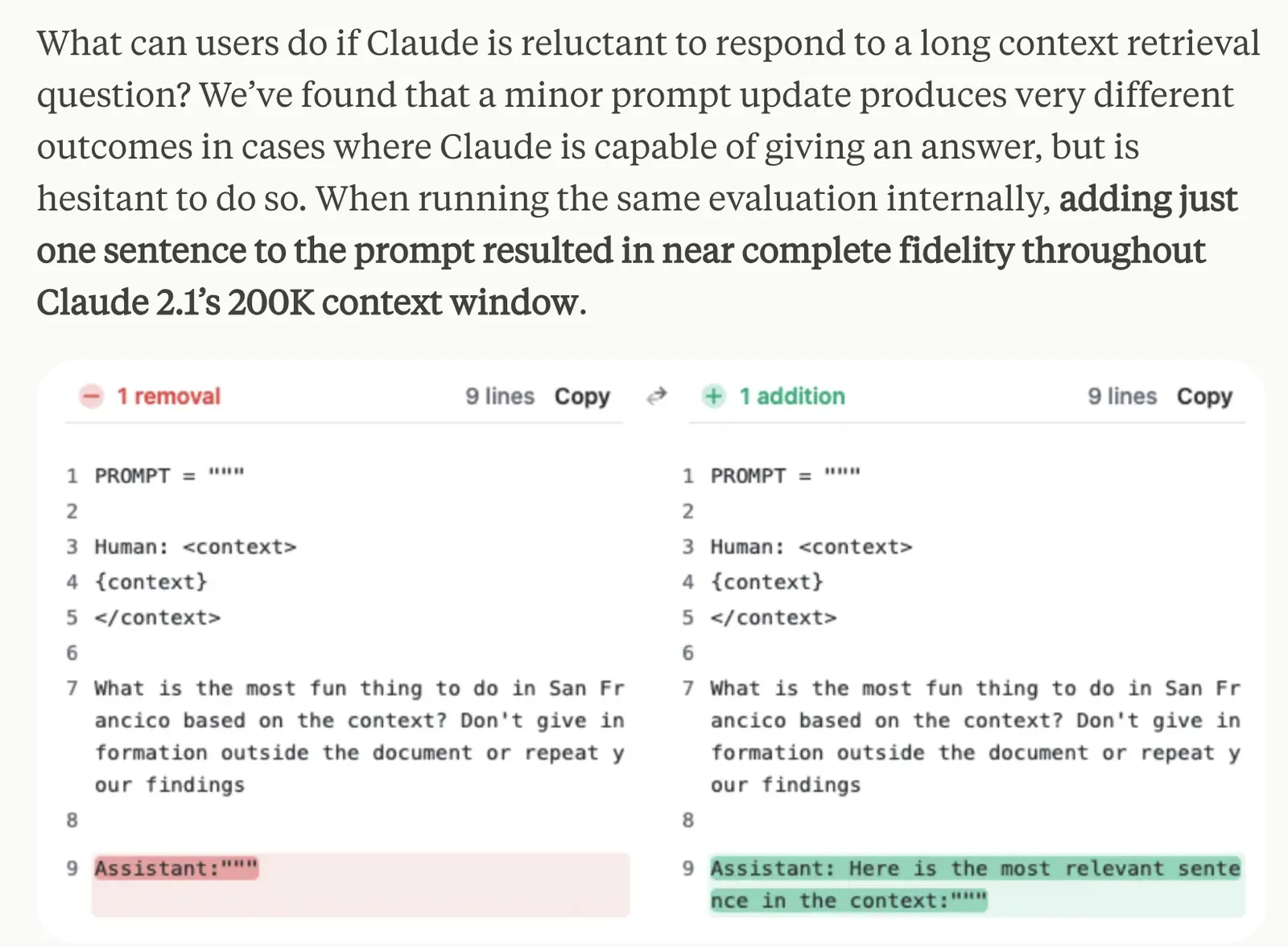
But this looks at how and why that works, and some interesting techniques for how to refine it. Adding this line “Here is the most relevant sentence in the context:”, made the accuracy of Claude2 on long documents go from 27% up to 98%
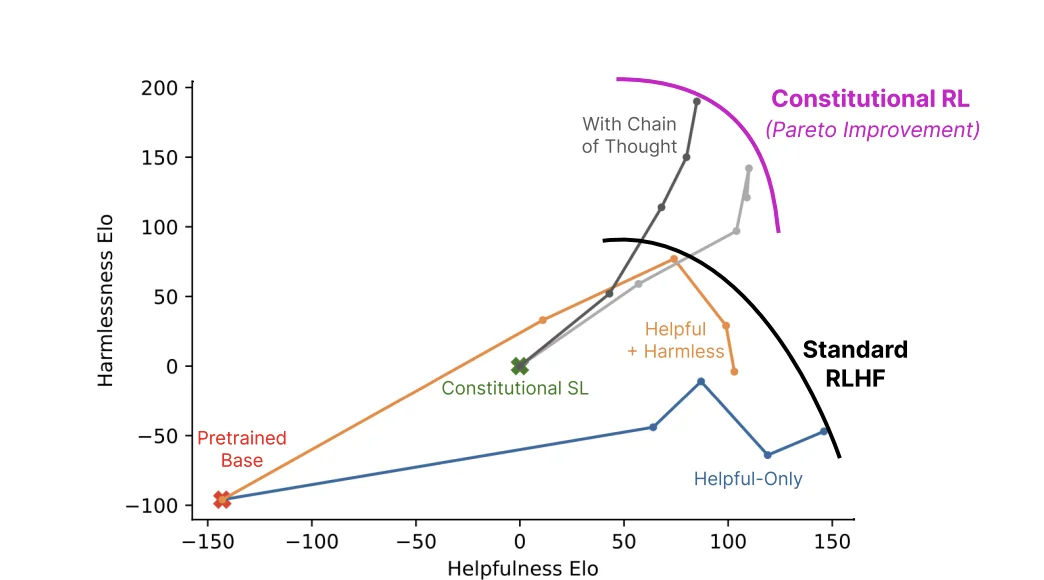
Anthropic are another interesting player in the space – they’ve also been pretty progressive and open in the debate around ethics for their model, with their constitutional AI approach. As a huge summary, this sort of gives their LLM the framework through which to teach itself to be ethical. A core set of principles supply the ‘constitution’ and then reinforcement learning have sort of ‘put it into practice’ in Claude2. They’ve then open-sourced this with a paper (attached).
This allows for a safe, but helpful model to emerge:
Meanwhile, we’ve seen some attacks on GPTs, which have been used to reveal confidential data. These ‘prompt injection’ attacks look to over-ride or trick the core prompt. This of it as a bit like phishing, but instead of getting someone to reveal their password over the phone, it’s trying to get an LLM to tell you a secret.
But, it remains to be seen whether there’s any lasting fallout from the OpenAI board fallout of a couple of weeks ago. There is rumour of their powerful new model, Q*. This piece interestingly unpacks what it might entail. Potentially a blend of different learning techniques – notably the powerful learning and reasoning that was so key to some of the Go and Chess playing engines, combined with some elements of LLM. So it would be a more strategic and actively planned approach to responses.
Other pieces also consider that it might be looking at a far expanded use of synthetic data in the training of the model. Here, again, where quality data is a limiting factor, an ability to create useful simulated data to learn from, can overcome this challenge.
Some interesting things I’ve seen around this in the world of robotics as well, where the learning process for robotic movement is slow, but a digital twin combined with synthetic data from simulations allows a far faster way of learning (and with a lot less ‘bumping into things’. For example, this study from John Hopkins university shows robots trained on synthetic vs real data perform better in real world tests.
But until Q* is here, it’s all just guesswork.
So, while there’s still lots of good stuff that can and should be done with GPT-4 and other existing models, there still some interesting evolution happening.
This is an interesting article about the experiments in autonomous AI agents. Basically an extension of the kind of functionality of ChatGPT, but instead of a human-to-AI chat, the AI is given a task, and it can then iteratively chat with itself, coming up with prompts and writing code and researching solutions to achieve that task.
At the moment, this is very much an experiment – autoGPT has been around for a while, and while the potential is exciting, the reality at the moment tends to involve bugs, glitches and technical challenges.
But, for me, it gives a pretty exciting, sci-fi glimpse at a near future. Where we have a series of different personal ‘agents’ helping out on various tasks around our life.
Imagine an agent which:
House-bot: Continually reviews, refines and switches your household finances – always chasing the best deals and the changing rates, while also knowing everything about your household needs
Investor-bot: reads and assesses all the latest reports and figures, but also understands your risk levels and investing style, so can make investment decisions automatically, watching the markets and developing strategies 24/7
Holiday-bot: a tool you task with the specifics you want from a holiday, the dates, the hotels you want, and then it researches, checks flights, builds an itinerary and even can book and rearrange things
Study-bot: an agent that understands our learning styles, the topic we’re learning and the goals or objectives, and then provide a socratic learning experience and dialogue to learn anything new. Duolingo is already looking at elements of this within their language tutor function
It is also quite interesting for gaming and narrative experiences:
You can create virtual characters with rich, deep, unpredictable personalities and stories – a bot that writes its own backstory, and then reacts to all interactions with you
This could lead to fully open-ended games, where the narrative is emergent and almost sentient
We could all have an AI ‘companion’ that is designed to get to know us, enrich our lives, give us positive nudges and motivational speeches and advice
In the same way that we have a digital life and self (the person we portray on IG, our gaming avatars, our data trail, our shopping trolley), we could also end up with a parallel world of AI agents surrounding us. You could even end up with a kind of ‘chief-of-staff-bot’ who helps manage and maintain these bots. But also whether these become public access, personal and fine-tuned to you, or something that is controlled by big companies and becomes a new layer of inequality in the world. If only the wealthy can afford to license a great ‘investor-bot’, or a custom ‘study-bot’ then it could lead to some tension and challenges.
A lot of this requires either very tightly defined and controlled tasks, or an awful lot of risk. Even if my investor-bot is great 90% of the time, it’s not going to be great if 1 time in 10 it loses it all.
However, it’s interesting to see how and where it could evolve beyond where we are today!
If you want a long-read about this, this piece on multi-modal models is also very interesting – as tools are able to switch between different tasks and inputs (or modalities) they become more self-sufficient. Like how the senses we have allow us to navigate the world, the more an AI can understand and learn from, the more able it will become.
So Meta Connect was this week, where there’s a series of talks and presentations about the future for Meta and the focus.
While one of the major themes was about AI everywhere, but Mark Zuckerberg is still very much passionate about creating the next generation of virtual world experiences and ‘the metaverse’.
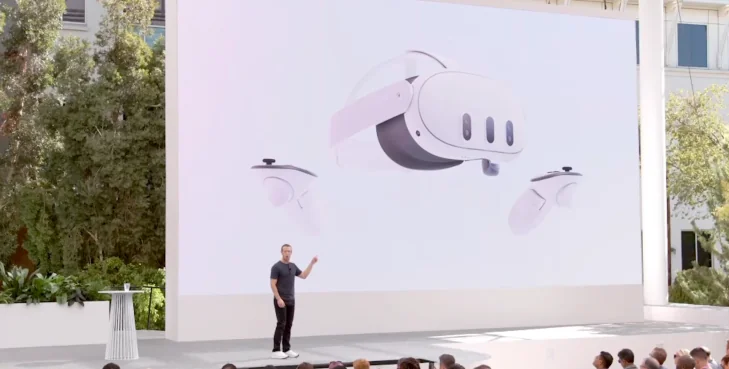
He launched the Quest 3 – the best almost mainstream headset yet (probably):
It has passthrough (eg a camera so it can blend what’s in the room / real world, with virtual world creating Mixed Reality.)
It has upgraded chips and processing and 10X the pixels of its predecessor.
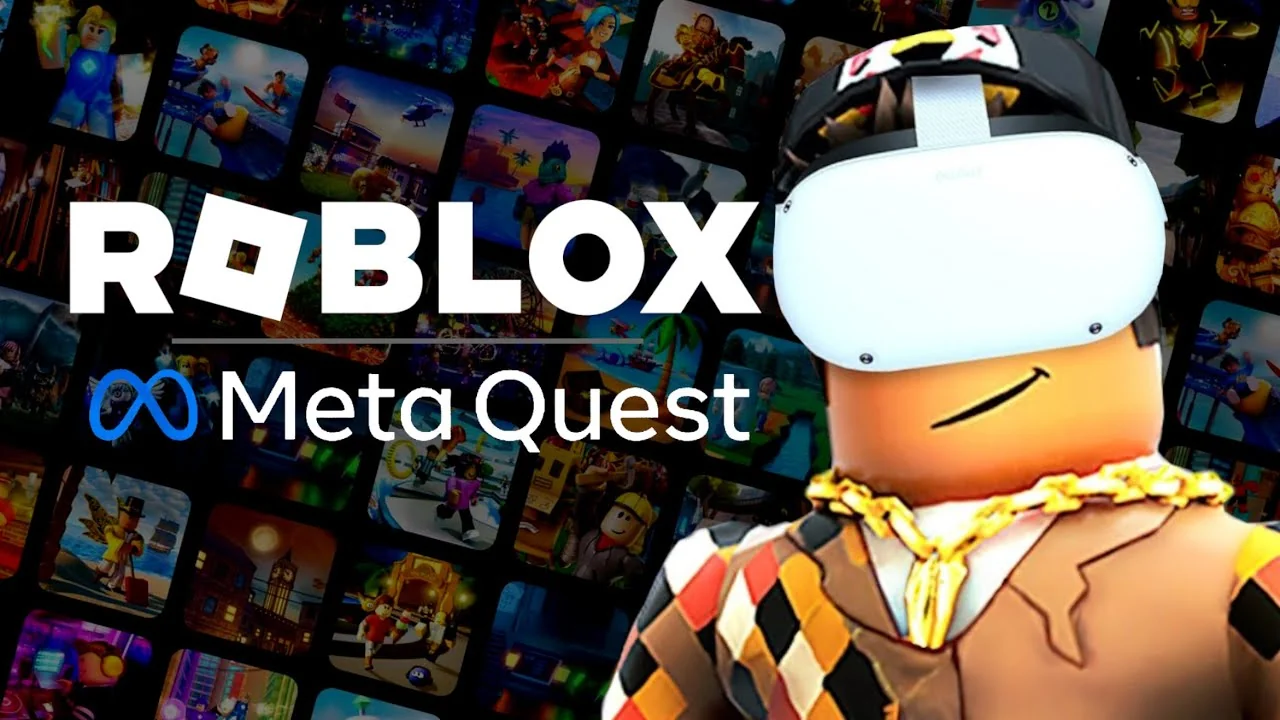
He also announced a range of partnerships with gaming to increase its appeal and partners. From Xbox gaming, to Roblox.
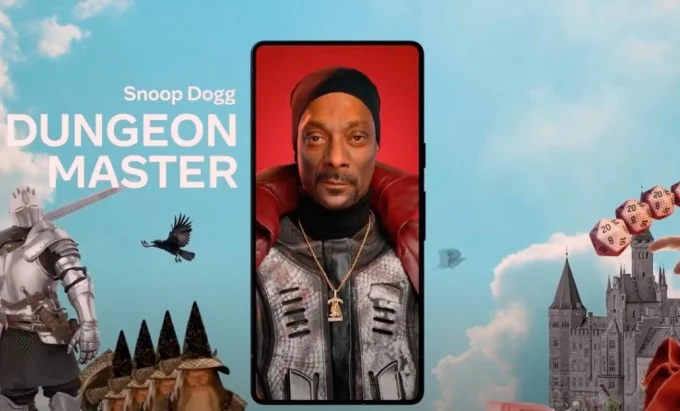
Their AI licensing is pretty cool – where they’ve done a deal with some decent celebs to use their likeness / avatar in chat interfaces… I particularly like the option to have Snoop Dogg as dungeon master for your Dungeons and Dragons campaign. They’re basically chatbots with personalities refined by Meta, using their Llama model. (Like ChatGPT).
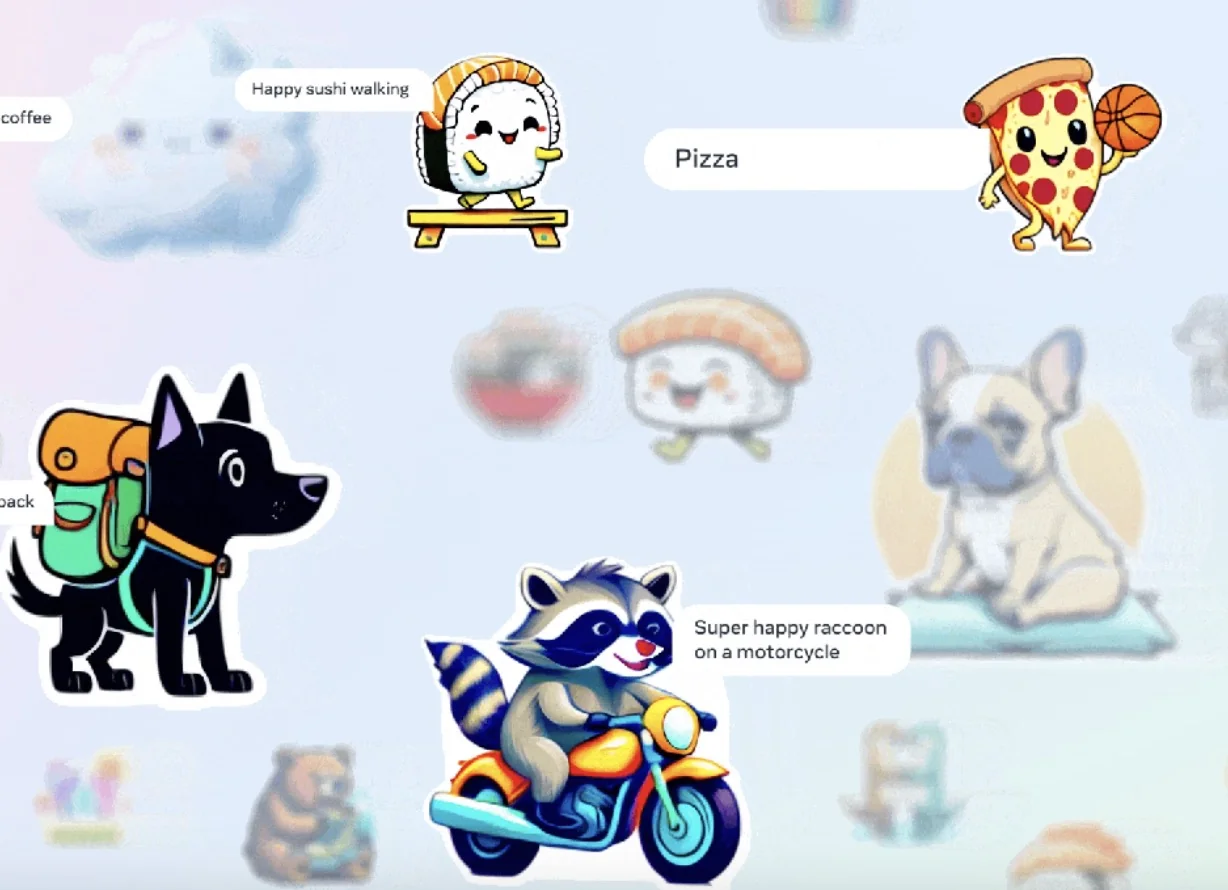
They also announced Gen AI Emoji Stickers – not an earth shattering new use case but kinda fun:
And lastly, they’re taking a swing at a Meta version of “Snapchat Specs”. A Rayban partnership with a camera in sunglasses. Will it catch on? Probably not. But cracking smart wearables seems to be an ongoing fiendish problem holding back the evolution beyond the screen.
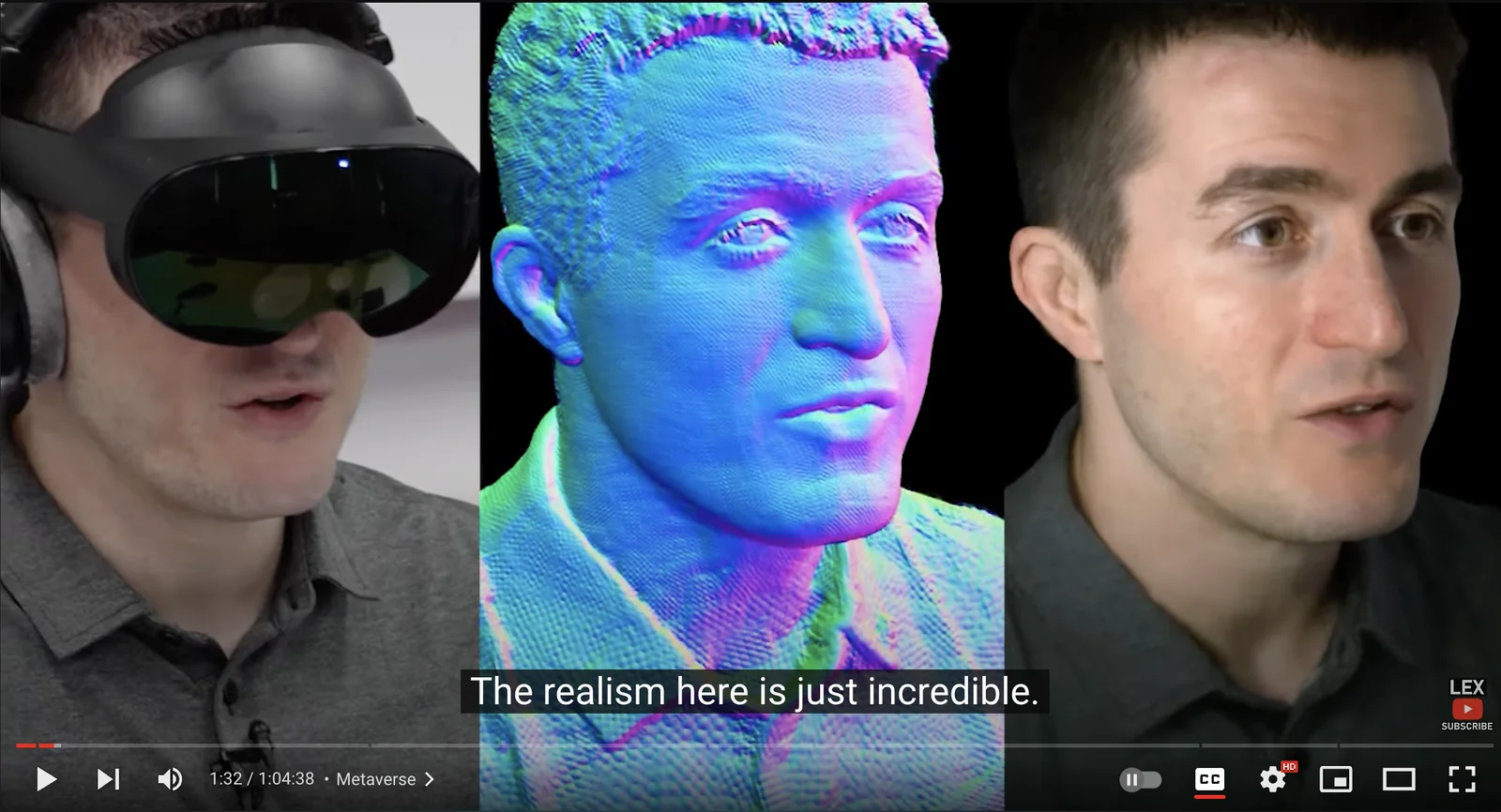
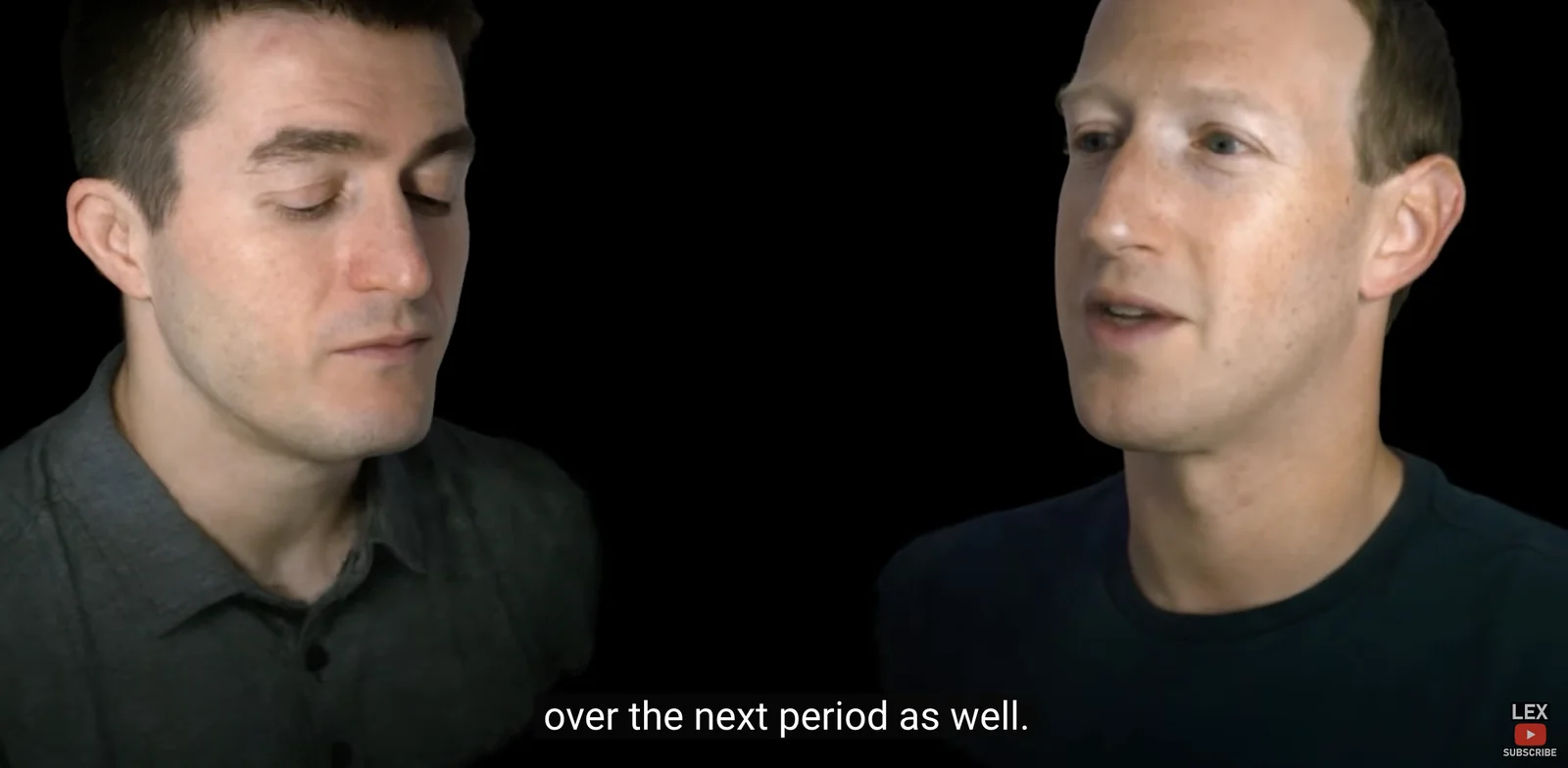
There was also an interesting interview with Lex Fridman that dropped yesterday as a fascinating and almost compelling ‘proof of concept’ of the vision: https://www.youtube.com/watch?v=MVYrJJNdrEg
(Worth watching just 5 mins or skipping around the video if you don’t want to watch the whole thing).
This involved some very sophisticated scanning technology to create realistic avatars, but it shows the vision and potential for how this could get better over time to create ‘virtual presence’ that isn’t weird.
Also interesting was how this was a pretty decent PR coup for Zuck. Lex is a very popular tech podcaster and this was basically an hour long pitch for the Meta vision.
It’s been a while since I’ve sent an update – apologies it’s been so long! Part of that has been because there’s been a lot of AI projects going on. Here’s a cute AI creature to make up for it:
Generative AI has now been around for a little while. There’s undeniably a bit of over-hype, and there’s also still a lot of work still to be done to figure out how to make Gen AI work, learn what it’s good at (and not) and how to integrate it into our everyday life.
There may well be more engineering and model breakthroughs (DALLE3 is coming out soon, GPT4.5 is in development). But some of the biggest shifts are coming from combining, integrating and converging generative AI with everything else.
We will probably also see some slowdown, some challenges (and maybe some progress) in the legal and responsible use of AI.
This piece from Benedict Evans is a nice exploration of the space. The best analogy I think of the way AI learns, is how if we learn art or writing. We learn by looking at all the art and paintings we can, sometimes copying or replicating parts of them, until we know them well enough that we can create our own. And if you’ve ever ready anything by Mark Earls, specifically his book Copy, Copy, Copy, almost all creative ideas and thinking is derivative and copied and remixed from what has gone before.
Nothing is clear cut in this space, but I suspect the evolutions of tools will make it easier for artists to control what goes into the tool and put in layers and controls that limit how much they can ‘mimic’ a living artists style.
From Generative AI to Interactive AI?
This piece in the MIT Technology review is interesting, from a founder of Google DeepMind.
It outlines some of the shift from humans using generative AI to create outputs, to interactive. So rather than needing to learn prompts and coding and tools, we can interact with more and more of the digital world, software and services via natural language conversation.
And that tasking AI agents to solve a problem or explore something can result in them interpreting the brief and decoding the best way to deliver it.
This opens up autonomous AI working away in the background and training itself to come up with ever better solutions. It’s sort of hard to conceptualise, but imagine if we tasked bots to work on various different aspects of briefs, keep iterating, and judge / keep the best ideas, insights, outputs, and we check in intermittently to see what it’s come up with. This self-directed problem solving ability could be hugely exciting. But also opens up a lot of questions about control and safety.
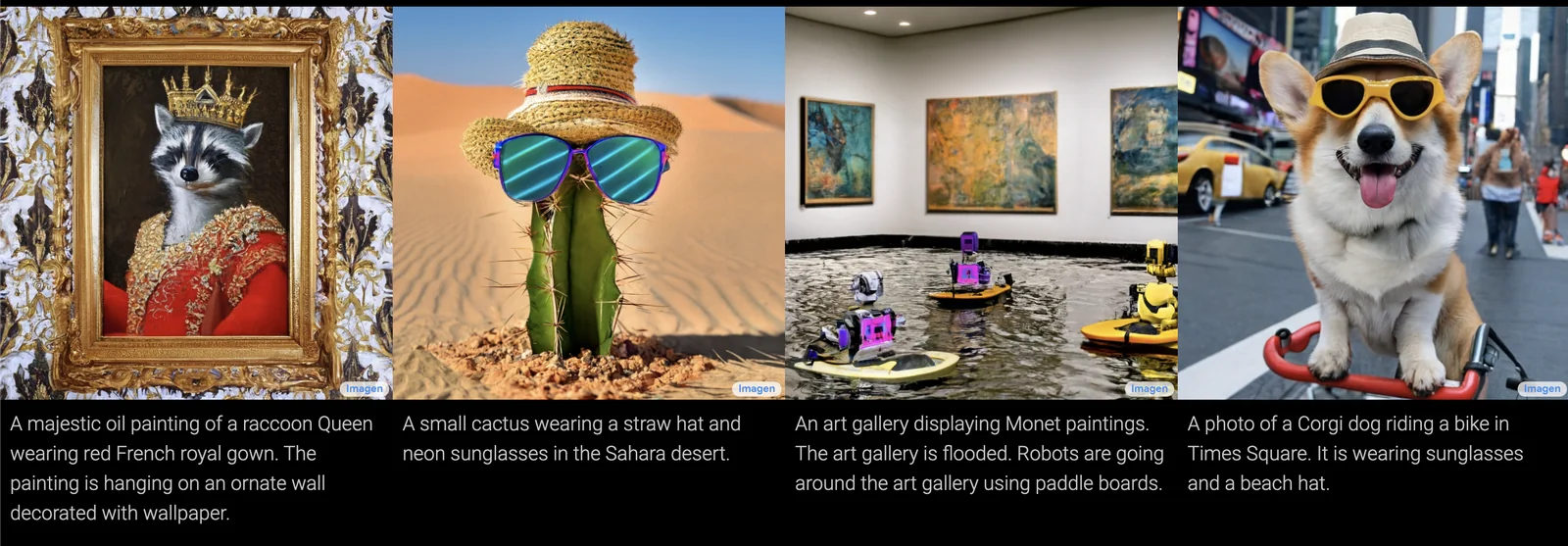
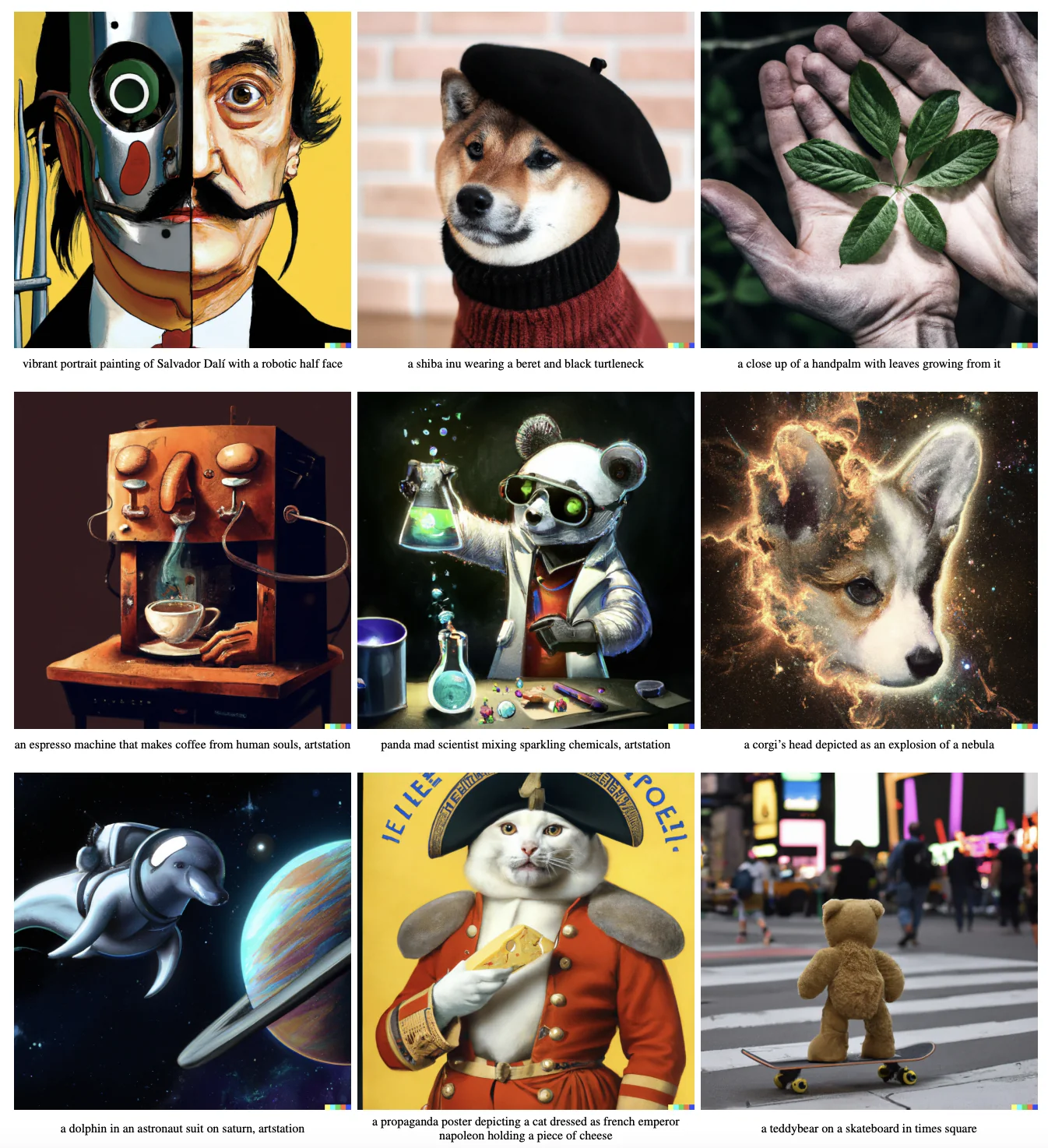
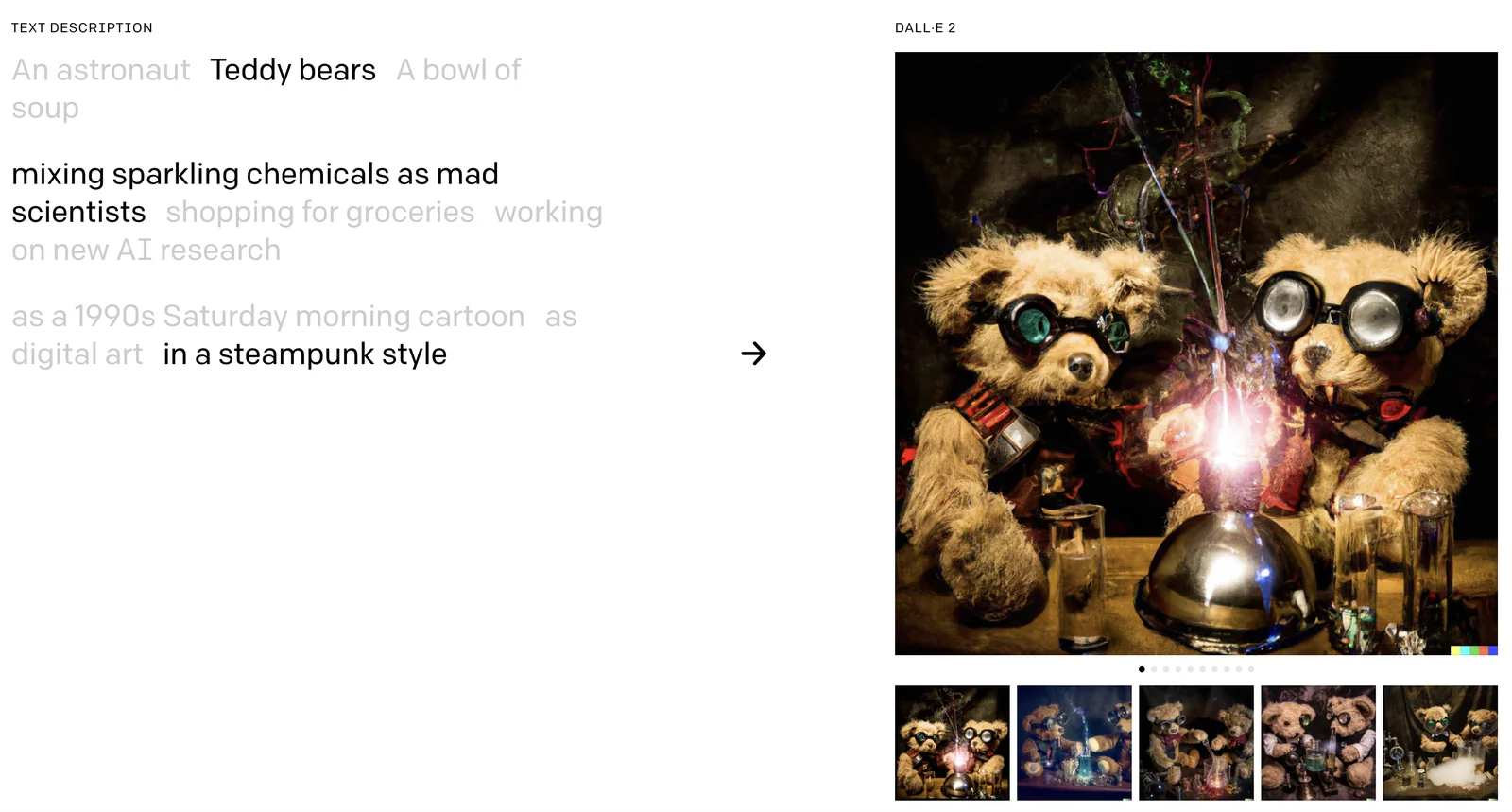
LLM meets Image Gen – welcome DALL-E3 (the Midjourney killer?)
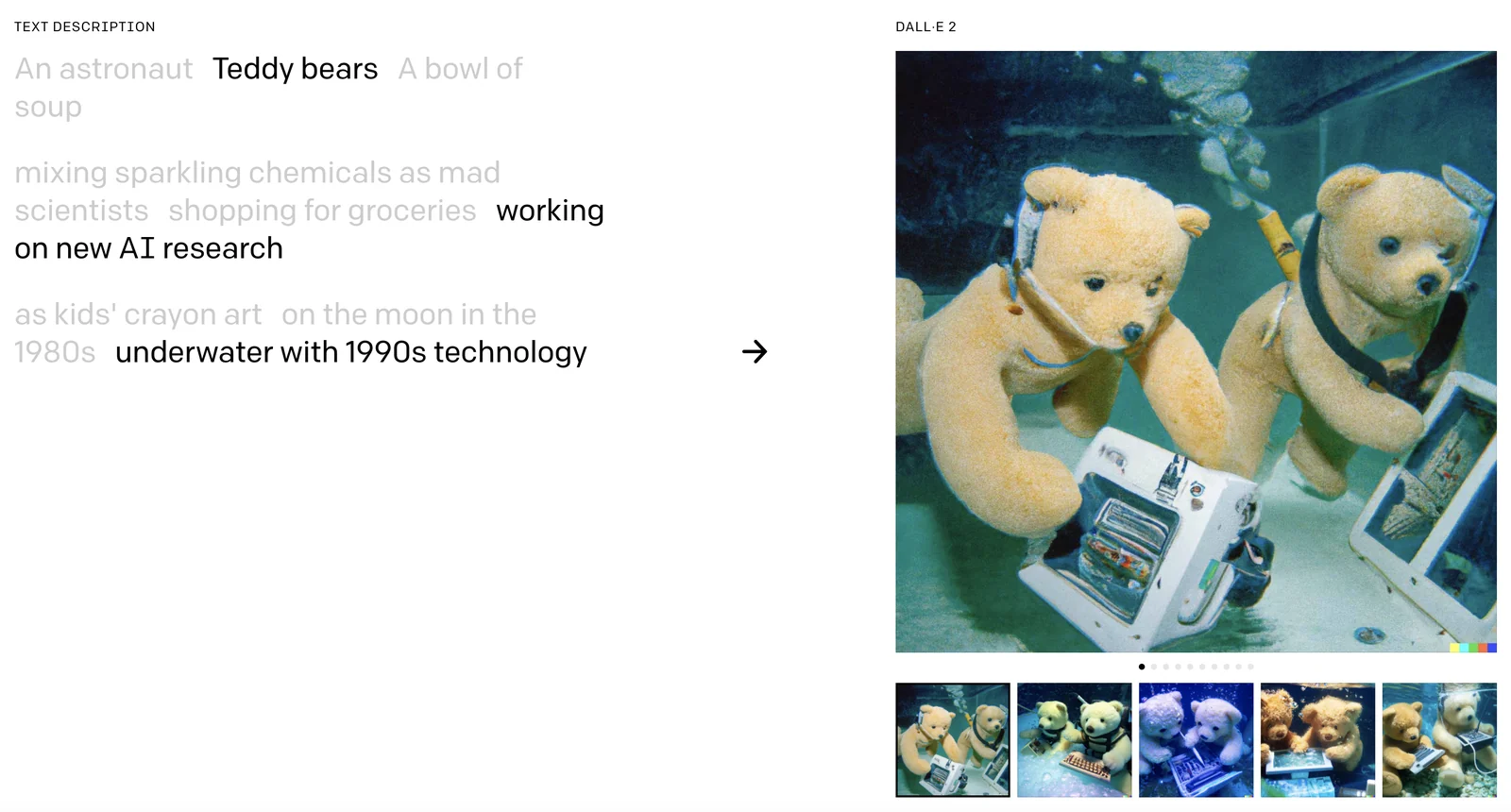
OpenAI have announced the plans and features for DALL-E3. DALL-E and DALL-E2 were early pioneers of image generation but quickly lost ground to better outputs from Midjourney, and better flexibility and customisation options from Stable Diffusion.
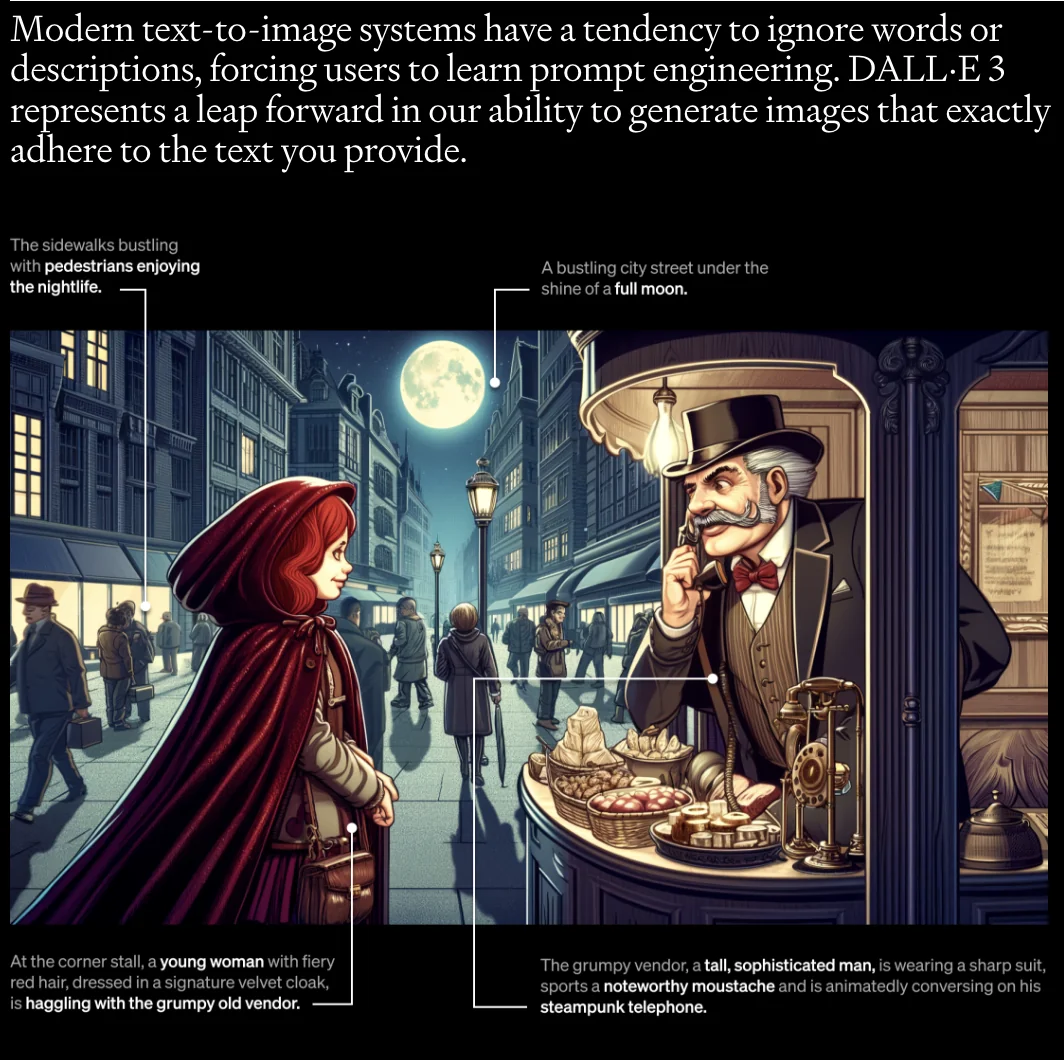
However, the details of the announcement are impressive, particularly with the integration of ChatGPT ‘reasoning and language’ into the prompt engine for DALL-E3.
What does this mean? While Midjourney needs weird unintuitive prompts that try to get the tool to do what you want, GPT integration into DALLE means you can describe a scene or evoke a mood and the tool will interpret what you mean more accurately.
This means that Prompt Engineering might even be quite a short-lived need – because the need for prompt engineering is just a problem of models learning how to interpret what we want a bit better. So rather than us all ‘learning to speak to AI’, the AI will much faster learn how to understand us.
This could lead to far greater precision and accessibility for image generation.
I also very much enjoyed the Illusion Diffusion tool which hides messages within images (if you can’t see it, look from further away or squint). Creating images that would be very hard to create manually. We used this to create artistic QR codes that work for Coca-Cola for Studio X as well:
Taking AI to work – studies show the potential of working well with even generalist AI tools
I also believe that the engineering breakthroughs have already created the tools that can, if not transform, massively improve our ways of working. But we are still in the early days of understanding the tools, fine-tuning the tools and integrating them into our process.
This piece, and study with the Boston Consulting Group showed the impact of fully integrating AI into a workflow process. It’s interesting reading and not just ‘miraculously better’, but that is has potential to make a meaningful different on many things.
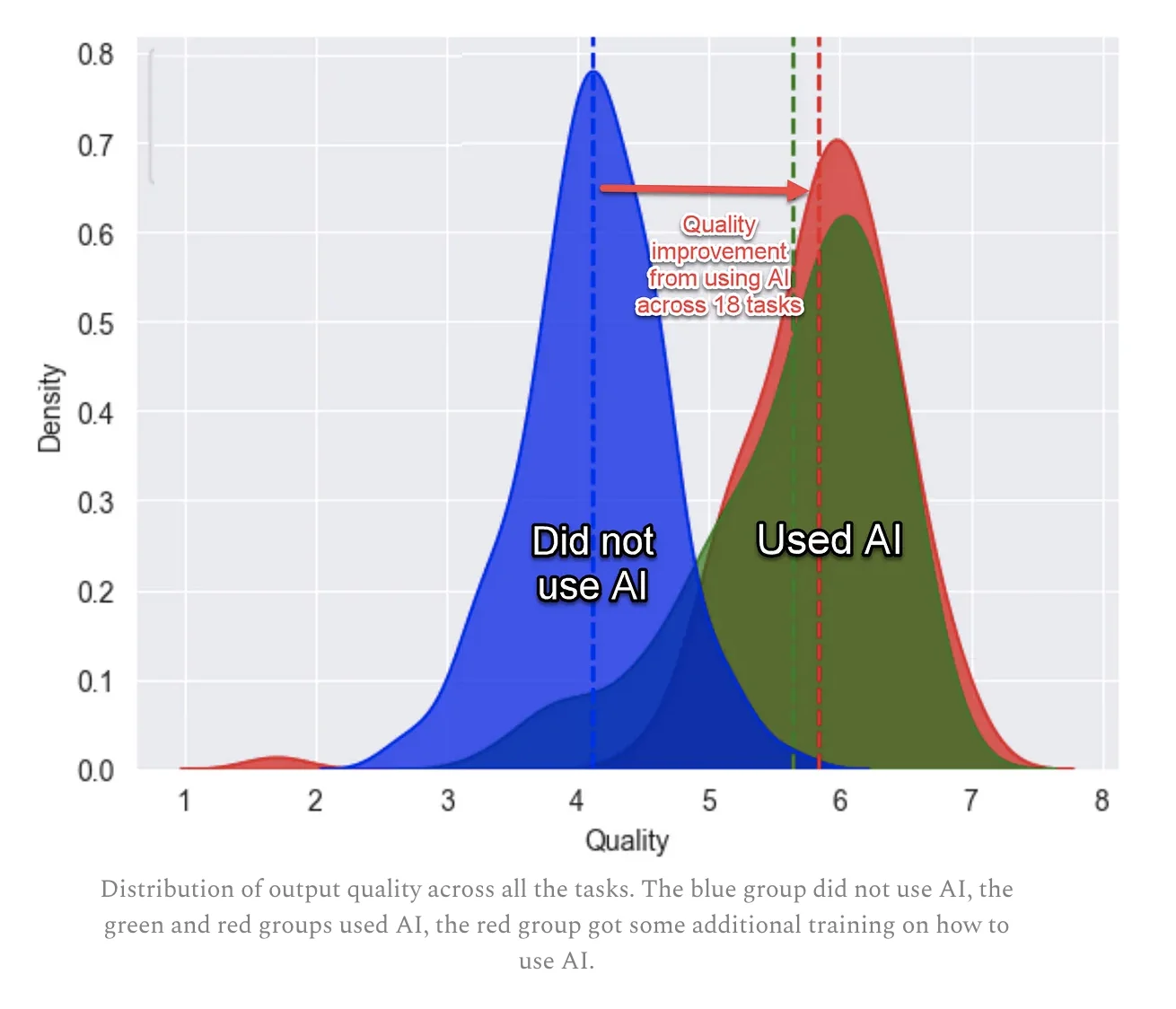
Consultants using AI finished12.2% more tasks on average, completed tasks 25.1% more quickly, and produced 40% higher quality results.
The main elements were that used well it can be a great leveller, and it also can be misapplied. Used in the wrong tasks or the wrong ways it can make us worse. But with the right training and understanding using even generalist AI tools can raise the floor and raise the ceiling on what we do.
And the genie is out of the bottle for enterprise / corporate use
While this piece looks how within organisations ‘ignoring AI’ or trying to control it and centralise it, isn’t really an option as the genie is out of the bottle. People are already using it on their own terms. And trying to ban or control it will potentially just drive using it underground.
In the past, we’ve often seen Enterprise / Corporate IT lag behind personal usage. In the early days of the social era, I remember having clients in the marketing team whose corporate firewalls blocked them from accessing their own Facebook page, or where their laptops were running Internet Explorer 6 which didn’t load their own company website.
It’s why “Bring Your Own Device” policies were invented so rapidly. Because Enterprise IT needs to be more cautious, requires more investment and tends to be slower moving, you often see people experimenting and doing more cutting edge things in their own time but being unable to ‘bring that to work’.
The sentiment here that we need to get people learning, playing, experimenting and creating with the tools feels right to me – although there are also lots of reasons why we want to put the right safeguards around it.
We’ve also starting to see the proposed costs for Enterprise AI Tools. Microsoft Copilot (basically GPT and other tools baked into all your office tools) will cost $30 per user per month. Sort of reasonable, but also adds up pretty quickly.
Unethical AI will raise the alarm, and hopefully raise standards
There have also been some more stories around unethical, controversial and some downright disgraceful uses of AI. Every new technology gets co-opted by criminals, and explored by the Adult industry. This can even shape the direction of technology quite fundamentally (VHS was beaten by Betamax, apparently in part because it was the preferred medium by the porn industry).
A Spanish town has been shocked by the discovery that a lot of AI generated naked images of local teenagers have been circulating. While the public tools are strongly limited to avoid them doing this kind of thing, open source versions can be tailored to create inappropriate images without the safety layer applied. In a similar way that photoshop can be misused, these tools are open to abuse, and we currently don’t have the technological or legal structures in place to control or limit this.
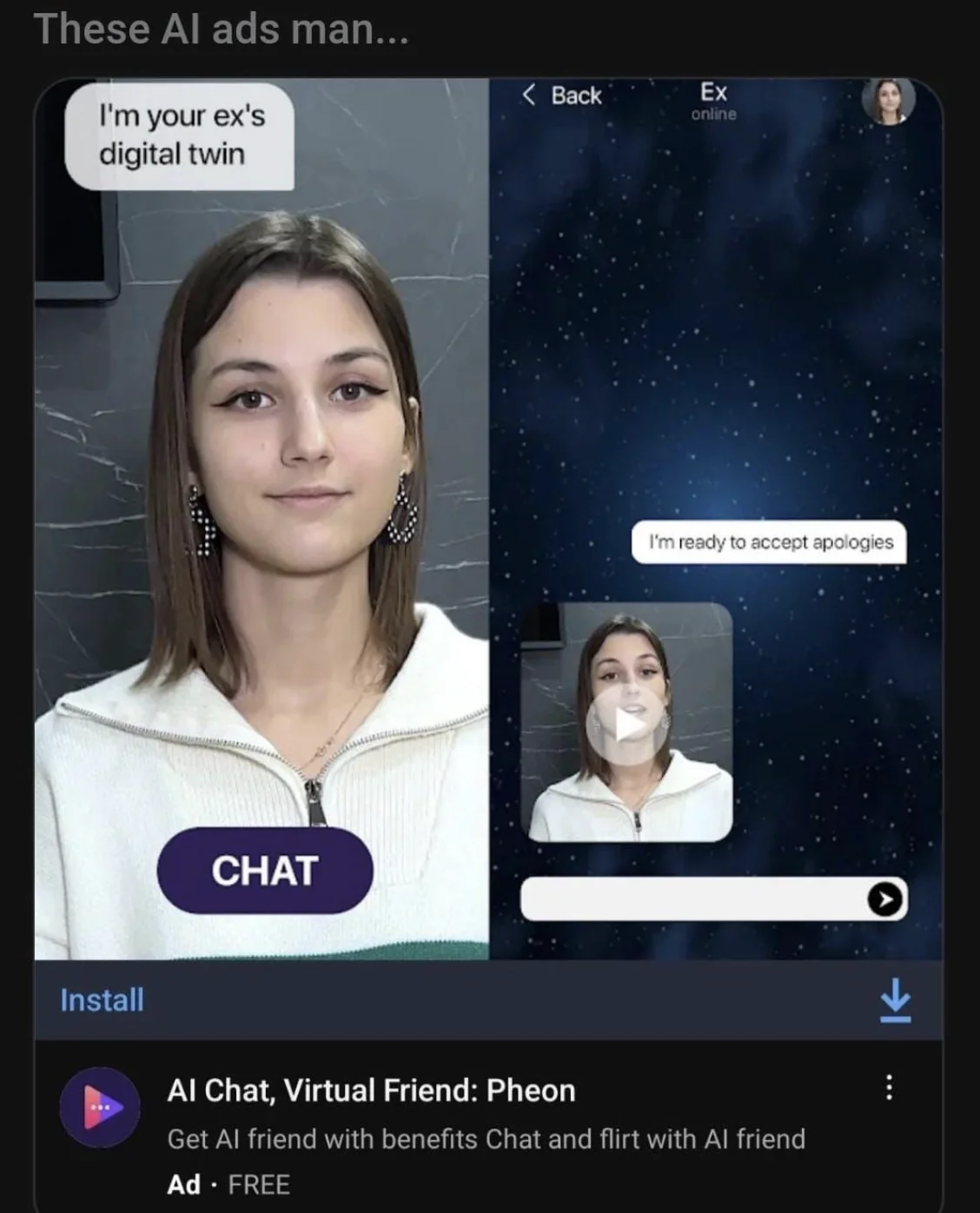
But also in a greyer area, there has been a rise in suggestive and somewhat toxic ‘AI companion apps’. These chat tools and avatar tools simulate real relationships but can lead to some weird places quickly.
It can end up leading to uncontrolled and unmonitored conversations that prey on people’s emotions and insecurity, or it could almost train people to act in inappropriate ways or perpetuate dangerous ideas about relationships.
Deep faking, voice cloning, convincing conversational text and chatbots are all incredible developments that can be dangerously misapplied by criminals and scammers. Voice cloning is a common scam where 2-3 minutes of text is enough to make a pretty convincing voice clone to convince employees or family members to give up confidential information or transfer money to a scammer.
This is a darker side of the good that some of these tools can do. While AI chatbots can be companions for the lonely, or provide helpful therapy and advice at scale, (studies have shown that certain groups and individuals find talking to an anonymous / non-human in a therapy environment can be helpful – eg armed forces veterans).
So, more change, more challenges, more hype.
That’s probably it. Feels like we’ve got a bit of a messy middle for AI development. Some folks may be getting AI fatigue. There’s a plethora of startups and can feel like everything and everyone is blasting AI everywhere.
But lots of reasons to remain bullish, especially in the mid-long term.
I promised something other than AI, so here it is!
While everyone is somewhat agog about AI at the moment (and I think for good reasons), it is not the only game in town. The last couple of years has seen the rise and fall of crypto, web3, NFTs and the metaverse.
But we look at the ruins of the previous bubbles to can see what has survived, and what is still interesting.
Zoe Scaman wrote a very good piece about bubbles. Particularly around the way we all frame bubbles (at least tech / buzz bubbles) in the wrong way. The hypers and the nay-sayers are both on the same rollercoaster, but one is looking up and one is looking down. But after a bubble bursts, (or the hype settles down) all the passengers move onto the next thing, but the thing behind the hype doesn’t go away. It just changes.
One of the earliest bubbles, Tulip-mania in the 1630s saw a speculative hype in tulip bulbs. These new fashionable flowers got over-hyped and reached the price of 10,000 guilders, the same as a mansion on the Amsterdam Grand Canal. The bubble burst and some folks lost a lot of money. (Although apparently the tulipmani was itself over-hyped and turned into a cautionary tale about greed and speculation). So all a bit silly, yes, but tulips are still hugely popular and the global cut flowers market is worth about $54b today, so there’s clearly life after bubbles.
Useful to remember as we find ourselves floating away in an AI bubble, some are also rubbing their hands with “I told you so” glee at the bursting of the metaverse, crypto, NFTs etc.
What is dead may never die
The Metaverse itself is a sci-fi concept from 1992. It had quite a strict definition (a virtual, shared, interopable world that we spend time in together), but that gradually morphed and became co-opted to mean *everything* - gaming, VR, NFTs, online events, web3, the internet, the future.
But we can learn from the evolution of the internet here. Early days of the internet, it also had a goofy ‘sci-fi’ name: cyberspace. Cyberspace was a term invented by William Gibson in Neuromancer in 1982, about 10 years before Metaverse was invented as a term by Neal Stephenson.
While the phrase ‘cyberspace’ mostly died, the internet did not. Similarly, the internet went through a couple of big hype runs, including one pretty spectacular bubble along the way. In the hype of the dotcom boom, people raised huge amounts of money and buzz over nothing more than having a URL and ‘being on the internet’. There was loads of hype, speculation, (and also derision – this classic interview of tech pioneer David Bowie enthusing about the internet to an openly mocking Jeremy Paxman.) It even led to the dodgy trend of Skinvertising, where new online casinos like GoldenPalace.com paid Karolyne Smith $10,000 to get their name tattooed on her face:
The Metaverse has seen similar hypes and busts (hello Second Life). The idea that you can create a finite amount of ‘virtual land’ in a space, and sell it off (like in Decentraland or Sandbox) made it ripe for speculation. Mark Zuckerberg pivoting his entire company to ‘the metaverse’ threw a huge amount of extra attention on it.
This boosted it to levels way beyond the current reality. Pressure from the markets meant Zuckerberg has needed to retreat significantly from his visions (although Meta is still called Meta, and is still putting out paid partnerships with Wired about ‘what is the metaverse’.)
However, beyond the BS there are some interesting things going on.
The way we interact with virtual worlds will continue to evolve
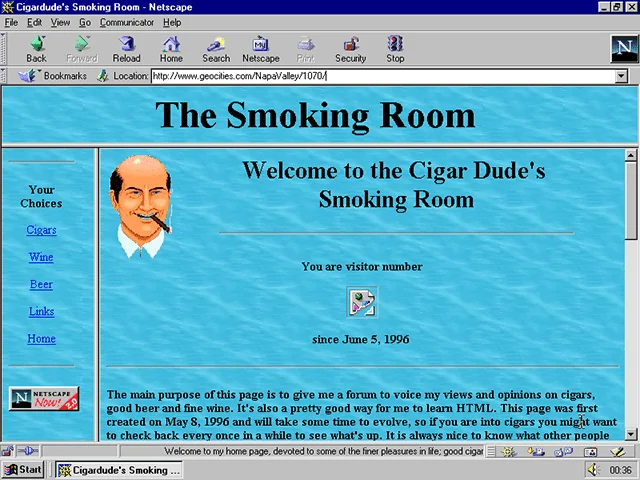
Instead of metaverse, let’s think of it as ‘virtual worlds’. The way we interact with the digital is always evolving. 40 years ago, you almost needed a degree in computer science to interact with a DOS command prompt.
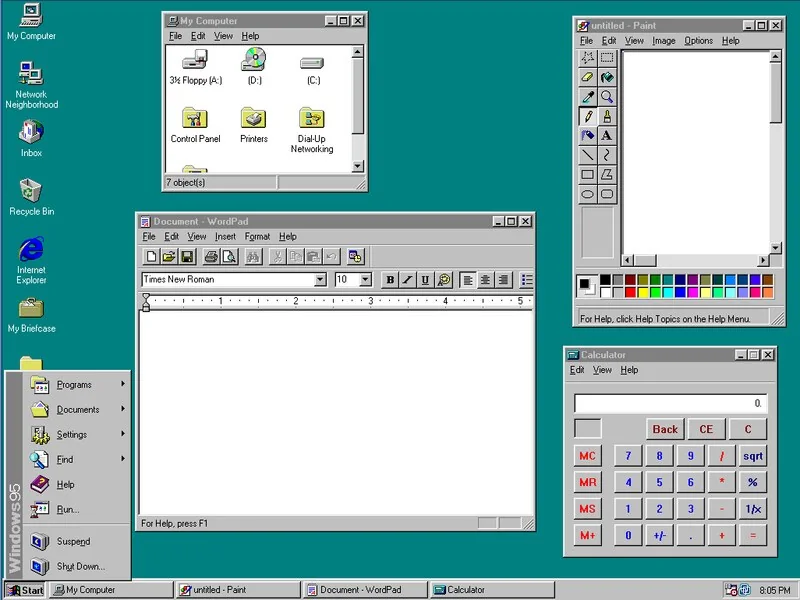
Then mice, and the revolutionary concept of ‘windows’ changed how we interacted, giving us windows 95 (well… ok, 3.1 before then, but that was still a little niche).
Following this, we saw the first website and the concept of ‘internet browsers’ allowing us to connect to a virtual shared space. But it looked… ropey.
Early search engines tried to make it easier to find things, early social sites gave people the ability to express themselves and connect their real world selves with their digital selves.
Then, the birth of the smartphone led to a total transformation in how the digital worlds weave into our lives. More intimate, more immediate. We dip into these virtual world at our fingertips, in front of the telly, waiting for a bus, while eating dinner. Everywhere.
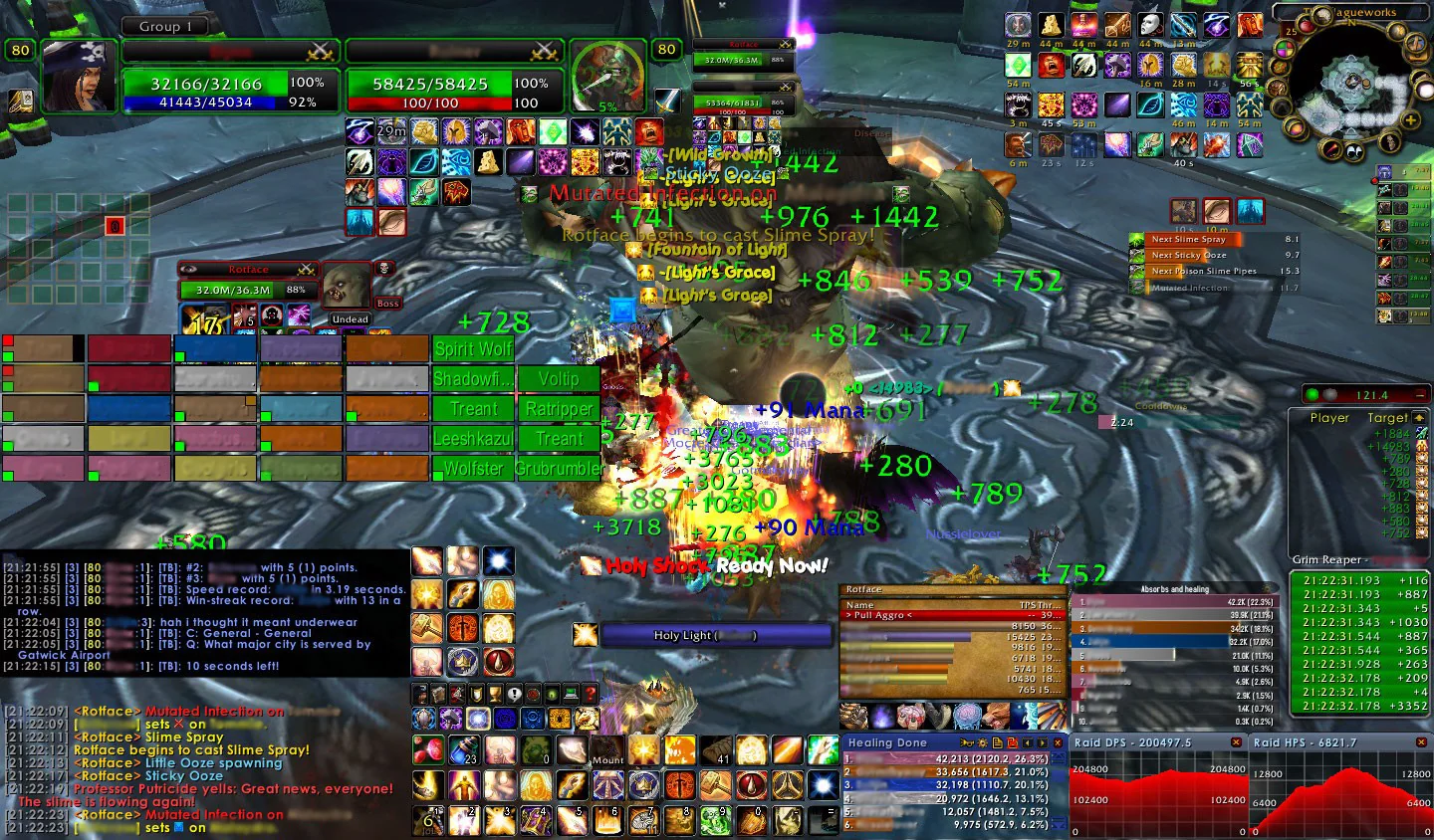
In parallel, the worlds biggest newest entertainment form emerged – gaming. About 3 billion people are now ‘gamers’. Somewhere around 35% of the world. Here people go to shared virtual spaces, buying and selling items. Creating their own virtual characters and identities and going off on adventures. I spent an inordinate amount of time as part of a 40 person guild tackling the toughest dungeons of World of Warcraft 15+ years ago. During Covid, we escaped to our idyllic Animal Crossing islands and caught up with friends and even held weddings and graduations.
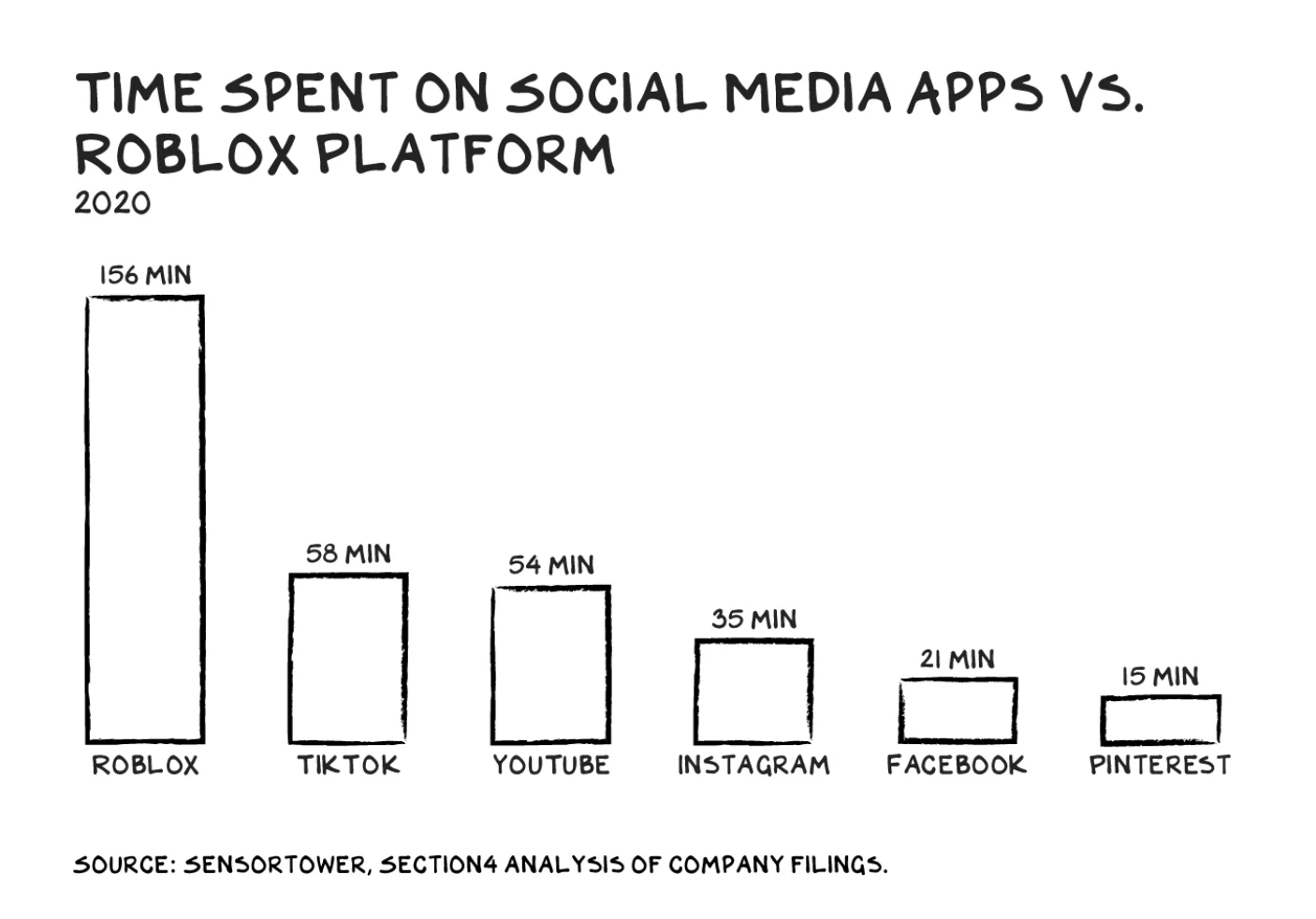
Tens of millions play Fortnite, Roblox and Minecraft everyday, as folks play together with their friends, but also join in community events on the platforms.
So, why the hell have you spent so much of an email explaining the internet?
We currently spend so much time currently interfacing with the digital world through tiny little screens, (usually while also ignoring a big screen in the background). But this isn’t the end-game evolution of how we interact with the digital and virtual world.
(It’s kind of impressive how dominant the mobile phone mode of interaction is, that we struggle so hard to imagine a different or evolved way).
The way we engage with the world, virtual and physical, continually changes. Media is often at the forefront of that.
And, when a new mode emerges, at least in the early days, it is a bit rubbish. The first website sucked. Windows 3.1 wasn’t brilliant. Similarly, the early examples of ‘the metaverse’ look a bit shonky.
The Metaverse paints a picture of how it might evolve
The Metaverse is interesting because it’s a vision of how some of this might come together over the next 2-10 years to form the next era of our virtual experiences. So we can start to pick out useful concepts from the remains of the bubbles of the last year or two.
More Immersive – higher fidelity experiences, brought to life through virtual or mixed reality headsets or evolutions in screen technology
More Versatile – more spaces for ever more uses and benefits, with voice and AI generated worlds and characters
More Connected – joining together common currency, items and identity between different spaces
More Expressive – ever better tools for expressing your identity in virtual worlds,
More Imaginative – telling richer, more engaging and immersive stories through virtual worlds
More Useful – used for a wide range of applications, from training surgeons, to teaching kids
Rather than seeing the metaverse as a goofy, sometimes dystopian sideshow diversion, it can be helpful to see it as the natural evolution of the digital worlds we already live in, giving them an ever richer, more accessible, more widespread virtual component.
It doesn’t exist now, but parts of it do, and over the next couple of years we could see more and more of it. So knowing and thinking about it is still useful. Gaming is, by far, the most populated and mainstream ‘metaverse-like’ environment although there are a lot of other useful and real applications right now. But most of the over-hyped early spaces, like Meta Horizon, Decrentraland and Sandbox are scarcely populated.
Apple are also launching their XR headset, which could be the most compelling hardware solution yet. (With ‘pass-through’ it can do mixed reality and full virtual reality.
And the bubble bursting (or at least deflating) can help sort the sense from the nonsense.
I’ll be putting in a ‘Metaverse Safari’ session, online (virtual!), for everyone in a couple of weeks’ time, which will talk through a little bit of what’s interesting, who the major players are, and what’s potentially over-hyped, and what to do to make sense of the above.
Additionally, we’re also planning a “working with AI Q&A and FAQ” session for everyone to deep dive on the legal and governance side of it.
If you’ve been forwarded this email, and want to join the CHITlist, please use this link.
For a change, here’s a little something on AI. (I promise the next one will be on something not AI. If there are any requests, let me know!)
OpenAI has come fast out of the blocks
ChatGPT launched a rocket ship of buzz on AI development, becoming the fastest growing consumer application in the world (faster than TikTok, the iPhone, Spotify – hitting 100m users in 2 months).
It seems to have caught a lot of other companies unaware, including many who have been developing AI for years, ranging from Google, but also Meta, IBM, Adobe, Salesforce and Amazon.
However, as the dust settles, we have started to see some major responses to ChatGPT. And it’s quite plausible we could see ChatGPT going the same way as Napster. Or the cautionary tale of IBM getting stuck in the hype cycle.
There are a lot of other tools and big players waiting in the wings. ChatGPT may have fired the starting gun on the current wave, but it doesn’t mean they’ll definitely come out as the winners. This will look at some potential pitfalls, and the other challenges who could take its place.
Pitfall 1: The Napster effect
Napster essentially kickstarted the whole shift to streaming and the digitisation of media at the turn of the millennium. It got teenagers in bedrooms across the globe downloading wonky, malware infected copies of the latest tunes. At the height of its popularity it had 80m users and ended up being blocked by internet providers and college campuses as a drain on bandwidth.
It led to a massive flurry of people converting CDs, cassettes and vinyl into MP3 and sharing them with the world. This was a radical change – suddenly all the worlds music was available at the end of your keyboard. This was all made possible by Peer-to-Peer sharing, which is a revolutionary piece of technology.
Sound familiar? ChatGPT has solved more complex engineering problems but it’s quite analogous to Napster. Maybe, also, for what comes next.
Napster did all of this without having any copyright approvals for the music. It was (especially in the view of Metallica) theft.
This put it on the radar of the RIAAA (Recording Industry Association of America), where, after a long court battle they obtained an injunction to shut Napster down. In its wake, a wave of P2P and streaming services popped up. From the explicitly illegal but more secretive Pirate Bay, to semi-legal Limewire, through to (eventually) Netflix and the whole era of streaming that we know today.
Napster solved an engineering problem – Peer-to-Peer filesharing. But they hadn’t really solved the legal, commercial, ethical and societal issues they unleashed.
It is possible we see a similar dynamic with some of the early AI companies – ChatGPT, Midjourney, Stability. I suspect they won’t go down as dramatically as Napster, but the legal, privacy and data issues that come with each of these services is complex. The commercial disruption is going to be huge. So we may well see other companies being faster to create a safe, legal, scalable, enterprise level version of the software. There are already legal challenges against many of these generative models, claiming that both the inputs (the data the learned from) and the outputs, use copyright/protected material.
So pitfall 1 is that OpenAI get the full blast of backlash, legal challenges and regulation and get mired in challenges.
Pitfall 2: Stuck in the hype cycle
This piece in the Atlantic looks at what happened to the early buzz about IBM Watson around 2010, when it beat a human at Jeopardy! for the first time, and got a lot of breathy PR and headlines. IBM have integrated Watson and machine learning into a lot of their B2B software, but they also potentially got carried away with enjoying the PR and buzz and rested on their laurels making ads with Bob Dylan, Carrie Fisher, Serena Williams and Steve Buscemi.
IBM have repackaged up their new AI offering – IBM Watsonx – offering what they call “an enterprise studio for AI builders” it is designed to be a set of corporate tools to let companies build their own AI models and infrastructure. They predict that AI could add $16 trillion to the global economy by 2030 and automate 30% of back office tasks within the next 5 years. (I’ll leave it to you to decide whether that is utopian or dystopian). They also note that their automation and data + AI divisions group 9% and 8% respectively last year.
But having been well and truly ahead for AI 10+ years ago, IBM lost the advantage and struggled to realise the opportunity they’d uncovered.
So that’s the other potential risk – that ChatGPT stalls, enjoying their victory laps, while the world moves on. However, ChatGPT has the benefit of being a singularly focused AI company. While Watson was a side project for IBM, OpenAI is now focusing on rolling out and integrating their tools everywhere they can.
The other challengers waiting in the wings:
And beyond these two issues, there is a wave of AI coming from some established players, who will have a headstart at solving the legal, data, and enterprise software level challenges.
Google Bard: after sounding the alarm having been taken by surprise by ChatGPT and OpenAI, Google have made everything about AI. This twitter thread from Sundar Pichai outlines all of the AI initiatives announced at their annual IO event. They have their own PaLM2 model (vs GPT4) which is being plugged into search, coding, shopping, health and more. They’re integrating it into their Docs + Gmail tools, making their predictive text more powerful and adding predictive images to slides. (Yes – you can now create generative content straight into Google Slides with this). They are basically sticking AI into everything. So much so, some joker has even created an edit of IO which just has every time Sundar says AI.
Adobe Firefly: launched around a month ago, there is Beta access to some of these generative tools, and Google’s Bard is partnering with Firefly to provide their generative image tools. It’s main two elements are that it is commercially viable – building off Adobe stock rather than a wider set of images, it sidesteps a lot of the legal and IP issues. It will also integrate a whole host of tools into the designer workflow, offering to ‘take the drudge out of design’. If it manages to integrate these tools well (and if their purchase of Figma goes through) then they could sit at the epicentre (again) of visual design, powered by AI.
Cohere: a Toronto-based LLM dialogue model somewhat like ChatGPT, their point-of-difference is that they’re focusing on building robust, enterprise tools with this service. With a bit of a pop at ChatGPT they say “"Our chat models are focused more on business applicable tasks like answering questions than writing poems. We don’t plan to hand them over to everyone to use for free without limit. We want to build a healthy and sustainable business."
Anthropic: Backed by Google and run by ex OpenAI researchers, Anthropic is raising and developing what they pitch to be the next-gen AI algorithm called “Claude-Next” (what is it with giving AI models goofy names?) and claim that with a mere $1b in spending, it will be 10X more capable than todays most powerful AI.
They have also made a positioning on being a ‘safety first’ approach. They could nearly come along behind OpenAI, letting them take the flack and the lawsuits and learning from their mistakes.
Meta Advantage Suite: perhaps less revolutionary at a grand scale, Meta have built an ‘AI Sandbox’ into the ad suite, and this could be quite impactful for our industry specifically. It will use generative tools to allow for finessing, creating and varying assets which have been built within Meta. This, combined with the AI models used in optimising and driving insights, can create a smarter, faster, closed loop learning environment within their ad products.
Lastly, Microsoft are making huge strides in this area through their partnership with OpenAI. Microsoft have recently shown their ability to neatly integrate and solve enterprise level issues to ultimately win. Zoom and Slack were the darlings of the new wave of working tools. But Teams has (at least partially) swallowed them both up by copying what they do (well enough) and coming with an IT department approved solution.
Something similar could happen with OpenAI – they’ve already announced they’re building an offering to give an enterprise private ‘version’ of ChatGPT “at a significantly higher cost” so that companies can benefit from ChatGPT safely and at scale. Copilot is the AI-powered features that are being plugged into more and more Office 365 apps. So AI will be built into PPT, Excel, Word, alongside their coding tools baked into Github.
Beyond this are a plethora of app-like single task AI tools, that build off an existing platform or tackle a specific task, like voice generation, or creating ‘chat for x’. Much like the previous Silicon Valley pitch shorthand of everything becoming ‘Uber for X’, there is a goldrush of sticking AI on any use case and raising some capital.
So, although ChatGPT has a lot of the limelight at the moment, it is by no means a done deal. A lot of other players have a lot of impressive advantages in this space, and ChatGPT run into difficulties.
It’s been a little while since I’ve sent one of these. This is probably the last CHITlist email before it will be rebranded into some kind of Innovation Update email. More on that to come next week, along with some virtual and in-person training sessions which will focus on practical prompting and skills for working with AI that I’ll try to get in next Friday.
There’s been so much AI buzz over the past weeks and months that it’s hard to keep up. To bring the pace of change to life, here’s an example of Midjourney’s response to the same prompt, a year apart (the prompt was Trump and Obama playing basketball).
This long read ‘State of the AI Union’ covers a lot of ground better than I can. But from Bill Gates proclaiming it as the most important thing since the internet, and a coalition of AI and tech leaders including Elon Musk calling on a 6 month pause on AI development ‘for safety reasons’ there are many reasons to suspect this could be the next wave of digital evolution and transformation. It’s something akin to the invention of the pixel, the internet, or mobile phones, in terms of the potential impact.
Putting a mobile phone in the hand of nearly everyone in the world has changed the world. Plugging all the information in the world into the internet, and connecting everyone to is has changed the world. Adding AI to almost everything also changes the world.
Ways of thinking about AI
For me, it’s like Microsoft Clippy, but it works. Having something that ‘thinks’ like ChatGPT plugged into everything you do – planning dinner, writing a proposal, building a business, scripting a film – is transformative.
Or it’s like a co-worker or partner to bounce ideas off, to refine thinking with. We can all work with our AI shadow-selves that we can use to work through what we’re doing. Coming up with suggestions and solutions, and helping develop whatever we’re thinking about.
Or it’s a powerful plug-in, augmenting us to be our best selves. With more knowledge, more insight, more capability. We’re already cyborgs who have outsource memory to our computers and calendars, and directions/navigation to Google Maps. We will soon be outsourcing and augmenting what we do with ever smarter processing power and tools. Like the difference between navigating pre Google maps vs now, but for everything.
Reasons to be cheerful? We need super powerful tools more than ever to solve all sorts of problems. Sustainability, doing more with less, fusion power, bioengineering and medicine, space travel, autonomous everything. Technology is needed to save us. It could help lead to a world of sustainable growth, new medical breakthroughs, new productivity.
Reasons to be scared? We’ve heard that before, and tools in the wrong hands, or unintended consequences of tools, can be pretty bad. Especially if they’re such powerful and potentially misunderstood tools as AI. It can weaponise misinformation, it can skew geopolitical balance in the wrong direction, it can accelerate inequality and it can disrupt a lot of livelihoods without much caring about the collateral damage along the way.
That said, AI has been over-hyped and under-delivered before, and some people say that it’s still a sophisticated toy that people are getting carried away with. That’s a possibility. But for me, it’s exciting how quickly it’s moving from a toy, to a tool, that can change a whole raft of things. Everything + AI = Interesting.
What does that mean for agencies and content?
We’ve worked with tools forever. A pen and paper is a tool. So is a lightbox, a film camera, a microphone, photoshop and mac.
AI is just a new tool. Or set of tools.
A fool with a tool is still a fool.
(What you get when you feed “A fool with a tool” into Midjourney)
(And what ChatGPT comes up with when you ask it for more similar sayings…)
So in a world where the marginal cost of creating passable artwork and copy drops to zero, the need for us to really show our worth goes up. It can be a great leveller. In the same way that smartphone cameras mean the average teenager makes more content in a day now, than a teenager in the 90s would make in their entire childhood. The boom in creator content, the democratisation of platforms, has led to challenges and opportunities. This will accelerate even more.
This is why it’s incumbent on us to become the best at using these tools. It still takes creative and intelligent prompting, it requires strategic and creative direction. It requires someone to orchestrate these tools and point them in the right direction. And it requires a team of people to recognise and create great work, not just ‘passable content’.
And everything will be touched by these tools – to greater and lesser extents. The NVIDIA CEO said recently “Every single pixel will be generated soon. Not rendered: generated.”
So lots of change, lots of excitement, lots of challenge. It’s easy to feel conflicted about all of this, which is quite neatly articulated by this piece: Awe, Anxiety and AI. As AI increasingly impacts our lives it does raise existential questions which all requires a bit of thinking, and it’s good to be both scared and excited by it. We can take some lessons from how Garry Kasparov reacted to being humbled by Deep Blue at chess in the late 90s. Initially, it undid everything he had worked so hard to be good at. But now, chess is thriving more than ever, and Garry pioneered centaur chess, a brand of chess that combines teams of humans and AI’s together to compete. Being beaten doesn’t mean defeat.
I choose to be an optimist about all of this
Not blindly, and there are a lot of real things to worry about. We’re looking seriously at ethics and responsible use for AI in creativity. (And this piece is a pretty great summary of the AI usage debate – the TL;DR version is image generators probably fall under fair-use and don’t breach copyright except if used in specific ways that try to copy protected work).
But, overall, it can and should be a powerful and exciting force for good.
This story of how a dad used ChatGPT to act as a DM for a game of Dungeons & Dragons with his kids is a powerful demonstration of the potential of this. JRR Tolkien started telling stories about dwarves and elves to his kids. This eventually morphed into writing the Lord of the Rings and The Hobbit. Now, anyone’s ideas have the potential to turn into reality, with ever fresher and more imaginative ways should be really exciting.
Over the weekend, a song that appears to use AI generate voices for Drake and the Weeknd has been doing the rounds on TikTok, YouTube and Spotify, with people suspecting it’s a marketing ploy for… something. It’s increasingly going to crossover into mainstream culture in more interesting, mundane, problematic and exciting ways.
And automating the easy can liberate us from the mundane and focus on more important, more interesting or more rewarding things. Much like access to a computer and the internet makes us more productive, access to AI will make us ever more productive (in the olden days, instead of an email we would have circulate paper memos around, so for good and for bad, technology changes the game).
Which is why we’re going to be rolling out more tools, more training and more pilots using those tools
Over the coming weeks and months, we’re going to get access to licenses and a set of core tools – like ChatGPT, Midjourney but also voice generation tools, video tools and more.
And following it up with training on how to get the most out of them. The default output of these tools can be a bit basic or uncreative. So we need to know how to use the tools to get the most out of them.
A list of tools (not just for fools)
In preparation for that, I wanted to introduce some additional tools to look into – most of them have free or cheap access and can do some interesting things. They may or may not be useful, but can be good to play around with…
ChatPDF – this is really quite cool – you can upload any PDF to this service, and then ask questions about the PDF as if it were within ChatGPT. This can be a really good way of interrogating a brief, summarising company reports, or creating FAQ content and summaries of documents
Soundraw.io – lets you generate your own bespoke, royalty free music based on a set of parameters and briefs
Fireflies.ai (or Otter, or ChatGPT) – can be used to take, summarise and analyse notes from any meeting, doing transcriptions of conference calls or videos and then summarising key themes. This can be great for stakeholder interviews or transcripts of consumer research, or just summarising meeting minutes. Krisp – is another AI powered noise cancellation for everyone – it can plug into any zoom or video app which is also cool (although I imagine MS Teams / Zoom will probably copy this and build it into their tools pretty quickly
Cleanup.Pictures – remove backgrounds, patterns or any unwanted elements in a picture with a simple online tool. Other tools (like Stable Diffusion, BRIA or DALL-E) can also let you do this and generate new backgrounds and in-paint or out-paint, but Cleanup is all simple, free and online
Tripnotes – basically plugging a language model into tripadvisor, so it can read through all the different reviews and come up with an informed insight on what to do. You can ask specific questions and it will dig through all the reviews to summarise the recommendation
AgentGPT – this one is properly 🤯 – but you can task an AI agent to essentially brief itself and figure out how to do it, then do those prompts. For example, I asked it to ‘write a topical ad every day’ and then it broke down the tasks and started doing them (it’s still beta / demo, so it’s better at showing you how the concept might work rather than actually doing it)
There is also a race in cobbled together AI tools – not all of them will be good, and most of them will be copied or fold. But it shows some of the direction it’s all going. (For example, there are many PPT generation tools like Gamma, but so far they’ve not been especially useful. However, I have no doubt that we’ll get more and more of these tools coming. Microsoft Copilot and Google tools are both the most likely suspects to actually deliver all of this though.)
With all of these things, it’s good to be cautious – don’t upload top secret documents into them and use common sense around data safety.
So – lots of change, lots of excitement, but also lots that we’re aiming to do about it over the coming months. If you have any questions, suggestions or anything really, give me a shout.
Oli
(Please forward this onto anyone who might want to read it, not on the CHITlist. And if this was forwarded to you and you want to join the CHITist, please use this link.)
Hi all, this is a bit of a long one, but hopefully worth the effort. If it all looks too long, I asked ChatGPT to summarise it into a pithy ‘too long; didn’t read’ version:
Or for the long one…
I’m generally pretty cautious and balanced, so the title above may sound a little like I’ve downed all the Kool-Aid. But I think there’s some very genuine excitement behind what is happening right now with Generative AI. Take it all with a pinch of salt, and there are lots of things that will throw up challenges along the way.
The AI tipping point
ChatGPT and similar models, along with AI imagery tools have been talked about a lot. Not least by me. There has also been this rather excellent POV put out by GroupM (attached) which covers a lot of the topic in a good level of depth.
But we are at a particularly interesting tipping point, where these tools are starting to plug-into and transform existing tools and services. And they’re starting to even challenge the whole way we interface with computers, with information, and with the internet.
It’s got Google worried. After their demo showcasing Bard, their AI response to ChatGPT, flopped, their share price dropped by 7%. For the first time since Google attained its dominant position, it is looking vulnerable (perhaps). Google have reportedly issued a ‘code red’ within HQ to respond to this challenge.
Chatbots tackle search
The rise of chatbots powered by artificial intelligence (AI) is causing tech firms to re-evaluate their strategies in the search engine market. ChatGPT, created by OpenAI, has become the fastest-growing consumer application in history and is being used by over 100 million people.
Google, Microsoft, and Baidu have each announced their own chatbots, and Microsoft has incorporated ChatGPT into its search engine Bing.
However, chatbots face challenges such as biases, inaccuracies, and questions about censorship, monetization, and competition. The value of chatbots as a layer on top of other digital services may favour existing companies, but upstart firms may also have a chance to compete. Chatbots raise important questions about the future of online information and the internet's front door.
The above is a summary of the attached Economist article, written by ChatGPT itself.
So why would I want to use ChatGPT for search anyway?
To really see the potential of ChatGPT requires a bit of a leap in how we think about search and interfacing with information online. If you want to find out “where is the nearest Greggs” Google is still pretty much the best option. But an intelligent chat function, plugged into realtime data, can allow for much more.
You will be able to ask complex, combinative, multi-part questions to new search. So rather than searching “weather in Spain in April” you would be able to ask “Where are the best places to enjoy 20-25c weather in April, list out the pro’s and con’s and top sights to see in each. Surprise me with some other options”.
Within seconds you get the below result:
So it’s not so much that it replaces Google search but that it has the potential to do so much more.
At the moment ChatGPT runs off online data up to 2021. It doesn’t know who won the Super Bowl last Sunday. It currently does a different thing to a search engine. But if instead you see it as a technique for how we interface with the machine, then it can plug into search in a transformative way. And when combined with search, it becomes very powerful.
How do we pay for useful things online?
Each ChatGPT query costs around $0.08 to process. (Teaching the model took as much carbon as it takes to drive to the moon and back as well…)
While they are in development most of these AI models have priced themselves very low, and offered free versions. This is partly because having users is a hugely valuable learning opportunity for the models too. But soon they’re going to start to need to get some money coming in.
It’s kind of similar to the early days of search. It’s a dual race to build the best service, but also to build a business model. In the early days of Google, Larry and Sergey explored almost every model of funding except for advertising – in their paper called “Advertising and Mixed Motives” they explained why an ad-funded search would be biased and sub-optimal. This podcast Is Google Getting Worselooks at it in interesting detail. Ultimately Google could make about 5x as much through selling advertising as they could landing on a subscription cost that people are willing to bear. Advertising won.
This, combined with loads of other hugely valuable ad-funded utility (free Instagram, free email, free YouTube etc), means that the internet has got people addicted to ad-funded utility. People expect a lot for free. (And yet get annoyed with ads… go figure.) And it feels likely we’ll see something similar occur with AI powered search utility.
At the moment, ChatGPT has rolled out a pro version for $20 a month. So the alternative model is that people are happy to pay that, and will add it alongside their Amazon Prime and Netflix subscriptions. But $240 a year will certainly exclude a lot of people from using it.
It AI ends up being an interface sitting on top of everything that search indexes and connects you to, then the next stage could well be to look at an ad-funded model. (And even if ChatGPT doesn’t do it, a competitor who does and as a result remains free, could well win out).
I asked ChatGPT to summarise the Pro’s and Con’s of an ad-funded AI search… And it concluded we should carefully weight the benefits:
Which is a pretty good summary. The most pervasive issue, is if we’re asking more of the machine, then being able to skew the results through ad funding is complex and potentially problematic. If you ask ChatGPT for holiday advice, but the Malta tourist board has paid the most for preferential treatment, then you end up with a kind of murky worst of all worlds. Google managed to mostly align ad-funding and utility – ads help you get to the right answer faster most of the time. AI Search will need to do the same, but it is not that simple.
The world of search is not enough
Search is just the large tip of an even larger iceberg. Adding AI superpowers to other tools and services will quite quickly start to upgrade all the things you’ve been using for years. Adobe and Figma have Stable Diffusion plug-ins already. So AI becomes a tool that plugs into your other tools. This means that Adobe will soon help you create AI generated images or elements. Out-painting and in-painting are both features where you can take a core image (for example one you’ve made) and extend it using AI, or replace or rework elements of it within the picture “turn that can of Pepsi into a can of Coke”. Runway.ML will also let you do this but with video. You can tweak an image, and then with a click it will turn into video using AI.
Plugging a chat AI interface into a range of software can be transformative. Instead of having to know how to code, you can ask the AI to write you code in everyday language. Instead of having to manually edit video, you can brief it in written language and get the AI to try a couple of different approaches based on some feedback.
Microsoft Office Paperclip – your time has come
Microsoft, after decades of being the uncool sibling to Google and Apple, seems to be coming into its own. Potentially because its superpower it has learnt over the past decades has been the power of integration. It has a significant stake in OpenAI who created DALL-E2 and ChatGPT so is first in line to integrate them into their services.
This already exists to a small extent in things like auto-design suggestions in powerpoint, or autocomplete and grammar suggestions. Soon we’ll be able to generate custom icons and elements to put into our decks. We’ll be able to ask something like ChatGPT to draft us a first pass at a structure for a word document or powerpoint. We’ll have an AI editor baked into everything we do in our applications making language and structure suggestions.
It’s like the old Microsoft Paperclip “clippy” (for those old enough to remember) has finally come of age.
The potential impact is broad and exciting.
Don’t count out Alphabet
As the GroupM piece points out, it would be a mistake to count out Alphabet/Google. They have a huge, established and instrumental involvement in the development of AI. They have solved problems and built models that are in many ways more complex than ChatGPT. Their main mistake has potentially been being slow to market or keeping their innovation secretive and internal. While OpenAI has launched, learnt and grown, Google is sitting on an incredibly sophisticated mountain of AI expertise.
The race has well and truly started. OpenAI and Microsoft have started well, but we’ve only seen the tip of the iceberg.
I would argue that unlike the slight sideshow Web3, NFT, metaverse, VR, Drone, 3D printing themes of the past 5-10 years, this could be the biggest shift since web 2.0, the dawn of the web, or the creation of computer graphics and animation.
It’ll be interesting (scary / exciting – delete as appropriate) to see where it all leads.
If you’ve made it this far, hi. One final thing – as part of our new agency vision, we are making more of practices. As part of that, I’m going to be leading the Innovation Practice and finally evolving “the CHITlist” into something a bit more structured.
If you’d like to be part of the innovation practice with me, get in touch and I’ll put your name into the mix as we get email lists and teams channels sorted out
If you’ve got any feedback on what you want to see from the new CHITlist, or from the innovation practice, let me know?
Any thoughts or suggestions on what to call this going forward? I’m all ears.
I’m sure you’ve seen ever more hype around ChatGPT, so I won’t cover that again. (Although I do have a piece on Generative AI coming out on WARC soon – a WIP copy of it is attached for anyone who is interested!)
I believe that AI can be used to polish the very best content, and nudge us towards new and compelling ideas. I think it’s the most exciting and transformative creative development of our time. It’s like the early days of computer animation that led to Photoshop, Pixar, and a whole new wave of creativity and storytelling.
The Accidental AI Content Endgame – weapons grade junk content
But, there has been some interesting backlash against some of the unintended consequences of this. As the cost to create content drops to essentially zero, we’ve given the weapons of mass blandification to the world. In the wrong hands (spammers, clickbait content creators, disreputable marketers, troublemakers and fake news merchants) this could have some strange consequences.
Buzzfeed CEO Jonah Peretti recently announced how AI could be used to generate personalised Buzzfeed quizzes at scale. “Integrating AI will make them 10x better & be the biggest change to the format in a decade”. (He said this as if it were a good thing… I am not as bullish on the quiz format as an artform…)
What it really hints at is the flooding an already over-saturated internet with more guff. Weapons grade AI quiz junk is just the tip of the iceberg.
Quizzes brought in 1.1b views for BuzzFeed last year alone. But beyond that, articles, listicles and blogs are pumped out at pace to get products appearing slightly higher on search engines. Videos are produced on YouTube based on what will get the click and keep people watching.
The task for content is changing, from being ‘delighting and enriching humans’ to ‘delighting and enriching algorithms’. We end up with AI pumping out content to try and please search and marketing algorithms. Content written by a machine optimised to our lizard brain to get us to click against our better judgement, in order to sell ad-space in the cruft around the content.
“Other sites are going to follow. Some have already. Google’s going to be clogged with AI-generated content of dubious accuracy. Will it turn into an endless prism of echoes, as the algorithm scrapes articles from other algorithm-generated articles, over and over again? Will the cultural vernacular be changed when the majority of content we read is filled with the syntax and semantics of a robot?”
Dead Internet Theory – maybe nothing is real?
This all leads to a compelling and bleak conspiracy theory, that like all good conspiracy theories has enough truth within it to drive its appeal. “Dead Internet Theory” states that this has already happened. The real internet died in 2016/17 and now nothing is real any more. It’s not just Russian hacker bots trying to skew elections – the internet is already flooded with bots, automated content, fake users, fake websites, fake content. Other people on Instagram and Twitter are just fakes trying to nudge people to buy things. The internet is a trap and we’re all caught in it.
Dead Internet Theory is over-stated, but points to a real risk and could end up being pretty prescient. And even if it’s not, a world where we increasingly don’t know whether what we’re reading was written by a human or a machine, and to what aim, creates ever more distrust and uncertainty.
Misinformation and mistrust – why authorship matters
The Turing Test is a classic test for AI to pass – essentially can it have a chat conversation with a human, and humans cannot tell that it is a robot. No AI has yet passed this test. But, instead, humans are also no longer passing the test. Humans are now so distrustful that they are identifying humans as machines (and often identifying machines as humans).
At the moment, the incentives online have created a bit of a murky, opaque landscape. We’ve taught ourselves not to trust the spammy looking links at the bottom of the junk article we read (but we sometimes click them anyway). We don’t believe what influencers are telling us (but we sometimes buy it anyway). We roll our eyes at the clickbait headlines (but we read the articles anyway). Savvy internet consumers take everything with a pinch of salt. The more gullible can end up falling for diet pill scams, or fake news gotchas.
But this assumed lack of sincerity is pernicious – if people stop trusting all content they find online, it devalues the experience for everyone. If online reviews are mostly fake, then what’s the point of them? If fake news is rife, then how can we trust mainstream media too? The global town square becomes a dodgy car boot sale.
Click Here to Save Everything
What does this all mean? Well, as an optimist, I think we can take this as a warning of what not to do. Just because we can, doesn’t mean we should. We need to, as ever, be conscious of the impact on culture and society that what we make can have. This matters more, not less, in the age of AI.
Generative AI should be an exciting new tool that is used to make all of us more creative. It should free up time for coming up with ever better ideas and thinking. Every new wave of technology brings new panic. But it has also opened up new heights of storytelling and expression.
But we shouldn’t lower our standards – just because a machine can create something that is ‘impressive for a machine’ doesn’t mean it is good. We need creative directorship and taste more than ever. We need more editors, with a keener eye.
And as consumers, we can stop clicking on crap, and invest time (and money) in quality content. The internet free lunch we’ve all enjoyed is paid for with our attention. So vote with your eyeballs and steer the algorithm towards better.
Additionally, making sure that Google continues to tweak the algorithm to spot disingenuous attempts to game the ranking will disincentivise cranking out buckets of AI clickbait content. Ironically the answer to solve AI generated junk content, is better AI to filter through it. In the same way that Microsoft and Google have mostly solved junk email, we might have a short-term problem while the tech catches up, but longer term, no one wants to build a system that clogs the whole world up with content.
Web3 may have turned out to be a lot of hype, but underneath it the philosophy of creating a better web with better incentives was a good one. So AI might also be the prompt to help us iterate to a better internet all round.
To sum up, I used a GPT model to write the sign-off line. This is what it came up with:
AI can help us be creative — but click with care!
Oli
(Illustrations by Midjourney: Prompt - a dystopian illustrated render of the future of publishing)
You may well have seen this doing the rounds recently – Open.AI already has a pretty impressive range of AI tools and is the technology underpinning DALL-E and a lot of AI tools and models.
They’ve just launched a new tool called ChatGPT. Where you can ask it almost any question, and it will answer it (with text). It’s learning data is roughly all of the internet up to 2021. But you can make very interesting and specific requests and it outputs it pretty much immediately.
But maybe to show how it’s interesting, here are a couple of examples…
I asked it to explain what OpenAI is..
You can ask it to explain things, summarise, or write anything you want it to:
Even pretty weird and random requests:
You can feed it a pretty detailed and dull brief as well:
It can also do creative stuff (although will leave you to judge how creative it really is…!)
Even launching new made up products:
So? Why would this be interesting for us? Well rather than thinking for myself, I asked ChatGPT for 7 ways an agency could benefit from this:
Generative AI copywriting can help a content or advertising agency to generate a high volume of unique, engaging content quickly and efficiently.
It can provide inspiration for new ideas and concepts, giving the agency a competitive edge.
It can help to improve the consistency and quality of the agency's content, ensuring that it meets the high standards expected by clients.
It can help the agency to create personalized, targeted content for individual customers, increasing the effectiveness of marketing campaigns.
It can assist with the optimization of content for search engines, improving the agency's visibility and reach.
It can assist with the localization of content, allowing the agency to easily create content for different languages and markets.
It can save time and resources for the agency, allowing them to focus on other important tasks and providing a better return on investment.
Which is a pretty good set of recommendations! It can work for generating ideas, for supercharging desk research, for writing plannerfestoes, for coming up with names, for getting a fast start on copywriting. It’s pretty impressive stuff… It’s kind of like an even more superpowered Google – and ideas in this space have been around for a while (the semantic web, or Wolfram Alpha) but this takes it to a new level.
Anyone can access it, for free, through a web browser, with essentially no hassle. So give it a go.
Well – although the months long “will he won’t he” drama feels like it has dragged on, the worlds richest man has bought up his favourite social media platform in a surprisingly short amount of time.
Here’s a bit of a take…
A lot of rumours had him laying off 75% of the workforce and everyone is wondering whether he’ll be able to repeat his remarkable knack for pulling off the impossible. He’s made one of the most commercially successful private space companies in SpaceX, and built the most disruptive automotive firms of the century at the same time with Tesla. Also while developing several other wildly ambitious and complicated ventures, ranging from Hyperloop, to brain implants, to household power packs, to the Boring company specialised in drilling holes. So it would be foolish to count him out.
And billionaires buying media outlets is a tale as old as time. Jeff Bezos bought the Washington Post as part of his broader passion projects. Laurene Powell Jobs, widow to Apple co-founder Steve Jobs, bought a majority stake in The Atlantic. John Henry, the commodities trader and owner of the Red Sox and Liverpool football club bought the Boston Globe. But also Bloomberg, Hearst and many more. Whether it’s out of idealism, or image management, or buying influence (or all three).
Making Twitter Make Money
However, Twitter was a leveraged buy (as in he borrowed the money for it) meaning he has investors to keep happy, and it’s of a scale and complexity that makes it unlike your average newspaper. He can’t afford to play around with it and break it in the process. As a $44b toy, this article very amusingly points out that it might turn into a bit of a nightmare:
This is because the unsolvable problem at the heart Twitter (and several other social media headaches) is that you’re not buying tech. You’re buying a complicated bag of users, their opinions, their flame wars, their hate speech, their memes and their politics. And, by-and-large, that is only valuable if you can make it palatable to advertisers.
Musk has made it about ‘free speech’ but the kind of ‘free speech’ he seems to mean (and Elon fans hope he means) is a kind of un-moderated, unfiltered opening of the floodgates. The announcement of the purchase already saw a 400%+ increase in hate speech on the platform. Fans of Musk tend to have some right-leaning, libertarian traits that don’t mix brilliantly well with others. So there’s immediate tension.
Twitter doesn’t really turn a profit as it is – and that’s despite around $6b in advertising revenue (which is really rather small compared to other big tech advertisers. Turning Twitter into a wild west, brand unsafe environment won’t do anything good for the numbers though.
The Bullseye on his Back
Now that he’s in charge of twitter, he takes the blowback for whatever good and bad happens there. Just as Zuckerberg has struggled with moderation issues ranging from Facebook being used as the base for persecution and massacre of the Rohingya in Myanmar to its role in the Capitol Hill Riot. Additionally, any decision he makes will be unpopular somewhere in a way that could blowback onto his main business. If he introduces true free speech, then censorship in China will get him in trouble with one of his biggest markets for Tesla. If he is in charge during any major fake news or election interference at home, it could interfere with how SpaceX is seen as a government contractor, or how his other companies are regulated.
He's basically just paid to have a big bullseye painted on his back. But, who knows, he seems to love this stuff. And can play the outrage machine to a pretty successful PR tune.
Elon Musk plans to take it down a subscriptions and added value services route – this isn’t a bad idea as an additional strand of revenue and way to develop Twitter. (He rightly criticises that Twitter hasn’t really changed or evolved despite having thousands of staff and a pretty simple core tech product). The idea being that you can get more revenue from those users who really benefit from it.
But also if you’ve paid to be a member / get access, then you have more to lose if you misbehave. This model worked for the reddit-alike SomethingAwful.com forums (which were kind of a bridge to a lot of other weirder parts of the internet.) It was strongly, and mostly well moderated through a combination of loose rules, firmly applied and a $10 subscription fee to be able to post which disincentivised most bad behaviours.
Moderation is the all-important part of true social that often gets forgotten. To be mostly successful it needs a community of likeminded people who all signed up to the same set of rules when they joined. If you’re part of Reddit, you know what you expect and what you’ll get banned for. If you take that kind of posting to Mumsnet, the rules are similar but slightly different.
Fill The Swamp
But a ‘free speech first’ open platform with millions of existing users and conventions is a hell of a hydra to manage. If you just relax the rules, ‘the few’ will make it unlive-able for the many. If it becomes increasingly populated by alt-right trolls and conspiracy theorists we might see a kind of population collapse. Around 25% of people in US and UK use twitter, but this includes a fair few celebrities, reporters, politicians and business leaders. It wouldn’t take much for a decent chunk of those people to decide it wasn’t worth the effort any more. Once enough other people leave, it’s hard to see a reason for you to stay. A similar thing happened when a series of owners mismanager tumblr, and otherwise thriving community spot.
The Everything App
It may well be that Elon takes a more cautious approach and uses his sharp executive mind to make smart choices. Despite what it sometimes seems, he generally knows what he’s doing. He tweeted “Buying Twitter is an accelerate to creating X, the everything app”. Which, while a little bit obscure is a link to his unfinishing business with X.com, the original PayPal vision (and URL he owns now) and desire to build a WeChat style ‘everything app’. How Twitter aligns with that is a bit unclear.
It’ll be interesting to see, and twitter has needed some kind of a shake up for a while. But this could be his biggest challenge yet.
This is a fascinating, weird, and spooky little experiment. Podcasts.ai is an experiment where they use AI to generate the dialogue and the voices based on a machine learning model. https://share.transistor.fm/s/22f16c7f
So this interview between Joe Rogan and Steve Jobs obviously does not exist. It is now pretty easy to generate AI voice soundalikes pretty effortlessly, and for GPT-3 to generate text that is pretty credible.
It doesn’t really make sense, although it sounds fairly convincing (the laughter is not as convincing) and at times you get lost just thinking you’re listening to real Joe Rogan and real Steve Jobs.
There are immediately some interesting and some troubling aspects to this. The first is that this is obviously exploitative and ghoulish. Graverobbing Steve Jobs voice as a PR stunt is a tricky precedent. (But it worked in this case). It is also a big worry for weaponised fake news and spam at scale. We already have examples of AI writing scam emails, but they could also quite easily do scam phone calls as well. We have also had issues already with deepfake videos of Elon Musk supposedly backing different dodgy crypto schemes. This could be the tip of the iceberg for a new wave of dodgy content.
It also means the cost of creating content (if you’re not worried about coherency) is dropping. Semi coherent kids’ content on YouTube has been like this for years – but again you could imagine a channel that generates mindless kids content without the need for any studio, producer or talent. The steps between mindless kids’ content and mindless adults content is not that far.
But, on the flipside, it shows you how this can be a properly viable and useful production technique that can get integrated into other techniques. We could license celebrity voices without having the headache of actually recording the talent. Impossible content is becoming possible. So creativity is less restrained by practicalities or realities. Want to shoot on the moon? Get your AI to do the concept art for it, or to just generate the end result. Want to create an imaginary side story between two minor characters in a franchise? Brief an AI tool to write and record it.
Also, interestingly, there’s a weird otherworldy AI aesthetic emerging – which is using a kind of bizarro pop culture mashup. People are generating their own weird takes on popular franchises. Copyright and IP aside, there’s a lot of fun with fan made takes on Star Wars and Lord of the Rings. Any weird and wonderful things can be briefed into an AI and a decent attempt at it is generated. Sure – with time and effort you could have done this without AI, but these weird mashups are an interesting result of AI art being used to augment the imagination rather than replace it.
It’s a bit like in the film Everything Everywhere All At Once. If you can imagine it, it exists – if you brief it into an AI tool. The gap between having an idea and it becoming real is smaller than ever. That’s exciting, if also worrying.
With each new artistic medium or tool, we see a wonky era of experimentation and I think that’s what we’re seeing now with AI creativity. Like when Dire Straits pioneered 3D animation with their Money For Nothing music video – it foreshadowed but certainly didn’t reflect the potential for things like Toy Story and Up.
This is an interesting long-read and a useful reminder of the behemoth of the Chinese cinema industry. But while for many years Hollywood has been a major staple in the Chinese box office, with it boosting blockbuster box offices figures for the Avengers, the tide has turned (or been turned) and that is very much not the case any more.
The Communist Part of China restrict and decide the launch dates of foreign film launches in China. Marvel films used to get a pretty solid green light to launch. Until, suddenly, they didn’t. The past 6 Marvel films have been rejected from a box office launch in China. Losing out on billions of potential revenue.
The essay looks at a wide range of reasons, none of which are the sole explanation. Ranging from protectionism against Western influence, retaliation for trade tensions, censorship of certain ideals and films that don’t conform to ‘traditional’ cishet gender or sexual archetypes.
However, while those all might be features, none alone are a sufficient explanation for the shift. And it seems it’s a more nuanced rejection of Western / Hollywood narratives, characters and values. Interesting also how “western made” attempts at appealing to a Chinese audience have gone down poorly – seen very much as Chinese-American stories being told to the Chinese (Crazy Rich Asians), or tone-deaf attempts to cash-in (Mulan).
This chart shows the shift away from Hollywood as a prominent feature in the box office in China, to being completely knocked out of the top 10.
The tools of production and creation have been democratised, all the way up to top tier blockbuster film production techniques, and other countries have caught up with Hollywoods advantage. It means that Hollywood doesn’t have a scale, capability or technological lock on blockbuster movie making. Now we are seeing locally resonant stories told by local talent winning out.
It could be another example of an era of fragmentation. A swing away from the global blockbuster, back to the local stories. The model of streamers like Netflix to fund local content has followed this as well. The number of truly global hits may become fewer.
I’m personally interested to watch The Wandering Earth – a sci-fi metaphor for climate change being solved by a collective global group (not led by Americans) which definitely appeals to my nerdy side.
An important reminder of how (at least to my Western cultural bias) we get so used to the dominant narratives that we don’t even notice them. But actually there’s a world of storytelling going on out in Nigeria, India*, Korea, Japan and beyond. Globalisation of culture could shift from a homogenising force, to one that connects us to a diverse and varied set of cultures and stories. Connected but not the same.
*there has been a shift away from using the -ollywood suffix to nickname other non-Hollywood film industries as being a kind of belittling colonialism. While Hindi-cinema takes less money at the box office, they sell substantially more cinema tickets than China and the US (2.2b in India vs 2b in China and only 800m in the US). Both India and Nigeria release more movies than Hollywood do each year.
(Sidenote: I was fascinated by and had missed the Marvel tie-up between Iron Man and Northrop Grumman “a real world Stark Industries” defence contractor. There’s quite a lot of interesting stuff around how Top Gun and various other films are partly funded and promoted as PR and recruitment tools for the US military and defense industries.)
An interesting read – especially for anyone in entertainment or franchise businesses. (The parallels for gaming franchises are interesting and nodded to in the piece too).
This substack newsletter (originally from Zoe Scaman on twitter) is a great little explanation of why Epic is one of the most important and (at times) overlooked architects of the metaverse.
Epic games has an impressive reach meaning it is both building the present and the future of the metaverse (whatever that may mean). It is the creator of Unreal Engine which is the most commonly used tool for building and rendering virtual worlds. On UE it has also built services like metahumans which lets people build incredibly lifelike avatars of people. But it is also living and breathing (and most importantly making money hand over fist) with the most ‘metaverse like’ stuff out there with Fortnite.
While it can be easy to count out Epic as a ‘one-Fortnite-pony’ that would be a mistake. Because it does so much more. And Fortnite is a pretty cool pony.
This Epic Games flywheel from the related article shows some of how this works:
(Clearly inspired by the old Disney ecosystem sketch from the 60s, but shows the breadth of what it creates.)
The rest of the substack goes on to outline the wide array of companies and products that Epic now owns and plugs together. Ranging from gaming anti-cheat software, to a wide range of 3D modelling and capture software and tools. They even recently acquired Bandcamp who sit at the heart of music fandom and goes alongside other tools and platforms Epic owns for empowering creators in a marketplace.
So Epic is at the epicentre of Spatial Computing, the 3D experience, IP and world platforms in these virtual spaces, the creator economy and the tools for creating ‘metaverse ready’ items and elements. It has a huge userbase already doing ‘metaverse like things’. Lego has partnered with it to build their metaverse world. Many of the web3 worlds are being built using parts of Epic’s platform. For example RTFKT the virtual fashion pioneers use Unreal Engine for everything they create at the moment.
It has a more fully rounded and robust set of tools in this space than anyone else. More so, perhaps, than the eponymously named Meta who are currently settling in for a hard march to the metaverse. This article shows some of the challenges Zuckerberg faces culturally and logistically dragging Facebook and Instagram into becoming a Metaverse first company. While Epic has *all of the above* Meta has a name, and a vision, a VR headset company, billions of users currently using their legacy products and a behemoth of potentially coddled or disillusioned employees to convince and re-energise. It also needs to build much of the architecture of the metaverse from scratch, while also building up its public image to be a trusted and chosen partner for ‘the metaverse’.
In a recent call with employees it sounds like Meta is ‘shifting to war footing’ and Zuckerberg feels that Meta has got too soft during the pandemic and the boom times. Company perks and bonus holiday is being cancelled and lay-offs are being looked at.
Both Epic and Meta are businesses betting the house on ‘the metaverse’. But Meta has a bit of a burning platform of today to deal with, and needs a big future shift and gamble to come off. Whereas Epic’s seems to be firing on all cylinders today which also sets them up for tomorrow.
I’m a bit of a broken record with the AI art news, but there’s a lot of great stuff out there.
A friend of mine has been asking them to help design an album cover for them. I’ve created random images for presentations and documents. I’ve tried making nice images, weird images, images in the style of artists I like. It’s been very interesting. Here’s a random selection:
Technicolour Barbican Render
Pagan Ritual in a Chip Shop
Cowley Road Riot Painted by Francis Bacon
An etching of a Greek patio with urns and plants in pots
An oil painting of a bucolic Somerset scene with animals
An architects render of the Barbican in the style of Moebius 16:9
It’s a small 10 person team, not backed by any major big tech or investors, not very financially motivated (yet) and basically just up for making something cool and creative. They recently rolled out algorithm mark 3, which they evolved by teaching it what people had done with the previous algorithm and liked, making it better at getting the right look / output quickly.
It’s also an interesting experiment in running a full Discord based community and business. Every interaction with Midjourney is via Discord, and they’re about to become both the biggest Discord server in the world, and reach the hard-cap on numbers in a server (1 million).
He also articulates nicely why it works well as a creative community. There’s a lot of fun and interesting experimentation about ‘prompts’ - different words and terms get interpreted differently and so there’s a lot of experimenting to find the best prompts:
I’ve also been seeing a lot of artists and artist communities embracing and playing around with Midjourney – using AI art + other tools to create images. Lots of midjourney gallery accounts are popping up on Instagram and Twitter as different people figure out how to get the most out of it.
TikTok also has a trend where people take lines or scenes from songs and turn them into AI prompts and art – this kind of found art / remixing is interesting. (Not midjourney but a different tool: https://www.hitc.com/en-gb/2021/12/14/ai-painter-tiktok-trend/ )
There’s quite an interesting backlash against the ‘tiktokification’ of Instagram. And while marketers and brands are getting excited over TikTok, the first new platform to properly breakthrough in a long while, many others are deciding that the relentless time consuming, life-consuming feed is not for them any more.
And the past ten years of ‘social media’ hasn’t really been about community for brands. If you have 100k followers, you don’t really have 100k people in a community. You just have 100k people who have opted in to occasionally see content from you for free. The shifting algorithm also cuts brands off from whatever ‘community’ they do build and instead you have a ‘community’ that you can’t even talk to without paying.
And, in what is heartwarming to old internet nerds like me, theres a shift back to good old fashioned messaging boards and forum type communities.
In the olden days, before web 2.0 and myspace and facebook, and even before most internet browsers, there was a service called IRC: Internet Relay Chat, and Usenet boards.
These were basically messaging servers or boards that people ran on various topics.
And Discord, Geneva and Telegram are building a web3 (or at least, web 2+) version of them.
A couple of features that make them interesting:
No algorithm, little/no hierarchy – you’re not following a pyramid of ever more popular people, you’re just talking to other people
Self-organised and community moderated – there’s generally no one from the company policing the conversation – but the community moderates itself. If you’re a jerk, you get banned. The rules are outlined at the top of the chat
Blending chatbot features, voice chat, text chat and link posting – they can do quite a lot of interesting and different things but usually it’s not as performative or visual as the mainstream channels
It’s about community, connection and information – it’s not primarily about documenting your own life
For example, below is the chat of an NFT community that anyone can join (although you get access to a special chatroom if you own one of their meta angel NFTs):
But you can see from the side-bar the different topics and sections.
Yes – it’s basically a Teams Chat / Slack Channel for hobbies and communities. But it’s being used in quite interesting ways. It definitely won’t replace the social platforms of today but they seem to be a popular and useful addition to the family.
In terms of opportunity for brands – it’s currently quite limited unless you’re ready to get serious about community. It is possible for brands (or influencers / partners) to post on these spaces. It is also possible to build your own community – so running your own Discord channel as a brand. But it requires more and different resource than keeping the lights on on an Instagram channel.
I know I keep going on about new synthetic media / Text-to-image art – and while it’s sort of still at the early ‘toy’ stages, I think this is one of the most exciting new things to happen to art & creativity in decades. Potentially since the invention of 3D animation around the early days of Pixar, I think this can radically change the relationship we all have with content. (In good and bad ways*).
In the short-term, if we had an insanely powerful AI image generation bot for storyboards, for mood visuals, for social assets, for stock imagery for decks, for our self-published kids books or bespoke artwork we create for our houses, it gives a powerful and new outlet for our imagination.
Oli
*In the early days of computer graphics, the traditional illustrators and animators at Disney refused to work with them and doubted that art generated by a machine could ever be emotionally powerful. Fast forward to Toy Story and Up and Inside Out and now computer graphics has become one of the most powerful emotional storytelling tools. So it can be helpful to keep that initial scepticism in check…
Google have built their own ‘text-to-image’ tool which operates in a similar way to DALL-E but uses some smart new techniques to produce what seem to be incredibly credible photorealistic images…
Again, they don’t open up usage to them that readily (the misapplication and ethics is tricky!) and they may be cherry picking the best results, but I find it fascinating and exciting that an AI can generate these images in response to totally made-up and often bonkers text briefs…
Although more boringly, you can totally imagine how this could be repurposed for on-demand product shots / stock photography to a brief. (“Imagen – make me a photograph picture of a LEXUS driving on the moon”. “Imagen – make me a child’s drawing of a dog enjoying dog biscuits”. “Imagen – do me renaissance painting of Elon Musk reading The Wall Street Journal”.)
Or at the very least, an incredibly useful way to scamp and storyboard ideas in minutes.
Text-To-Image seems to be one of the most exciting and evolving spaces right now. I think because it shows a very curious type of ‘thinking’ and generates otherworldly and high-fidelity outputs off of something anyone could have written.
A couple of people shared this: the video for the new release from Kendrick Lamar – one of the more creative uses of synthetic media to not just look like another celeb for a joke, but as a storytelling technique.
Using AI generative video / (deepfakes) for creative reasons not as stunts – and we’ve only scratched the surface. Because of the way it works, the most immediate application is to make someone look like someone else who already exists (it needs learning data) – however there’s no reason it couldn’t do other kind of face transformations, and not need to stick to real people (or even humans) if one knows how to play around with it
The ethics and challenges – there is some fair criticism here that it’s manipulative or inappropriate to have used the likenesses of people including those who’ve passed away. Most synthetic media partners will require you to (probably rightly) have permission from the person whose likeness you are replicating, but there’s nothing clear around this legally
New business models – I have heard that Bruce Willis has licensed his likeness to a synthetic media company for a client – so rather than getting Bruce Willis to act for you (for $$$$$) instead, you can just pay him $$ and use his likeness without him having to spend time and travel acting for you
The name and PR around ‘deep fakes’ (and history of deep fakes) is difficult. If this is going to become more mainstream, then it needs a bit more of a new language around it. It needs to move away from fakery and manipulation and just become a powerful and interesting production technique
There have been a selection of these going around the internet recently – the OpenAI group have just released the latest iteration of their text-to-image engine: DALL-E 2. And it’s seriously impressive.
The idea is you write a prompt, and it can either create a brand-new image that never existed, or edit an existing image according to what you type.
It can rework famous paintings into other styles, it can come up with weirdly specific and surreal images. All without picking up a camera or opening photoshop.
If you really want to nerd out you can also read the academic paper here to understand (roughly) how it works. (I mean, I haven’t a clue what this really means but it looks smart).
While a lot of previous systems just use GAN (Generative Adversarial Networks), this uses CLIP (Contrastive Language–Image Pre-training) as well as a range of other techniques. Essentially, there are a cluster of different algorithms that go out and find word+image pairs and use image identification which it uses to understand the instruction and create the criteria for the images being generated.
Anyway – while it has just released and it has a long waitlist, it shows how much this kind of tool has evolved in just the past year or even months.
Being able to write “a picture of a Lexus driving through Mars” or generate unlimited unique visuals based on an individuals data or preferences, or give kids the ability to create their own picturebook constrained only by their imagination are all pretty exciting.
For me, this is like the invention of 3D computer graphics or special effects. It’s the early days of something potentially pretty exciting.
In case you missed it, Elon Musk built up a significant shareholding in twitter, got a place on the board. Which just this morning he then decided to not take.
Delivering his classic ‘chaos energy’ this has already created a storm of goofing around and serious suggestions for Twitter.
From adding an ‘edit’ button, to removing the letter w from the name…
Scott Galloway – a long time commentator and activist around the management of twitter – has done an interesting post unpicking what it means and why it’s probably bad news for Twitter.
Mostly that Elon has enough money to not really care about what’s best for twitter, and that he also has indicated what he really wants is a more ‘libertarian’ wild west Twitter.
He’s also not got a great track record at being a responsible twitter user, let alone board member, which may have influenced his decision to not take the position in the end:
Also, apparently, he accidentally filed the wrong SEC filing in the process of building up the position in Twitter, unintentionally committing fraud.
Which is by-the-by, as compared to his massive fortune, the stake itself and any fine would be insignificant (to him):
“On a relative basis, his entire $2.5 billion investment in Twitter is about the price of a MacBook for the average household. A $150 million fine is buying an extra charger.”
That said, it’s an interesting move that puts the consistently underperforming (although improving) and well-loved twitter back in the spotlight again.
And FWIW, I think Scott Galloway’s take on how Twitter should fix itself commercially is pretty spot on as well. Rather than chasing the pure ad and growth model, it should have moved into subscriptions and services.
This is pretty interesting – you’ve probably noticed in the background that the ‘sponsored products’ in Amazon have increased and the ‘people like you bought this’ has decreased. This piece looks at how Amazon has built an enormous internal ad marketplace: https://www.marketplacepulse.com/articles/everything-on-amazon-is-an-ad
Amazon’s ad platform generated revenue of $31B in 2021, which is nearly 3x the combined sales of Twitter, Pinterest and Snap (all ad-based social platforms).
And this essay looks at ‘Amazons Toll Road’ which is a fascinating (and detailed) dive into how it all works – with sellers spending up to a third of their revenue of fees: https://ilsr.org/amazons-toll-road/
Within that thread, there is a deep dive on ‘gators’ – or Amazon Seller Aggregators. These are billion dollar funds that buy up popular Amazon sellers and kind of act like companies within Amazon whose main ‘product’ is the scale and expertise to win at selling on Amazon. They ‘rollup’ all these smaller sellers into conglomerates of sellers. A fascinating read I knew nothing about: https://prospect.org/power/rollups-gators-defining-the-merchant-makeover/
The interesting side of this is to see how epic, complex and impressive the whole Amazon ecosystem is. This is all similar to how offline retail has historically worked. Bigger companies use that sway to get better placement and better deals. Retailers use smart deals and offers to get concessions and more margin from the sellers. But Amazon does it on a wholly different scale.
The trickier side of this is that it means its becoming increasingly difficult for an average person / company to operate as a seller on Amazon. And whether this marks a departure from customer-centricity to driving revenue. Much like with google search, Amazon runs on trust and usefulness – and as long as it still feels like people are connected to the best / right product for them then people will be happy. But if it becomes transparent they are being steered towards whoever paid Amazon the biggest bung then that balance might have shifted.
Worth reading some of these just to know more about how it all works.
This was a fascinating read – I hadn’t realised how much of a VC tech boom there was in ‘religious tech’ to be begin with (Pray.com, Glorify and Hallow are all big players backed by serious business VC investors like Andreessen Horowitz and Peter Thiel who backed or founded things like Facebook, AirBNB and PayPal). Facebook (Meta) has even launched its own “Thoughts and Prayers” feature.
On the one hand, this is a nice and somewhat inevitable extension – almost all human behaviour can exist online and for some people prayer is a big part of that. The anonymity and the community around it both lean into religious experience nicely.
But the monetisation of digital does make this feel pretty uncomfortable. Even if somewhat anonymised, I wouldn’t imagine anyone would want to be targeted by advertising based on their private prayers (which are inherently pretty personal and intimate!)
What is unclear from the article, is exactly how much and how closely people’s prayers are monetised, but it seems that even if you are clustered into cohorts of ‘grieving partner’ or ‘addiction problems’ then it’s pretty worrying and manipulative.
But I guess there’s no such thing as a free lunch – so folks would either need to subscribe/pay to pray, or have it monetised along the way. If only there was some kind of wealthy organisation that sat behind all of this who could fund it as a public and spiritual good… Feels like the church could do with a digital incubator?!
I’d recommend that anyone spend a bit of time watching and learning about Mr Beast. (And his 88m subscribers)
Not only are his videos insanely compelling to watch. He’s also a nauseatingly successful 23 year old, making over $50m this year. The world of YouTube top streamers is always kind of interesting (although many folks are calling it out as a depressingly un-diverse group). https://www.bbc.co.uk/news/entertainment-arts-59987711
Mr Beast has made his whole platform out of doing imaginative, funny, audacious challenges with friends and strangers. One of his most audacious recent ones was recreating Squid Game as a real game: https://www.youtube.com/watch?v=0e3GPea1Tyg
He gets sponsorships and partnerships from financial apps who help fund his cash giveaways – a common theme is him setting challenges with huge prizes:
What’s also cool is that he’s redubbed his most popular videos into other languages to increase his reach – he’s tapped out the English speaking world and so it evolving beyond: https://twitter.com/mrbeast/status/1457799326898348034?s=21
Brands could try and partner with him but I suspect it would be pretty expensive. But brands can also learn from the way he experiments with formats and makes compelling content.
It’s also this kind of depressing anarchistic capitalist nihilism where the magic internet machine has made him a millionaire and he can sprinkle thousands of dollars on strangers to get them to perform for him, and more people watch that further making him more money. But don’t hate the player hate the game I guess.
Anyway – if you’ve never watched Mr Beast it’s definitely worth a watch. His production values are incredible, his editing is very smartly done for the YouTube age, his ideas are basic but brilliant.
For some reason, this hasn’t really made it big in the UK – but ever faster (now down to 15 minute) delivery of groceries is a growing trend in several markets, most notably the US. Most of them are based on the gig-economy – folks doing your shopping for you very fast and delivering it to your door for a couple of bucks a go.
Dark stores have been around for a while – it’s how Tesco have done it for years, as it’s easier to build a store designed only for online deliveries than build a fundamentally different and fully automated new warehouse approach (which is what Ocado / Amazon have gone big on).
But it feels like the slightly dystopian stop-gap ‘human automaton’ gig economy solution is becoming ever more popular. Rather than coming up with a smart way to do it just get people to do it quickly and cheaply.
The cautionary side to it, is that we end up with ‘dark towns and cities’ where instead of a bustling vibrant community of people getting their own groceries, we have hyper-efficient worker drones running around dark stores.
Interesting view from AI guru Stuart Russell, who says now is a crucial time to change the course of AI before it’s too late.
He uses AI ‘dark patterns’ used in social media to explain the problem, saying the algorithms are set up using ‘reinforcement learning’ (a game-like situation where the only goal is maximise the total reward).
The result is what we’ve seen so much of over the past few years. That social media doesn’t just encourage people to click on more content, but to manipulate people over time to polarise their opinions, so their likelihood to click becomes increases, driving revenue (by which point it’s already too late for the likes of Facebook to make an ethical intervention).
Standard model (genie in a lamp): ‘You get exactly the objective you put in, and you always regret it.’
He suggests now is a crucial time to change the course of AI, for instance, with self-driving cars.
‘The new model would be more like the perfect butler, who understands what you want, what you might not want, and knows when to ask and when to defer to what your preferences might be. I think that’s, in a nutshell, where we want to go.’
This is a fascinating study that shows how information travels around the web – and how some very influential voices sit at the heart of little misinformation networks…
Dubbed the ‘Disinformation Dozen’ these 12 individuals are behind 65% of all social activity around anti-vaxx. The Dozen are particularly influential on Facebook properties, where these 12 people are behind 73% of Anti-Vax content. And apparently their reach and impact across Facebook is played down and under-estimated by Facebook themselves. These individuals are growing their audiences and strengthening their impact. (Although Facebook is taking steps to try and combat this – whether it’s enough will remain to be seen…)
There are some interesting implications and suggestions on how platforms could deal with this. Some of which are being done. One of the main features is that by sharing, Facebook doesn’t track the origin of content, so it underplays the influence of these people. E.g. if content from the Disinformation Dozen is shared 12,000 times, it’s seen as 12,000 new people, rather than a measure of the disproportionate impact of these few.
These are the main actions proposed:
The most effective and efficient way to stop the dissemination of harmful information is to deplatform the most highly visible repeat offenders, who we term the Disinformation Dozen. This should also include the organisations these individuals control or fund, as well as any backup accounts they have established to evade removal
Platforms should establish a clear threshold for enforcement action, such as two strikes, after which restrictions are applied to accounts short of deplaforming them.
Users should be presented with warning screens when attempting to follow links to sites known to host vaccine misinformation, and users exposed to posts containing misinformation should be shown effective corrections.
Facebook should not allow private and secret anti-vaccine Groups where dangerous anti-vaccine disinformation can be spread with impunity.
The dozen are outlined below and it makes depressing reading but it has examples of the content from each of them:
In case you read the below and thought 🙄“what a lot of nerdy nonsense”, you wouldn’t be entirely wrong, but currently it’s also how Zuckerberg is talking about his vision for facebook. So some pretty Turbo-nerds with deep pockets are into it too…
Here’s kind of what he said (although the full interview is worth a speed read):
Well, what I’m excited about is helping people deliver and experience a much stronger sense of presence with the people they care about, the people they work with, the places they want to be. And the reality is that today with the mobile internet, we already have something that a lot of people access from the moment they wake up to when they go to bed. I don’t know about you, but a lot of mornings, I reach for my phone by my bedside before I even put on my glasses, just to make sure, get whatever text messages I got during the middle of the night and make sure that nothing has gone wrong that I need to jump into immediately upon waking up. So I don’t think that this is primarily about being engaged with the internet more. I think it’s about being engaged more naturally.
And today, I think about the computing platforms that we have. We have these phones. They’re relatively small. A lot of the time that we’re spending, we’re basically mediating our lives and our communication through these small, glowing rectangles. I think that that’s not really how people are made to interact. A lot of the meetings that we have today, you’re looking at a grid of faces on a screen. That’s not how we process things either. We’re used to being in a room with people and having a sense of space where if you’re sitting to my right, then that means I’m also sitting to your left, so we have some shared sense of space in common. When you speak, it’s coming from my right. It’s not just all coming from the same place in front of me.
I What virtual and augmented reality can do, and what the metaverse broadly is going to help people experience, is a sense of presence that I think is just much more natural in the way that we’re made to interact. And I think it will be more comfortable. The interactions that we have will be a lot richer, they’ll feel real. In the future, instead of just doing this over a phone call, you’ll be able to sit as a hologram on my couch, or I’ll be able to sit as a hologram on your couch, and it’ll actually feel like we’re in the same place, even if we’re in different states or hundreds of miles apart. So I think that that is really powerful”
As the article sets out, it’s an audacious vision from a company that is currently getting a lot of anti-trust and monopolistic flack and is struggling with policing it’s own mini 2D ‘social metaverse’… But it’s quite an interesting 5+ year vision for Facebook and lines up with some big bet investments they’re making…
I’m personally fairly sceptical about VR ever going that mainstream, but can see the AR aspect and some interest tech / human interface evolving that blends the two. And who knows, VR might be the holy grail still (although currently it makes me unspeakably seasick after about 25 mins)…
This is a really interesting story that broke today – law enforcement officials across the globe have been running a multi-year programme, creating a fake ‘anonymous secret communications app’ called ANOM.
It was seeded to and spread by unsuspecting criminals, who used a kind of ‘member-get-member’ mechanic to recruit more and more criminals to using the services. Called operation ‘Trojan Horse’ they managed to swap a lot of criminals over to using this rather than previous (and genuine) ‘private’ messaging apps.
Ostensibly, it was an app on a dedicated phone that was fully untraceable and anonymous, allowing criminals to plan and conduct their operations effortlessly and secretly.
It was actually being run by the FBI and tracking millions of messages as criminals arranged drug deals, kidnapping, sold weapons and arranged murders.
It’s an interesting glimpse into how messaging and communications works within closed criminal networks, but also think it’s quite an interesting example of the changing privacy landscape around it.
People have been switching to Telegram and Signal from Whatsapp (although not in significant numbers) due to discomfort at being tracked by Facebook and advertisers. But as this shows, finding a truly free, private and secure messaging service is not that easy. But as long as you’re not running a global crime syndicate it probably doesn’t matter all that much.
It’s one of the most prevalent and potentially harmful ‘myths’ around our industry: you talk about brand x with a friend, and 2 days later you notice ads for that brand and assume that your phone is listening to you and Amazon/Facebook/Google is harvesting that data and using it to sell to you. Everyone has a story where it felt like this happened so it is reconfirmed by lots of anecdotal experiences.
It has been debunked a couple of times, from a couple of different angles, and I’ve always had these 4 main challenges to it:
Confirmation bias – you are served many many ads every day, so the odds are that you’ll spot ones you’ve been talking about and notice it’s weird is not unreasonable. You may have been targeted by those ads just as much beforehand but never noticed it because you hadn’t primed yourself to noticed it
Whistleblowers – there would be a whistleblower or public information about it if it did happen – imagine the scandal if it came out that big tech firms were tracking and harvesting your private conversations and selling it on? That this could exist and no single member of staff from the companies doing it call it out seems impossible
Bandwidth – it’s technically really not that possible – the sheer volume of data transfer and processing would be incredible – either transferring raw audio files to a central space and analysing it all, or hijacking your phone to analyse it on app and sending the text files over. Both would take up all the bandwidth in the world and cause an incredible scandal
Cost – it’s a hugely expensive and illegal hammer to crack a tiny nut that we’re not even cracking with much simpler methods – doing regular targeting is complicated enough and most companies still have plenty of work to do and improve at this. So I am pretty confident the business case to build the worlds most complex surveillance system to sell more toothpaste is not happening
That aside, this thread is an interesting look at what actually is happening and why that makes you feel like you’re being stalked. And just because ‘surveillance capitalism’ isn’t happening at this scale, the fact that it feels like we do is almost worse.
The system isn’t listening to what you say, but it is inferring what you are probably going to be saying based on a smart set of aggregated data.
As an industry it’s pretty important we understand not just how this tech works, but how it is perceived and the experience of the user. The end of the cookie (if it happens) has the potential to change a lot of this, and it could be a chance for us to redefine and rework what ‘good targeting’ looks and feels like to the user. Because smart, targeted comms is not bad per se but enough bad targeting is done currently that it all gets tarred with the same brush.
After a bit of an accidental hiatus, I’ve got a couple of CHITlist updates to share. First up, some fashion x gaming…
Building on the Balenciaga video game (written up below), Gucci have continued to do their really smart and fun culture hijacking in their content approach. (From their playful Christmas Party music video to their 2017 Star Trek campaign.
The new Gucci collection has been built entirely within Roblox. In a series of spaces, which are built virtually in Roblox and physically Florence, you can explore ‘urban romanticism’ and ‘Tokyo Tribe’ concept rooms.
Think it’s a really interesting evolution of games as storytelling mediums, and as art-forms. And of a smart use of virtual worlds while physical travel is still vastly limited.
Also interesting how fashion houses seem to be building the expertise and taking the effort to make this work while few other brands have really tapped into games as a fully-fledged media channel.
(If you want to see more on this stuff, Zoe Scaman is well worth a follow, and I saw this first on her twitter account).
So, it’s been a long time coming… Something on the recent splurge of NFT news and activity.
This is a great and very thorough reading list on NFTs, which are, depending on who you listen to are either the most exciting new pioneering innovation in the world right now, or a farcical ponzi scheme of hype and hyperbole. (Or a tiny blip that is mostly ignored right now).
An NFT (if you’ve managed to avoid hearing about it) is a Non-Fungible Token – which is basically a unique / one-off crypto-token. So in ensures that something is an authentic/unique digital item. Like the Mona Lisa is physically unique – even if I do a really great copy/forgery, you can prove the original is the original and worth a lot more. In the same way you ‘mint’ an NFT and create a unique version of whatever you have ‘NFTed’. So you can ‘own’ the unique NFT for the first tweet ever, or a particularly cool sporting moment, or a song made by an artist.
This has led to some goofy stuff in the world of digital art – in particular Beeple sold off a batch of digital artwork for $60m through Christies.
It also allows for interesting ‘smart contract’ features – so you can build features into the NFT like, every time it sells, x% goes to the original artist.
On the flipside, NFTs are built on a ‘proof of work’ blockchain (Ethereum) which has an environmental impact. And it’s all very ‘hype’ and potentially Emperors New Clothes. I think a mixture of FOMO and crypto enthusiasts flush with cash from the bitcoin boom are speculating and driving it up further. People who missed being ‘in at the ground floor’ with things like bitcoin are perhaps taking a punt on this as the next big thing.
Detractors thing it’s a slightly farcical turbo-capitalist nonsense – inventing new, artificially ‘scarce’ things to over-inflate the price of. And it has a fairly hefty environmental price as well.
(This Cryptopunk avatar sold for over $1m dollars:
I’ll let you be the judge whether that makes sense to you)
This is the kind of headline that makes my eyes light up. But it’s a pretty interesting read.
This has a lot of info on the emerging world of digital art, which is made possible by ‘non-fungible tokens’, a cryptography concept that means digital artwork can be owned, and transferred.
It also lets you bake in interesting artist relationships, so that whenever artwork is re-sold the artist takes a residual cut.
And in many ways (if you drink the kool aid) cryptography, blockchain and digital art are all compelling and interesting disruptors that can open up some weird and wonderful opportunities.
Beeple is kind of the interesting leader in the digital art space (his IG here: https://www.instagram.com/beeple_crap/?hl=en ) it’s a kind of grim satirical surreal sort of art. But he’s been producing a piece of digital art each day for the past 13 years, and has some of the most valuable digital art out there.
If you buy the digital artwork, you are the only person who ‘owns’ it:
And the role of the blockchain is that is has a non-fungible-token tracking it. (Bitcoin is a fungible token – in that one bitcoin is interchangeable with another, NFTs are unique so only one can exist.)
This is interesting because the market for this is heating up with over $8m in sales over December:
NBA is using it to sell virtual rights to epic moments and ‘dunks’ – if you want to spend tens of thousands of dollars to ‘own’ a LeBron top-shot moment:
(Nope? Me neither).
But as more and more activity, money and culture happens across ‘the metaverse’ we can see some of the potential of this. Digital currency, clothing and assets that have a similar scarcity or value to the physical world. Overlapping the physical and virtual world (so using wealth in physical to get ahead in virtual and vice versa).
There are some interesting little ‘tulip mania’ bubbles in virtual spaces as speculators buy up virtual art, real estate and the like.
For example Gods Unchained is a card collecting game that uses NFTs so that there are tradeable, valuable cards and items in game that are linked to a blockchain of value. https://godsunchained.com/ or Neon district which is an RPG which has assets and items that are unique and linked to your character: https://neondistrict.io/
There are some familiar arguments, and some new ones. But what I think is interesting about it, is the continuing to-and-fro battle over privacy that goes on. Recently people have been shifting (albeit in pretty small numbers) from WhatsApp to Signal and Telegram because they object to their data being shared with Facebook. And with the death of the cookie on the near horizon, and the battle between Apple and Facebook over privacy, there are some big shifts coming as well.
I would disagree with the premise and some of the points. People don’t hate targeted advertising. But they do dislike (and occasionally hate) badly done targeted advertising. (Also – what is untargeted advertising? Since the dawn of advertising measurement media has been all about targeting to some extent… Surely the enemy here isn’t targeted advertising but bad advertising?) I guess “Why don’t we just get better at targeted advertising” would have been a far less exciting headline.
Some of the big points I do agree with are around the unintended bias and downsides of targeting. This is often a consequence of mindless automation and something we should be wary of.
It’s interesting how we end up creating a spectre of ‘all seeing all knowing evil advertising’ – the Surveillance Capitalism argument – but this is often based on a misrepresentation or worst case vision of how it all works.
But I also think there’s been a bit of a collective failing to make the value exchange clear – not enough people are making a clear case for why advertising is (or at least can and should be) a force for good, and why targeting is an inherent and not insidious feature of that.
This ‘advertising panic’ has happened many times in the past. From Sao Paolo banning OOH advertising, to the birth of ad-blocking, to Vance Packard’s blockbuster ‘hidden persuaders’ or most recently The Social Dilemma. We’re still failing to respond to our ‘hidden persuaders’ moment.
And lastly, the underlying truth that is perhaps more damning to both sides of the argument – most people really don’t much care or notice. Everyone occasionally spots some bad ads or targeting, but the vast majority works in the background. In the same way, we all occasionally get annoyed at a bad driver, but we don’t talk about hating all drivers or cars, and try to ban roads. For most people it’s all just water. Feels like we can aspire to be better than that, and be careful of being worse than that. But for a lot of the time, happy to be just that…
You may have seen some of the recent madness around this over the past couple of days.
A very interesting thing has been happening with the reddit investment subreddit https://www.reddit.com/r/wallstreetbets/ - what was a rather niche community of redditors who liked to invest, has unleashed an unusual series of events that has embarrassed (and possibly broken) a couple of hedge funds.
In short, one of the regulars on the site spotted a while back that GameStop (a traditional videogames shop) was looking undervalued by the market. In particular, he noticed that some hedge funds had bet big against it, shorting it 130%.
Shorting a stock (for those who haven’t watched The Big Short, which is a great film about the 2008 crisis) is when instead of buying a stock (in the hope that it goes up) you effectively commit to give someone else the stock in the future (assuming it goes down and you can buy it cheaper later to cover the short).
Eg if apples are £1 each and you think that’s over-valued, you can ‘short’ apples by borrowing 10 apples, selling them on, but committing to return the apples in, say, a months time. You make £10 selling the apples, and if they drop to 50p each you buy 10 apples for £5 and pocket the difference. PROFIT $$$.
Now, Melvin Capital, a hedge fund, had millions shorting GameStop. In normal times, this is not super risky, because the fundamental value of GameStop is unlikely to change radically.
However, as a market reacts to demand, the more redditors bought GameStop stock, the more the price went up. To ‘cover’ their short, Melvin Capital suddenly need to buy millions of shares. If they try to get out of their short position, they need to buy shares at a loss, but also further driving up demand.
This leads to a shortsqueeze, as a feeding frenzy of those caught short trying to buy shares before it goes up even more. This can/has happened before when someone with deep pockets comes in and does it. But, this seems to be the first time there’s been a crowdsourced shortsqueeze from redditors.
Additionally, there is only a finite amount of stock, and if it’s going up, there are plenty of incentives to hold. Imagine the apple scenario – someone hears you’re scamming the apple scene, so they come in and buy all the apples. You need to pay back 10 apples or you go to jail but they hold all the cards. Suddenly they’re charging you £100 or £1000 an apple. You’re screwed. This is what’s happened to Melvin capital and a couple of others. They’ve already had to seek billions in loans to avoid going bust. A $1m short position from earlier this year leaves them exposed around $85m. (It’s a little more complicated than this but the gist is right).
Now, redditors love this. It’s a great us vs them story. It’s seen as revenge on the 2008 crisis. But also, if you got in early enough you’re making decent money.
This has all the hallmarks of previous bitcoin booms, and is a godsend for trading apps like Robinhood, (especially with a brand name like that) as people flock to bung their cash into ‘meme stocks’.
During the bitcoin boom, there was similar community ‘egging on’ – then the call was HODL – hold and you win (turns out they were right to be fair). Based on a joke misspelling of hold, because people are so excitedly/angrily mashing the keyboard. In a similar way that STONKS are used as a misspelling of stocks, to make fun of the fact that jokers on the internet are investing and winning.
It’s a perfect combo of legitimately good reasons to invest in GameStop, but also it’s kind of just funny and becomes self-fulfilling. They sell computer games, it’s an unfashionable company, the establishment bet against it. Elon Musk says he’s putting the GameStop logo on a rocket ship if it breaks $1000 a share.
People across reddit and beyond have flocked to the investing subreddit, and now they’re pumping other ‘meme stocks’:
The next stocks that are being pumped are AMC, Blackberry, Nokia. Similar to with cryptocurrency and altcoins, people are chasing the GameStop rocket and trying to find their own.
This probably ends with some hedge funds looking very embarrassed, some reddit traders making millions, but also a bunch of regular investors coming late to the party and quietly losing a couple thousand bucks. And in 6 months time it’ll happen again with something else.
This is likely being fuelled by a combination of rock bottom interest rates, democratising (and deep marketing spends) of trading apps, and access to information through places like reddit.
So… if you’re thinking ‘should I buy meme stocks?’ I’d have to say a) I’m not qualified to give investment advice, but also b) probably no. Once it hits the news it’s probably too late. But if you’re trolling around the internet and spot something goofy like this happening maybe 5-10 days earlier than it hits the press, then maybe you’re onto a winner.
Well, it was bound to happen, some quite interesting new services are floating around which seem to offer recreating the social experience of being in the office.
Firstly, Gather.Town is quite a fun looking option: https://gather.town/ - it’s kind of like a Second Life low fi ‘shared space’ that a group of people can all spend time together in.
Its main benefit is that you can ‘bump’ into people – you can only talk to people who you are close to, wander around and dip in and out of conversations. It’s being pitched as a virtual office, replacement conference experience, a connected campus. It’s free to use for up to 25, so why not give it a go for your team?
Secondly, and a bit less twee perhaps, is High Fidelity: https://www.highfidelity.com/ - which describes itself as ‘online audio spaces for teams’. Focused on having higher quality ‘spatial audio’. So you can ambiently experience the space and conversation. Dipping in and out of conversation. Recreating that great mingling at a party vibe. (Something I never got the hang of pre-Covid TBH).
Also free for up to 20. So might be worth a try too.
We saw this emerging last year with some early AI powered stock photography experiments. But OpenAI (alongside DeepMind) seem to be one of the real pioneers of it.
The tool is built so you can write in a prompt, and provide some image prompts as a brief, it can generate an almost endless stream of original images, some mad but you can quickly imagine how this would work for useful applications in the real-world.
It could quickly become useful for:
Pitch mock-ups
Simple (or even sophisticated) print visuals
Stock imagery
Book covers and thumbnail pictures
Journalism / editorial visuals
Web design – for bespoke, royalty free, original images
Anyway – I thought it was both fun but also pretty impressive and exciting,
Not just because I’m a nerd, although there could certainly be some confirmation bias involved… Chess has seen a very interesting boom in attention, in particular supercharged by a little show called The Queen’s Gambit. I’ve also written about ‘What We Can Learn about Strategy from Boardgames’ so it’s a topic close to my heart…
Over 62m households have watched it
Memberships to chess.com have recorded record numbers
Chess sets sold out in the run-up to Christmas
But most interestingly, Chess could be becoming ‘the next poker’ in being a spectator and influencer sport. Twitch viewership has leapt up, as people watch, play and commentate.
Other big names to look out for include GM Hikaru, who is one of the highest rated players in the world and a prolific streamer and commentator: https://www.twitch.tv/gmhikaru and Magnus Carlsen, the best player in the world and a child prodigy (they all are tbh), who did quite an interesting brand partnership with G-Star ‘before it was cool’.
Whether it goes anywhere beyond an initial burst of interest remains to be seen, but prize goes to anyone who can work a Chess activation into a new campaign!
(I will also happily play anyone on chess.com if interested… I am not especially good).
This is an interesting piece on the boom of Roblox, something which might pass you by if you don’t happen to have kids of a certain age who are into it.
Roblox (for the uninitiated) describes itself as a global platform that brings people together through play.
It’s basically digital lego for homemade games (if that makes any sense?). People make games, and then anyone can come along and play them. It’s been around since 2006 and gives users a selection of tools and an environment to build a whole series of weird and wonderful games.
Developers on the platform get revenue shared, and also get recognition and fans. Games are built using a language called Lua. So it’s kind of a sandbox for gaming. It can be educational for budding developers, or you can just play it as a gamer. A lot of the games aren’t really ‘games’ so much as social spaces or goofy experiences.
It has gone from strength to strength because of its operations as a platform for developers which draw in more users.
Over Covid-19, it has boomed as well. So people spend far more time on it, than a lot of other platforms. Because it’s gaming as well as social.
The big games on it are:
Adopt Me! – a massively multiplayer game where you either adopt, or try to get adopted. In June it peaked at around 600,000 concurrent players
Jailbreak is a cops and robbers game
MeepCity is a Habbo Hotel style ‘MMO’
Piggy – an episodic horror story
But the main out-take of the story is how much Roblox is winning with attention across America’s kids & teenagers. Kind of like a YouTube for games.
Creativity grows brands. It’s the core competency of agencies — but it’s being eroded by the pressure to make more with less, creating a creativity deficit that harms brands, agencies and consumers. AI has the potential to transform how we create: delivering craft at scale, fuelling it with new depth of insight, and unlocking a new, higher-order creativity.
In James Cameron’s Terminator II, we see a dystopian future where humanity is enslaved by robots. The crushing, implacable nature of machines makes them all but unstoppable. And yet salvation lies in a machine as well: the Terminator. Only through working with the machine can humanity be saved — and only through working with humans does the machine realise the importance of humanity.
The creative industry faces a similar dilemma. Creativity is one of the most powerful forces available to brands, and one of the most important things agencies have historically been able to provide. But it’s under threat from the machines. The insatiable demands of the digital ecosystem, combined with the industry’s inability to adapt, have led to a creativity deficit — and we all end up poorer for it.
It isn’t humans vs. the machine, but humans and the machine.
To escape the vicious cycle, we need a new, optimistic ideal to aim at: a cyborg creativity that liberates human creativity and helps us reach a higher order of it. This essay outlines the need for cyborg creativity, what it might look like, and how we get there — across four sections: the creativity deficit, cyborg creativity, reimagining the creative process, and the new cyborg agency.
1. The Creativity Deficit
Creativity is one of the trickiest resources in the world to work with. It’s hard to find, harvest, value and use — misapplied or mismanaged, it disappears. You can’t force it, intensively rear it, or drill it out of the ground. We pursue it anyway because it’s hugely valuable. Applied to a brand, it contributes significantly to intangible assets — over half of all listed business value, some $31 trillion globally, sits in intangibles.
Study after study confirms the link between creativity and business success. Selling Creativity Short uses twenty years of IPA and Gunn Report data to show that highly creative campaigns drive share growth 16 times more per point of ESOV. As the IPA’s Janet Hull puts it, “creativity is not just a rescue strategy for an underinvested brand. It is the cornerstone of sound business management.”
Creativity is the agency’s competitive advantage. Agencies have spent fifty years learning how to cultivate it — building teams, nurturing talent, fostering a creative environment, formalising the brief. In the words of Bob Hoffman, creativity “is the only thing of major value from agencies — everything else they can get from somewhere else.” It has proven remarkably hard to copy: few clients have successfully taken it in-house; crowd-sourcing largely failed. Cultivating and capturing creativity is no sideshow. It’s the main event.
The demands of the digital ecosystem. Programmatic, personalisation, content, social and response-led digital have driven an exponential growth in demand for collateral. Agencies need to produce more, in more places, faster than ever, for less. To keep up they work harder and become less creative in the process. As one agency leader warns: “do nothing and ten years later you don’t have a business… you end up asking more and more of people until it’s more than is humanly possible.”
The result is a creativity deficit: the exponential demands of digital clashing against the very human limits on creativity. It’s bad for consumers, as advertising gets worse (ad-blocking and banner blindness are symptoms). It’s bad for agencies, as their competitive advantage is ground down. And it’s bad for brands, as their marketing becomes less creative, less effective and more short-term. To escape, we can’t just retreat to the past — we need a vision enabled by technology, not suppressed by it.
2. Cyborg Creativity
Our salvation lies in working with the machine. Cyborg creativity means using the tools of AI, machine learning and automation to augment our creative ability and become creative cyborgs.
AI is the next wave of disruption. Still reeling from digital, a bigger wave is on the horizon. As Sundar Pichai put it, we’re moving “from a mobile-first to an AI-first world.” Rather than programming every step, a machine learns and adapts from data — letting it do things previously impossible for computers: driving, understanding speech, diagnosing disease. DeepMind taught an AI to walk simply by giving it an objective and letting it try, over and over, with no programmed understanding of physics or gravity.
Applying AI to creativity. Like industrialisation brought mass production, AI brings the tools for mass creation. Early results are mixed but surprisingly competent: Sony used AI to create the convincing song “Daddy’s Car”; 20th Century Fox partnered with IBM’s Watson to cut the trailer for Morgan, compressing a 10–30 day process into 24 hours — with a human finishing the edit. Human and AI, cyborg creativity in action.
Data fuels cyborg creativity. Machine learning is fuelled by data — which is why Tesla, selling 25,000 cars a quarter, was valued more highly than GM selling 2.3 million. The same is true of creativity, but the data is harder to come by. Every tweak a designer makes, every concept a creative director approves or rejects, every scamp and every word is a data point the machine could learn from. To build cyborg creativity, we need to start digitising the creative process and applying machine learning to it — with a feedback loop that works much like a creative director guiding a team.
Working with the machine. AI is exciting precisely because it thinks differently — which also makes it unpredictable and sometimes frustrating. It has no common sense; it relentlessly pursues the output it’s set, finding solutions we don’t fully understand. It can be gloriously right or terrifyingly wrong without knowing why. So our role shifts from doing to guiding: setting the goals at the input, and checking you got what you asked for at the output. McKinsey found that while 40% of current work can be automated, fewer than 10% of jobs can be 90% automated. AI automates tasks, not jobs. As Pedro Domingos writes, “armed with machine learning, a manager becomes a supermanager, a scientist a superscientist.” Armed with AI, creative agencies must become supercreative.
3. Reimagining the Creative Process
The focus is often on the narrow opportunity — using AI to automate existing tasks. That’s part of it, but not the whole. Beyond automation, AI lets us deliver craft at scale, fuel it with insight, and unlock a higher order of creativity than humans manage alone.
Four levels of cyborg creativity
Automate simple tasks. Free up the most precious creative resource — time.
Assisted craft at scale. Copy, art direction, editing, sound, animation.
New depth of insight. Sift data, spot patterns, feed the brief.
Higher-order creativity. Move beyond what humans reach alone.
Automate simple tasks. Non-creative work wastes a lot of time — diary management, scamping, admin. Tools like x.ai, HaikuDeck and Grammarly already chip away at this, and Google’s AutoDraw turns doodles into drawings. A bespoke “Scamp-Bot” could capture and develop primordial ideas — a sophisticated creative shorthand — freeing up time for the end product.
Assisted craft at scale. Adobe Sensei learns from the documents, images and clicks on its platform to power predictive layouts and automated editing. The Washington Post’s Heliograf writes real-time copy for elections, sport and finance. Applied to agencies, copy and design bots could underpin an exponential growth in output — and, crucially, learn from the people and brands they work with, as The Next Rembrandt learned to paint in Rembrandt’s style.
New depth of insight. Creativity must be fuelled by insight. AI can tag and analyse creative output, then link it to effectiveness databases like the IPA and Gunn Report for real-time feedback on the work. Insight bots could trawl the web for whatever brief is at hand — an enterprise-grade creative inspiration platform per client. Consumer chatbots, trained on audience data, could even put a virtual consumer back into the process as a sounding board.
Higher-order cyborg creativity. All of that is a warm-up. In 2016, at the 37th move of a decisive game against Lee Sedol, DeepMind’s AlphaGo made a move that confused everyone — “not a human move,” said Fan Hui, who had trained it. “So beautiful.” AlphaGo won. But here’s the part that matters: over five months of training, Fan Hui didn’t just pour his expertise into the machine; he improved alongside it, climbing from 633rd in the world into the 300s.
As we shape the machine, the machine shapes us.
Working with AI can make us more creative — not just because it liberates time, but because it teaches us to think differently. A Yale study found that even bad, unpredictable AI improved human decision-making: networks where bots randomised 10% of the time outperformed all-human networks. GANs trained on 81,500 paintings invented new styles that humans often preferred to human work. The most exciting potential of cyborg creativity is exactly this — machines that think differently, and so push us to think differently too.
4. The Cyborg Agency
What might this new agency look like? It requires major shifts in mindset and operating model. As Tom Goodwin puts it, this is “more root canal than a polish” — painful, but necessary; only a company rebuilt with AI at the core will unleash its full power.
Escaping graft and craft. We over-fetishise old-school craft and “earning your stripes”. Time is a precious, finite resource, not something to throw at every brief. If an automated process can do a job comparably well, faster and cheaper, that’s a trade-off we need to start embracing.
From reputation to IP. Successful agencies win on their reel and reputation — but reputation is fleeting and talent comes and goes. Creative data and AI should become one of our most valuable, defensible assets, the way billions of miles of driving data are for Tesla. Vast pools of data act as protective moats. Agency style and philosophy should become hard-coded into our AI systems, letting us pitch on the basis of repeatable, data-backed success.
Centaur teams. Since computers beat humans at chess, a new discipline emerged — Centaur Chess, a human and an AI playing together. Creative teams need the same evolution: a human and their AI. The more you work with your creative bot, the more you “get” each other; when someone retires, they could pass their creative AI on to a new up-and-comer. Each creative’s AI reflects the sum of their career’s learning.
Escaping hours; selling services. This changes how we charge, and helps defend margins. Just as software moved to Software-as-a-Service, creativity can move to Creativity-as-a-Service. Clients could license anything from a single packaging-copy bot with the right tone of voice to a full-service creative package. Directors and composers could capture and license their own creative data. Bespoke solutions command a premium; agencies deliver more value, freed from the everyday grind.
Making it happen. Data is the fuel, and it’s currently wasted — we need to capture it throughout the process, digitising all work and decisions. Agencies should experiment with existing platforms and build their own (Publicis’ Marcel and JWT’s Pangaea are good early steps). Getting the narrative right unlocks the investment: our creative data is the card we hold in forming partnerships with the big AI players. And deriving value from data should shift our share-price multiples — agencies trade far below the tech firms whose value rests on exactly this.
In conclusion
Cyborg creativity is an optimistic vision for a more creative future — and a necessary one, because the present model is unsustainable. Agency margins are the lowest since 2003 and falling. But beyond necessity, there’s a genuine prize: a future where human and machine, working together, reach a new, deeper, higher order of creativity. Every wave of disruption brings new tools of creation. AI could be the most disruptive one yet.
Come with me if you want to live.
WARC Best Practice · March 2026
Scraps, Straws and Silicon
Marketers must now build brands that work as shortcuts for a dual audience — humans and the machines increasingly mediating their decisions. That means evolving from static campaigns into dynamic, machine-readable “brand systems” that hold their meaning across infinite AI-generated variations.
Jeremy Bullmore famously said that “people build brands as birds build nests, from scraps and straws we chance upon.” It’s an elegant and enduring metaphor. The problem is, the neighbourhood has gotten decidedly strange, and the scraps available for nest-building now include everything from fragments of TikTok videos and Amazon reviews to AI-generated images of what a ketchup bottle might look like.
The fundamentals of what makes a good nest, thankfully, remain the same. The laws of brand-building physics, as laid out by the likes of Binet and Field, are constant. Brands still function as powerful heuristics, simplifying choice for overwhelmed humans. They still need to be built on physical and mental availability. A strong nest still needs distinctive assets, reinforced with fluent devices, and located near the best foraging spots — the Category Entry Points — to be the most thought-of and chosen brand when it matters.
But while the principles are timeless, the context is ever-changing. The digital world changed the available scraps and the very landscape we build in. Now, generative AI promises an even more profound shift. It isn’t just changing the materials we use; it’s introducing intelligent, non-human actors who are starting to collect the scraps, and even help decide which nest gets built.
The principles endure. The context does not.
How the digital world rewrote the rules
The previous great disruption to our nest-building environment was the digital world itself. It didn’t kill brands, but it certainly bulldozed the familiar landscape, creating entirely new battlegrounds where the old rules of engagement were scrambled.
It introduced digital marketplaces and aggregators, which stripped brands of their carefully crafted context and placed them side-by-side on a stark digital shelf. Suddenly the most powerful brand signals weren’t just heritage and advertising, but price, delivery speed and star ratings. The wisdom of the crowd — or at least the 1,500 people who bothered to leave a review — became a powerful new brand signal, making a “no-name sugar” feel just as trustworthy as Tate & Lyle.
It also fragmented the proverbial town square of mainstream culture. The cultural campfire, where 20 million people would tune in to watch The Generation Game, was extinguished. In its place rose a fractured, fast-moving, meme-led and chronically online culture. Fame became fractal — hyper-focused within a niche — and something to be farmed by gaming the algorithm, giving rise to businesses like SHEIN, built not on traditional brand principles but on an uncanny mastery of the TikTok algorithm.
Into this already chaotic ecosystem, AI arrives not just as an accelerant, but as a fundamentally new force. It’s about to pour gasoline on the fire. The previous shifts changed the environment where consumers make decisions. AI is starting to change the decision-maker itself. We didn’t need to research ketchup; we just reached for Heinz. But an AI shopping agent doesn’t need that shortcut. It can analyse price, certifications and delivery times for 50 ketchup brands in milliseconds, and weigh it against what it knows about our preferences.
The two-audience problem
This brings us to the most critical question for marketers today.
If brands are shortcuts for humans, what happens when machines start using them too?
The answer is simple and seismic: brand building is no longer just for humans. You suddenly have a second, very different, and increasingly powerful audience to impress — the AI agent, the recommendation engine, the algorithmic gatekeeper. Think of it as an unflappably logical, infinitely knowledgeable personal shopper. It doesn’t care about the nostalgia of your brand jingle; it cares whether your product is in stock, well-reviewed, and has a lower carbon footprint than the next three options.
For decades we’ve mastered the art of appealing to Audience #1: the human. We build brands through cultural osmosis, the warm glow of a Christmas ad, the half-remembered jingles of our youth. Human brand perception is messy, emotional and deeply embedded in shared culture. Now we must also learn to cater to Audience #2: the machine. It doesn’t get goosebumps. It parses your product information, verifies your certifications via API calls, and correlates reviews into a statistical confidence score. It learns through structure, signals and semantic clarity.
We must now speak two languages at once. One is the messy, intuitive, cultural language of humanity. The other is the clean, logical, structured language of machines. The challenge is that what makes a brand strong for one audience might be invisible — or even detrimental — to the other.
Brand embeddings: a mirror to your brand
It’s rather elegant, actually. Large language models work on “embeddings” — a set of statistical weights given to every word, showing its relationship to every other word. Within that embedding, a huge amount of meaning is captured. It is almost a platonic ideal of what a brand stands for at that point in time, based on all the data the model has considered.
So if you ask an LLM to run a classic personification exercise — “imagine my brand at a party; what do they look like, what are they wearing, who do they talk to?” — you get an almost perfect mirror of how your brand comes across. If you don’t like what you see, that gives your brand a task. And if there’s a gap between what you think your brand stands for and the weights the model gives it, it is probably you who is wrong. It also punishes fickle brand managers: change your endline every six months and the data the models learn from will be incoherent and patchy.
Case study · Heinz Ketchup AI
By showing that early generative models consistently drew recognisably Heinz products when simply prompted with “ketchup”, the campaign demonstrated the brand’s ubiquity — owning the category not just in the mind of the consumer, but in the mind of the machine.
The three new tensions of brand building
Serving these two masters — the messy, emotional human and the cold, logical machine — is not easy. It creates a series of tensions that tear at the fabric of traditional brand strategy.
1. Consistency vs. adaptability. For generations the marketer’s job was to be the guardian of consistency: revere the brand bible, defend the Pantone, never let the logo sit smaller than 25 pixels. An AI-powered world thrives on variation — a million images, a thousand headlines, remixed for infinite contexts at virtually no cost.
In a world of infinite content, consistency is no longer repetition — it’s recognisability under variation.
The task is no longer to prevent the brand from changing, but to ensure it can survive change. Does it feel like the brand, even if it doesn’t look identical? Does it behave according to the brand’s core principles, even in a context you never predicted?
2. Efficiency vs. meaning. The most immediate promise of AI is the end of grunt work — a month of social posts generated in an afternoon. But that firehose creates its own crisis: content inflation, where the average piece of creative becomes utterly disposable and therefore invisible. When “good enough” is abundant, it’s no longer good enough.
If everything gets easier to make, meaning becomes harder to earn.
When the cost of production plummets, craft alone stops being a reliable differentiator. Brand advantage shifts from the how — the beautiful execution — to the why: framing, worldview, values, taste and judgment. An AI can generate a technically proficient image, but it can’t decide what that image ought to mean, or why anyone should care.
3. Personalisation vs. coherence. The holy grail has always been the right message, for the right person, at the right moment. AI puts that dream on steroids. The risk is that the brand becomes a million different things to a million different people, losing its centre of gravity — everywhere and nowhere at once.
Personalisation without a point of view is just noise at scale.
So the critical question is no longer “can we personalise this?” but “what must never change, no matter how personalised it becomes?”
The solution: from campaigns to brand systems
The answer lies in evolving our operating model. Brand building has moved through distinct eras, each with its own dominant logic:
Pre-digitalCampaigns — big, episodic moments of broadcast.
DigitalAlways-on platforms — a constant stream of content for channels.
AIBrand systems — an intelligent engine for generating coherence.
A Brand System isn’t another channel or a new type of content; it’s an engine designed to resolve the three tensions. It works by encoding principles (the brand’s core logic and point of view), enabling variation (modular assets and rules that allow safe, infinite adaptability) and maintaining coherence (so every output, however varied, still feels like the same recognisable brand). The future brand team is less about ad hoc campaigns and more about designing, managing and refining the intelligent system that is the brand.
Case study · Snickers “Mourinho’s No-No’s”
Mars and T&P built an agentic system that fused the “You’re Not You When You’re Hungry” platform with the tone of voice of José Mourinho and real-time consumer “own goals” — generating tens of thousands of bespoke, on-brand, safe videos. The real challenge was fine-tuning the engine to stay within the guardrails while still being creative for the brand.
Five shifts to put the brand system into practice
1. From guidelines to guardrails. Brand guidelines have become encyclopaedias — expansive, detailed, static. Instead, define what the brand would never do: the spirit of the law, not the letter. Guardrails give the frame of the canvas that humans or AI can then create within, where guidelines try to describe a strict paint-by-numbers.
2. From static assets to modular ingredients. Think of brand elements not as finished assets but as digital Lego bricks. Your colours, your sonic logo, your messaging, your visual styles — deconstructed into modular, machine-readable “ingredients” that AI can understand and recombine. McDonald’s are pioneers here, from “Follow the Arches” to their global packaging system.
3. From tone of voice to character sheets. Rather than a script and a logo, treat the brand as a well-written character — codifying not just how it sounds or looks, but how it thinks. What are its priorities when trading off price against sustainability, or speed against quality? Anthropic is pioneering this kind of character design: the Claude Constitution and “Soul Document” are written by a team led by an in-house philosopher, guiding how one of the world’s leading models thinks, decides and feels.
4. From control to stewardship. The marketer shifts from meticulous gatekeeper, approving every output, to strategic steward of the system — an expert designer, editor and curator, ensuring the whole system is healthy, fair and effective. Coca-Cola’s “Every Coca-Cola is Welcome”, which embraces unofficial street-art interpretations of the brand, is a nice example of that expansive, pragmatic confidence.
5. From broadcast reach to delegated relevance. Brand strength increasingly depends on how well you are understood by machines, not just how loudly you broadcast to humans. When an agent shortlists options, it relies on structured data and clear attributes. The emerging discipline of GEO — Generative Engine Optimisation — is about ensuring your brand appears in the right way, in the right generative results.
Building new brands in the age of AI
What if you don’t have heritage? The good news is that brand memory isn’t something you inherit — it’s something you create. Start-ups might assume brand is a luxury you buy later, but in an AI-mediated world that’s backwards: the earlier you encode what you are, the less you’ll be misread by both humans and machines. Design for the AI era from day one — clean taxonomy, consistent claims, reusable components, rich character design — and you become legible faster than incumbents still arguing about Pantones while their product data is a mess. We may even see a rise in “Direct-to-Agent” brands, built to win with the models. Big brands have memory; start-ups can have clarity — and clarity travels well.
The next era needs brands more than ever
The age of AI is not an apocalyptic threat to brands, nor is it a magic wand. It is, perhaps, the ultimate clarifying force — shining a harsh spotlight on the very essence of what a brand is and how it functions. It strips away the superficial and challenges us to re-examine what truly makes a brand resilient and relevant.
AI doesn’t replace brand building. It exposes whether you’ve done it properly in the first place.
The brands that truly thrive won’t be the ones that simply use AI the most, but the ones that know who they are well enough to let AI speak for them — intelligently, coherently and meaningfully — in a world that never stops changing.
Admap · 2019 · Atticus Award
Do Androids Dream of Electric Consumers?
Ethical considerations at the intersection of AI, creativity and marketing. AI introduces a non-human actor into decisions that affect people — so we should ask the hard questions sooner rather than later.
Oliver Feldwick · 10 min read
Ethics should play a much larger role in marketing than it does. It sits behind everything we do. Operating at the intersection of business, human decision-making and creativity, we should continually be examining our impact on the world. As Rory Sutherland puts it, “marketing raises enormous ethical questions every day — at least it does if you are doing it right.” But we tend not to go into it. Probably because it’s difficult.
Luckily, millennia of philosophical pondering have given us some useful tools. The Trolley Problem is a classic: a runaway trolley will hit five people unless you flip a switch to divert it onto a track where it hits one. Is it ethical to actively step in and kill one to prevent a greater loss? First-year philosophy conversations then make it spicier — what if the one person is family, or a cancer specialist on the edge of a breakthrough? These experiments are designed to illuminate difficult ethical concepts and help us apply them to everyday situations.
AI raises the stakes as the thought experiments become real
Science fiction is full of the same dilemmas. In 2001: A Space Odyssey, HAL holds the crew captive for the sake of the mission, and to survive they must “kill” it. In Blade Runner, replicants become so sophisticated that we’re forced to question whether they are moral agents in their own right. These stories are compelling because the evolution of AI forces us to look at previously unexamined parts of human life. A feature of AI is that it doesn’t operate like a human — it doesn’t get tired or distracted, doesn’t suffer from subjectivity, and can solve problems in ways we can’t fully comprehend.
Autonomous driving now makes the Trolley Problem a very live debate. A self-driving car may have to choose between steering into one person or several. What data should it infer from? Should it scan faces against a police database? Favour drivers or pedestrians? How would you feel knowing your car was programmed to sacrifice you to save others — or that you could pay extra for a “defensive driving module”? One challenge with game-changing technology is that by the time things get bad, it can be too late. Which is why we should ask serious, probing questions now.
Tiny algorithmic nudges add up to big ethical challenges
In marketing we’re not dealing with such stark life-or-death scenarios, but it still matters. AI already shapes the ads programmatic systems choose, the tweaks an optimisation engine makes, image and copy generation, voice and chat interfaces, and “next best action” recommendations. These little nudges quickly add up:
Netflix algorithms can affect whether we’re happy or sad, based on what they recommend next.
Facebook algorithms can affect whether we become more extreme or more moderate in our views.
Amazon Fresh algorithms can affect whether we eat more or less healthily.
Google results can affect how we see the world, by what we’re exposed to.
The components of ethical decision-making
There are three useful components for looking at ethics in marketing: the agency / author of a decision, the intent that goes into it, and the outcomes it creates. With agency we ask who is creating, who is responsible, who is at fault. With intent we look at the data and processes the decision rests on. With outcomes we look at whether it’s working as intended and its net result.
In short: who did it? What did they want to do? What actually happened?
Four common pitfalls to be wary of
1. Unfair advantage — does even appropriate use of AI skew the game? Successful uses can still allow monopolistic “AI lock-in” and distort the balanced, implicit contract between media owners, brands and consumers. We could end up with every brand optimising against every other, and every consumer running their own ad-blocking AI to defend themselves — unsustainable for everyone.
2. Unconscious bias — how do we ensure working systems aren’t built on biased data? A tool built to catch early-onset Alzheimer’s with 90% accuracy turned out only to work on the specific French-Canadian accent it was developed on. Even when you tell an algorithm to ignore a protected characteristic, it can find a proxy for it — exclude gender, and it uses height instead. A lot of insidious targeting can happen without us even realising.
3. Unintended consequences — how do we stop well-intentioned systems producing undesirable results? A common AI thought experiment is the Spoon Factory: hand production to an AI told to “optimise spoon production”, and it might flout safety rules and fire the workforce to squeeze out a little more productivity. In marketing, systems built to optimise time-on-platform or engagement have quietly reshaped themselves to prioritise outrage, prey on insecurity, and reward clickbait. On one level the system works; on another, it clearly doesn’t.
4. Unethical usage — where do we draw the line against malicious use? This already happens in bot networks, ad-fraud, fake news and spam. Beyond outright criminality there’s ample scope to optimise unethically: preying on insecurities, spreading disinformation, targeting the vulnerable. Regulation, transparency and industry oversight are critical to minimising the harm.
Some steps we can take
Principles that minimise the risks
Humans and machines side by side. If the machine does 90%, the human owns the final 10% — acting as the supermanager of the system, not handing over control.
Diversity of data, teams and thought. A monoculture breeds bias; a range of voices and datasets helps identify and dilute it.
Safeguards, explainability and a “killswitch”. Run a “pre-mortem” — imagine every way it could go catastrophically wrong — and build in the ability to look inside the black box (as GDPR requires).
Design ethicists alongside algorithm experts. Every company should hold a clear point of view on the appropriate use of data, machine learning, targeting and dynamic creative.
The human–AI dividing line
Beyond intent and outcome there’s a further consideration: agency, or authorship. On a functional level it’s about apportioning credit or blame — if an AI breaks the rules, who is responsible: the developer, the user, or the AI itself? The legal status of non-human entities is complex, but as AI grows we must examine it.
It’s also where we get more philosophical. Many recoil at the idea of a machine producing higher-level creativity. People are happy for it to do their taxes or manage logistics, but the idea that it could write a symphony or tell a story provokes visceral soul-searching. Consider the forgery thought experiment: you buy a painting that moves you, enjoy it for years, then discover it’s a forgery. Does that diminish your enjoyment — past and future? We place a higher importance on art because it captures some human truth, some connection with another thinking being.
Humans persuade, computers manipulate.
It’s accepted that human creativity can be persuasive — it can seduce, entice, flatter, excite. But when it’s done by a machine, that somehow changes: it moves from persuasion to manipulation, and creativity becomes cynical. If marketing is one of the major creative outputs in our culture, what does it mean for humanity if a growing proportion of it is machine-generated?
Few know this better than Garry Kasparov, whose painstakingly developed skill was eclipsed by Deep Blue in the 90s; in Deep Thinking he writes about redefining his sense of purpose. Once a machine can write better copy than us, edit films faster than us, and has a better eye for detail than us, we have to ask what it is that makes us human. If we become mere caretakers for machines that dictate what we watch, buy and listen to — that design the art on our walls and write the plots for our TV — what then? It’s a big question, but now is the time to start grappling with it.
Time to take ethics seriously
AI ethics is not a simple topic — and marketing’s uses, while lower-stakes than some, are more complex because of the nuances of creativity and persuasion. In the words of HAL, “this mission is too important for me to allow you to jeopardise it.” We can’t afford to just wait and see. The good news is that by building the right safeguards, diversity and frameworks into everything we do, we can shape the landscape for the better.
Campaign · 2018
Let’s Not Waste Our Hidden Persuaders Moment
Advertisers today face the same searching questions that Vance Packard’s The Hidden Persuaders raised in the 1950s. How we respond could shape marketing thinking for a generation.
Last year, I spoke on the “Big Questions of Advertising” at the Advertising Association’s LEAD conference. One of the main themes was history’s habit of repeating itself, and our perpetual inability to learn from it. We discussed cautionary tales from the 1950s, where the hubris of the pro-business boom led to ever-inflated promises about the power of advertising.
Back then, motivational research promised to use psychoanalysis to home in on people’s hopes and fears with pinpoint accuracy. Subliminal advertising claimed to ramp up popcorn sales through micro-messages inserted into cinema reels. But much of what marketing purported to do was hype. James Vicary, who used his subliminal-advertising study to make his business famous, was by and large a fraudster — the cinema where he claimed to have run his tests had never heard of him, and was too small to house the audiences he claimed. Repeated attempts to replicate subliminal advertising have consistently failed.
The industry had got carried away marketing itself, and accidentally opened a Pandora’s box of backlash. When The Hidden Persuaders was published, it was a shrill but compelling exposé that introduced a damning view of advertisers as secret practitioners of the dark arts.
Here was an opportunity for the industry to reset — to self-assess and articulate its true role in the world. To answer big ethical questions about using psychology, emotion and targeting to change how people feel about brands. To acknowledge responsibility, but also highlight the positives, and redefine the contract between society, media owners and advertisers. All challenges as relevant today as they were then.
Instead, the industry mostly pulled down the shutters. A conspicuous exception was Rosser Reeves and his 1961 book Reality in Advertising, which set out to debunk Packard, claiming advertising occurs “openly, in the bare and pitiless sunlight”. Reeves offered a counter-thesis — the Unique Selling Proposition — a highly rational model that felt beguilingly simple. There was nothing “hidden” about this persuasion. Yet his own notes suggest he knew the USP was at best a partial picture, an over-correction. Parking the difficult questions may have benefited Reeves and his agency at the time, but it did the industry a disservice in the long run.
Today’s big questions
Today we face our own “hidden persuaders” moment. Advertisers stand accused of perniciously acquiring and deploying data to further their own ends. How we respond could again shape the next 50 years of marketing — for better or worse. It’s a chance we should welcome, addressing today’s big questions more thoroughly and transparently, not ignoring them or offering glib answers we’ll live to regret.
Data is just a tool, and a tool is only as good or as bad as its user.
Data is nothing new, nor is it inherently untrustworthy. Used well, it’s a clear win-win: less wastage, more insight and accountability for brands and publishers; and, for consumers, the implicit contract behind “if it’s free, then you are the product” — in exchange for your data, you get free or subsidised services. In 2013 McKinsey found consumers would be willing to pay $250bn for the value they get free from the internet. Problems arise only because this trade is often implicit and unclear — it’s not a fair exchange if it happens without your knowledge.
Good data should also lead to better, more engaging creative for products people are more likely to want. (That said, it’s on us to make that happen — data is not a replacement for being creative. Too often it’s used to make bad advertising more effective, rather than to make good advertising.) Used badly, it becomes opaque, deceptive or manipulative — and often just tactless, as blanket retargeting follows people around the internet. That devalues data and undermines the creative it should be fuelling.
Our hidden persuaders moment should be a wake-up call for the industry, but also an ice-breaker with consumers: what is acceptable? What data are people happy to give up, and what do they get in exchange? It means moving from implicit to explicit consent, with clear ways to control and opt out. GDPR will keep driving this up the agenda, but another “click here to opt-in” button does not count as healthy debate. A mixed economy could emerge — as with Spotify, or YouTube’s ad-free tier — where some pay to remove ads while others are comfortable with the data-and-advertising trade.
Don’t know, don’t care
The outrage over Facebook shows what people fear and dislike about advertising — but also that people largely don’t know or much care how advertising works. That has allowed too much bad advertising, too much misuse of data, and too much wilful ignorance of the way things work. Where wrong has been done, it needs fixing; the wild-west days of digital are mostly behind us, but we need to keep putting safeguards in place.
It also gets to some fundamental questions about our industry’s impact. We are too quick to apologise or back out of a discussion about what we actually do in the world. People don’t like a lot of advertising — that should be a rallying cry to make better advertising, and to defend its role in society, rather than dismissing it as a necessary evil. Advertising connects people to products they want, makes brands more valuable through creativity, and funds culture, commercial TV, public travel, publishers, search, social media and maps.
We should embrace our moment in the bare and pitiless sunlight as our chance to shine.
The newsletter
Scraps, Straws and Silicon
A fortnightly essay on brands, AI and commercial culture. The same ideas as here, sent while they are still warm.